Revolutionary Guard Conducts 30th Wave of “True Promise 4” Operation
Iran’s Revolutionary Guard launched the 30th wave of Operation "True Promise 4," striking U.S. and Israeli positions with missiles and drones—the first military action since Mojtaba Khamenei became Supreme Leader.
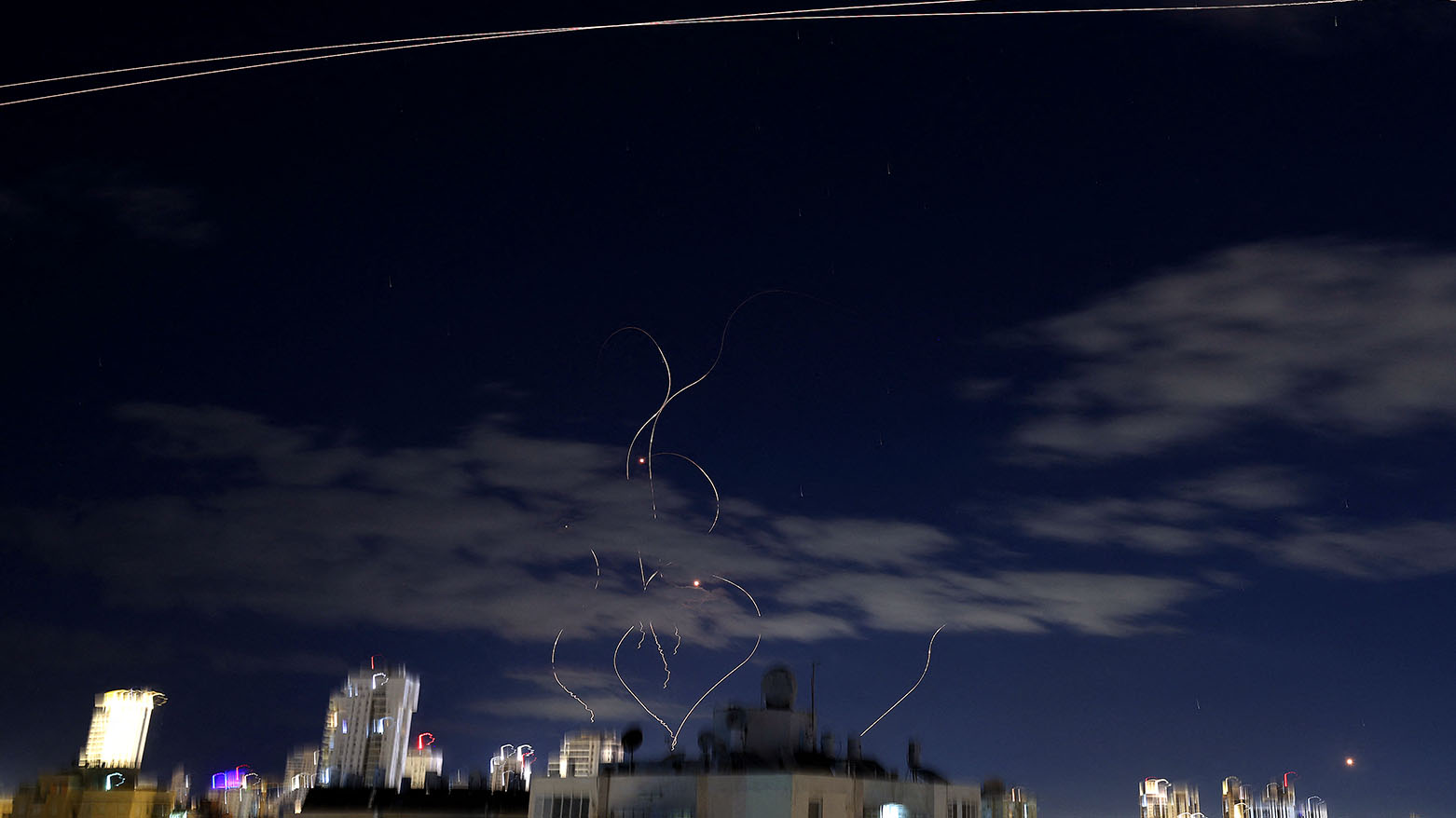
ERBIL (Kurdistan24) - Iran’s Revolutionary Guard carried out the 30th wave of Operation "True Promise 4," targeting U.S. and Israeli positions with missiles and drones, the Guard’s Public Relations office said in a statement on Monday. The statement noted that Khorramshahr, Fattah, and Khaibar missiles were used in the operation alongside strategic drones. Simultaneously, warning sirens were activated in northern Israel as the attacks commenced.
The operation marks the first military action following the election of Iran’s new Supreme Leader, Mojtaba Ali Khamenei, who was selected by the Temporary Assembly of Experts on Monday to succeed his late father, Ali Khamenei.
The Assembly cited Articles 108 and 111 of Iran’s Constitution in confirming Mojtaba Khamenei, 57, as the third Supreme Leader of the Islamic Republic. In their statement, the Assembly called on all Iranians to pledge allegiance to the new leader.
Mojtaba Khamenei, the second son of Ali Khamenei, studied at the Alavi school in Tehran and has resided in Qom since 1999 for religious studies, under scholars including Mahmoud Hashemi Shahroudi, Mesbah Yazdi, and Jafar Sobhani.
He has rarely appeared in public and holds no formal government position, though he has been considered a key figure within the "House of the Leader," maintaining influence over political, security, and military matters. Reports indicate that he exercises control over the Basij forces and maintains strong ties with senior Revolutionary Guard commanders and military intelligence.
Observers have noted Mojtaba Khamenei’s prominence dates back to the 2009 Green Movement, during which he reportedly directed security forces in suppressing protests.
His role has drawn international attention; the U.S. Treasury Department added him to its sanctions list in November 2019 for acting on behalf of his father and for involvement in human rights violations and regional destabilization efforts.
Within Iran, he is regarded by supporters as a protector of revolutionary values and by opponents as a symbol of concentrated power and the institutionalization of hereditary succession.
The Israeli military is preparing for a potential extended confrontation with Iran and its allied groups, according to Yedioth Ahronoth.
Citing a senior official from the army’s General Staff, the report said Israel has raised alert levels across all armed forces, reinforced air defense systems, deployed additional troops, and drafted plans for sustained operations should the current hostilities escalate further.
The official noted that preparations anticipate a conflict lasting at least one month.
Israeli Parliament Speaker Amir Ohana issued a threat on the social media platform X directed at Iran’s new Supreme Leader.
The post included images of assassinated leaders, including former Supreme Leader Ali Khamenei, and stated in Hebrew, “Whoever follows their path will become like them,” signaling a warning to Mojtaba Khamenei.
The 30th wave of the Revolutionary Guard operation reflects ongoing escalations in the Iran-Israel-U.S. conflict. Previous attacks, including the February 28 joint Israeli and U.S. strikes, targeted military headquarters, operational facilities, and oil storage in Tehran. Those attacks resulted in the deaths of Ali Khamenei and several senior Iranian officials, according to Iranian sources.
The Revolutionary Guard’s statement emphasized the use of multiple missile systems and drones, indicating a continued reliance on long-range precision strikes and unmanned aerial vehicles to engage enemy positions.
The deployment of Khorramshahr, Fattah, and Khaibar missiles underscores Iran’s capability to target both strategic and tactical sites across the region.
The election of Mojtaba Khamenei as Supreme Leader consolidates his influence within Iran’s military and security apparatus. Analysts note that his established relationships with the Revolutionary Guard and intelligence organizations provide him significant authority over both operational and strategic decision-making.
The succession maintains continuity within Iran’s leadership structure despite the unexpected loss of Ali Khamenei during the initial U.S.-Israeli strike.
Israeli preparations for extended conflict reflect security institutions’ concern over the escalation of hostilities, which have included multiple fronts and repeated exchanges of missile and drone attacks.
Officials have indicated that the potential duration of the conflict, along with the intensity of operations, may test regional stability and the operational readiness of Israeli forces over the coming weeks.
The election of Mojtaba Khamenei and the immediate military actions taken by the Revolutionary Guard demonstrate the continuity of Iran’s command structure and its capacity to conduct sustained operations against U.S. and Israeli targets.
The Guard’s 30th wave of Operation "True Promise 4" signifies Tehran’s ongoing commitment to maintaining its strategic posture in the conflict.
The central verified development remains that the Revolutionary Guard launched coordinated missile and drone attacks against U.S. and Israeli positions on March 9, marking the first operation since the appointment of Mojtaba Khamenei as Iran’s Supreme Leader.