IMF Warns Middle East Conflict Could Increase Global Inflation Through Higher Oil Prices
The IMF managing director warned that sustained increases in oil prices linked to the Middle East conflict could contribute to higher global inflation if energy costs remain elevated.
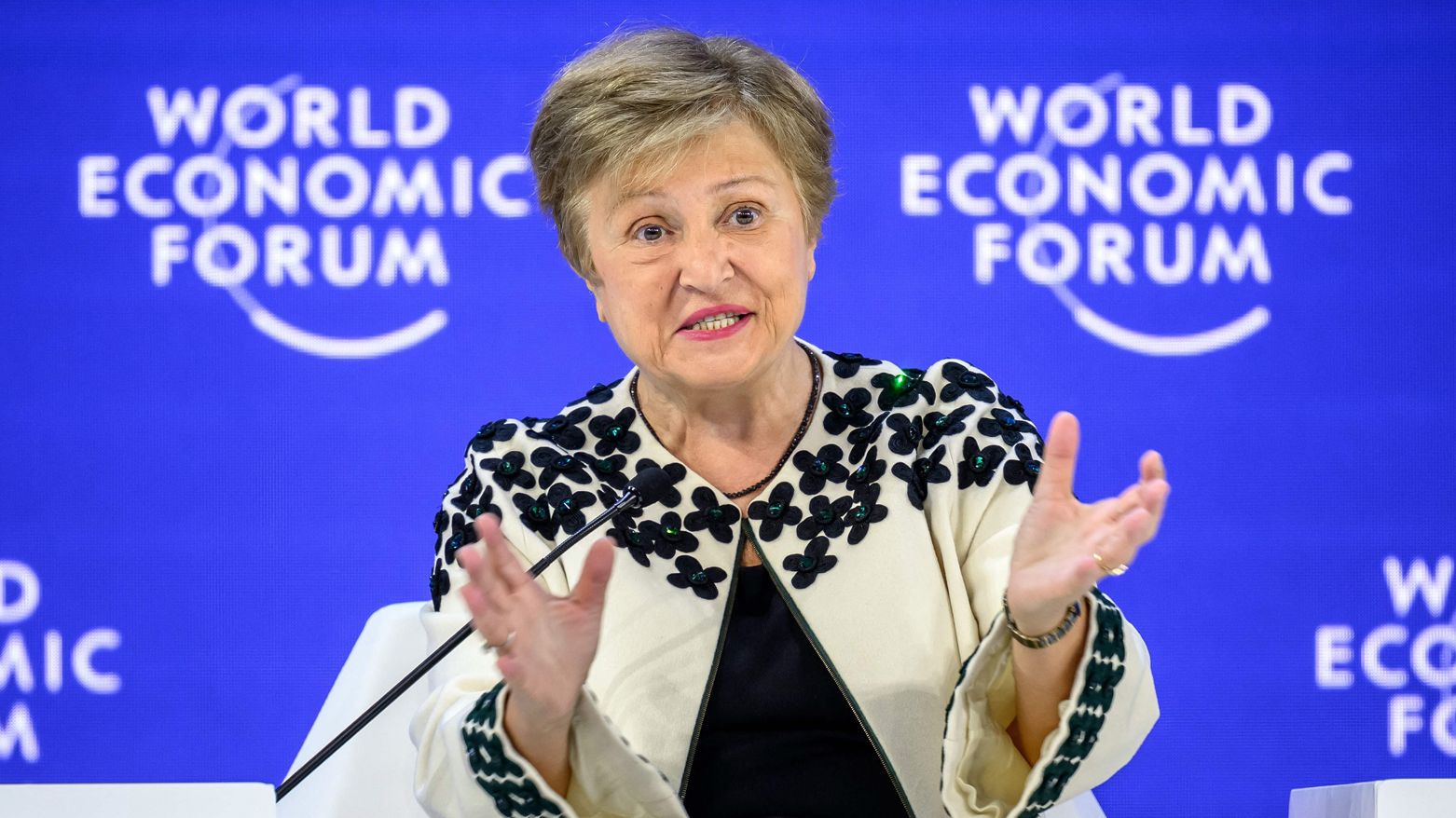
ERBIL (Kurdistan24) - International Monetary Fund Managing Director Kristalina Georgieva warned on Monday that the ongoing conflict in the Middle East could raise global inflation if energy prices remain elevated, saying a sustained increase in oil prices would have measurable effects on worldwide price levels.
Speaking during a symposium hosted by Japan’s finance ministry in Tokyo, Georgieva said a 10 percent rise in oil prices that persists through most of the year would lead to an increase of about 40 basis points in global inflation, according to remarks reported by Reuters.
“We are seeing resilience tested again by the new conflict in the Middle East,” Georgieva said during the event.
The IMF chief said policymakers must prepare for the possibility that the conflict could create new economic pressures across global markets.
“My advice to policymakers in this new global environment is think of the unthinkable and prepare for it,” she said.
Her comments come as global energy markets react to escalating tensions linked to the war involving Iran, Israel, and the United States, which has already contributed to a surge in oil prices and concerns about disruptions to energy supplies.
Oil prices climbed above $100 per barrel as the conflict intensified, marking the first time in nearly four years that global crude benchmarks have reached that level, according to market data cited in earlier reporting.
Both Brent crude and West Texas Intermediate rose more than 15 percent when markets opened following the escalation of hostilities, reflecting investor concerns about potential disruptions to production and shipping routes in the Gulf region.
Energy markets have been particularly focused on the Strait of Hormuz, a strategic maritime corridor linking the Persian Gulf with global markets and serving as a key route for oil exports.
Approximately 20 percent of global crude oil and natural gas shipments normally pass through the waterway, making it one of the most important transit points for international energy supplies.
The conflict has significantly reduced shipping activity in the corridor, according to maritime monitoring data cited in recent reports.
Only 66 commercial vessels have passed through the Strait of Hormuz over a nine-day period amid the escalation of military tensions, according to information released by an international maritime traffic monitoring site.
The data showed that 15 of the ships transiting the corridor during that period were Iranian vessels, while most of the remaining ships carried the flags of India, China, and Türkiye.
The monitoring report said the Iranian Revolutionary Guard Corps has been blocking and preventing U.S. and British commercial vessels from transiting the strait as a reaction to the armed tensions between Tehran and Western allies.
The decline in maritime traffic has contributed to growing concerns about the stability of energy supply chains and the ability of exporters in the Gulf region to deliver oil to international markets.
Iraq has been among the countries most directly affected by the disruption, according to economic reports examining the impact of the Strait of Hormuz closure.
Iraqi oil production has fallen from 4.3 million barrels per day to 1.3 million barrels per day following the closure of the strait, reflecting the country’s reliance on maritime export routes for delivering crude oil to global buyers.
The disruption has also reduced Iraqi oil exports by at least 800,000 barrels per day, creating direct losses for refineries and petrochemical companies across Asia, particularly in China, according to the reports.
Several major Chinese refineries have reduced operational capacity or suspended certain production units due to shortages of Iraqi crude oil supplies, according to economic assessments cited in the reports.
Energy companies in China have begun searching for alternative sources of crude oil in Africa and Latin America in an effort to compensate for the reduced availability of Iraqi shipments.
Security risks in the Strait of Hormuz have also driven increases in the cost of shipping and insuring oil tankers, according to the reports.
The higher transportation and insurance costs have had a direct impact on the prices of petrochemical products, reflecting the additional expense associated with moving energy supplies through the region during the conflict.
The broader increase in oil prices has drawn responses from policymakers in the United States as governments assess the economic implications of the conflict.
U.S. President Donald Trump defended the military campaign against Iran in a social media post while addressing the rise in global energy prices.
“Short term oil prices, which will drop rapidly when the destruction of the Iran nuclear threat is over, is a very small price to pay for U.S.A., and World, Safety and Peace,” Trump wrote.
“ONLY FOOLS WOULD THINK DIFFERENTLY!” he added.
U.S. officials have also sought to reassure markets that global energy supplies remain sufficient despite the disruption in the Gulf region.
U.S. Energy Secretary Chris Wright said supply interruptions linked to the conflict were unlikely to persist for an extended period.
“Worst case, that's a few weeks. That's not months,” Wright said in comments to CNN.
Wright also said that global oil supply remains adequate despite the volatility in energy markets.
“They shouldn't go much higher than they are here because the world is very well supplied with oil,” he said in comments to CBS.
Officials have begun exploring measures to stabilize shipping through the Strait of Hormuz in order to restore normal energy flows.
According to Wright, authorities are discussing arrangements with shipping companies seeking to move vessels out of the Gulf region amid the heightened security risks.
He said that some early tanker movements may involve direct protection from the U.S. military to ensure safe passage through the corridor.
“Early tankers probably will involve some direct protection by the US military” to get through the strait, Wright said.
Financial measures have also been introduced to address risks associated with maritime transport during the conflict.
The U.S. International Development Finance Corporation announced that it is establishing a reinsurance mechanism valued at up to $20 billion to cover risks linked to maritime travel through the Strait of Hormuz.
The program is intended to provide financial protection to shipping companies operating in the region while the security situation remains unstable.
Georgieva’s warning at the Tokyo symposium highlights how developments in the Middle East conflict are increasingly being viewed not only as a regional security issue but also as a potential driver of global economic pressures.
The IMF chief said policymakers should prepare for the possibility that energy market disruptions linked to the conflict could translate into higher inflation across the global economy.