Iran Security Chief Dismisses Trump Warning Over Strait of Hormuz Oil Flow
Iran’s security chief said the country would not be deterred by what he described as U.S. threats regarding the strategic waterway.
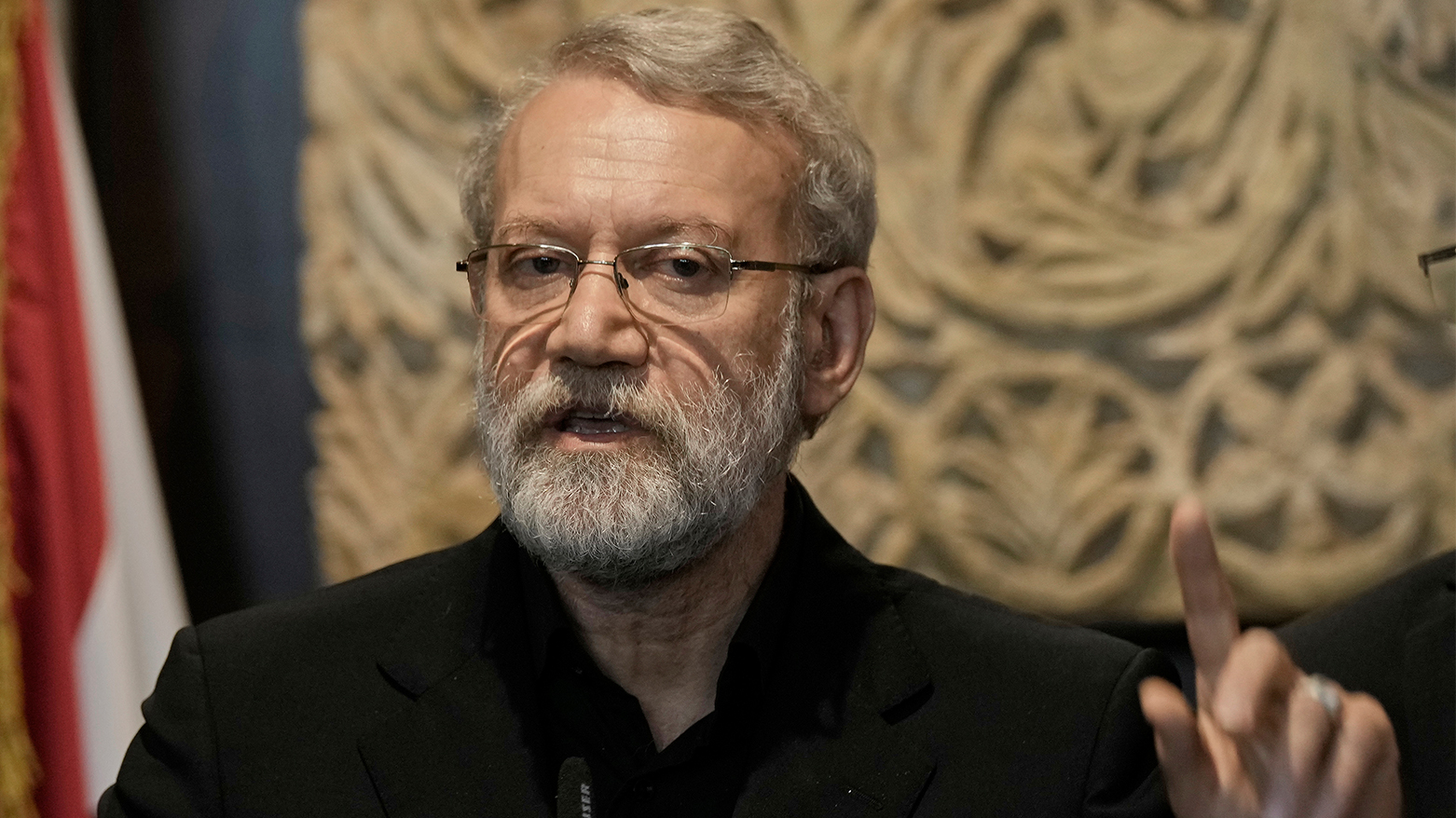
ERBIL (Kurdistan24) - Iran’s security chief Ali Larijani on Tuesday rejected warnings by U.S. President Donald Trump that the United States would respond with overwhelming force if Iran disrupts oil shipments through the Strait of Hormuz, describing the threats as “empty” in a public statement posted on social media.
Larijani issued the remarks in a message published on the platform X, responding to statements by Trump that any Iranian attempt to halt oil flows through the strategic maritime corridor would trigger a significantly stronger U.S. military response.
“Iran is not afraid of your empty threats. Even those greater than you could not eliminate the Iranian nation. Take care of yourself not to be eliminated!” Larijani wrote in the post.
The statement followed a warning issued earlier Tuesday by Trump in a message published on the social media platform Truth Social, in which the U.S. president said that interference with oil shipments through the Strait of Hormuz would provoke a large-scale retaliation.
“If Iran does anything that stops the flow of Oil within the Strait of Hormuz, they will be hit by the United States of America TWENTY TIMES HARDER than they have been hit thus far,” Trump wrote.
In the same message, Trump said the United States would target infrastructure he described as “easily destroyable targets” if the flow of oil through the waterway were halted. He added that such action could make it “virtually impossible for Iran to ever be built back, as a Nation, again.”
Trump’s post also emphasized the strategic importance of maintaining energy shipments through the corridor, saying continued access to the route benefits major oil-importing countries.
The exchange of statements came amid ongoing military tensions involving the United States, Israel, and Iran, which have affected maritime traffic and energy markets across the Gulf region.
The Strait of Hormuz is a critical maritime passage linking the Persian Gulf to international shipping lanes. According to economic data cited in recent reporting, the waterway normally carries roughly 20 percent of global crude oil and natural gas shipments.
Disruptions to shipping through the strait in recent days have affected regional oil exports and international energy markets. Economic reports cited in recent assessments indicate that Iraq’s oil production has declined sharply following the slowdown in maritime traffic linked to the conflict.
Output has dropped from approximately 4.3 million barrels per day to around 1.3 million barrels per day, according to figures referenced in the reports. Iraqi oil exports have also fallen by at least 800,000 barrels per day due to the disruption in shipping routes.
The reports note that Iraq relies heavily on maritime transport to deliver crude oil to global markets, making the Strait of Hormuz a central component of the country’s export infrastructure.
Shipping data cited in the reporting indicates that only 66 vessels have passed through the strait over the past nine days, illustrating the scale of the decline in maritime traffic.
Of those vessels, 15 were Iranian ships, while the remaining ships primarily carried the flags of India, China, and Türkiye, according to monitoring data referenced in the reports.
The same monitoring data indicated that the Islamic Revolutionary Guard Corps has been preventing U.S. and British commercial vessels from transiting the corridor in response to the broader military confrontation involving Tehran and Western allies.
The slowdown in tanker traffic has coincided with significant volatility in global oil markets. Market data cited in earlier reporting showed crude prices rising above $100 per barrel for the first time in nearly four years after the escalation of hostilities in the region.
Both Brent crude and West Texas Intermediate increased by more than 15 percent when markets opened following the latest developments, reaching price levels last seen during the early months of the war in Ukraine in 2022, according to the market figures referenced in the reports.
U.S. officials have sought to reassure energy markets that global oil supply levels remain stable despite the disruption.
U.S. Energy Secretary Chris Wright said supply interruptions were unlikely to persist for an extended period, according to comments cited in the reporting.
“Worst case, that's a few weeks. That's not months,” Wright said in remarks reported by CNN.
In separate comments cited in the same reporting, Wright said global energy supplies remain sufficient despite the current volatility in markets.
“They shouldn't go much higher than they are here because the world is very well supplied with oil,” he said.
According to Wright, U.S. officials have begun discussions with shipping companies about measures intended to restore tanker traffic through the Strait of Hormuz.
“Early tankers probably will involve some direct protection by the US military” to transit the corridor, Wright said in comments cited in the reporting.
Financial measures have also been introduced to address risks linked to maritime shipping during the conflict. The U.S. International Development Finance Corporation has established a reinsurance mechanism valued at up to $20 billion to cover insurance risks associated with shipping through the Strait of Hormuz during the crisis, according to the report.
The initiative is intended to provide financial protection for shipping companies operating in the region while security conditions remain unstable.
In separate remarks reflecting Iran’s position on the ongoing conflict, Iranian Parliament Speaker Mohammad Bagher Qalibaf said Tehran is not seeking a ceasefire.
“We are definitely not seeking a ceasefire; we believe that the aggressor must be struck in the mouth to learn a lesson so that they never again think of aggressing against our dear Iran,” Qalibaf wrote in a message posted on his social media account, according to comments reported by Tasnim News Agency.
He also said that Iran intends to break what he described as a cycle of “war–negotiation–ceasefire, and then war again,” referring to the broader confrontation with Israel.
The latest statements come after joint U.S. and Israeli strikes on Iran on Feb. 28 targeting military facilities and infrastructure in Tehran, according to earlier reporting citing Iranian state sources.
Since those strikes, the conflict has expanded into continued missile attacks and aerial operations, with governments and energy markets closely monitoring the stability of shipping routes and global oil supply chains.
Larijani’s remarks on Tuesday reiterated Tehran’s rejection of U.S. warnings over potential disruption to oil flows through the Strait of Hormuz, as tensions between Iran and the United States remain elevated.