Israeli Defense Minister Says War With Iran Entering ‘Decisive Phase’
The Israeli defense minister said the war with Tehran was entering what he described as a “decisive phase,” as fighting between the two sides and their regional allies continued across multiple fronts.
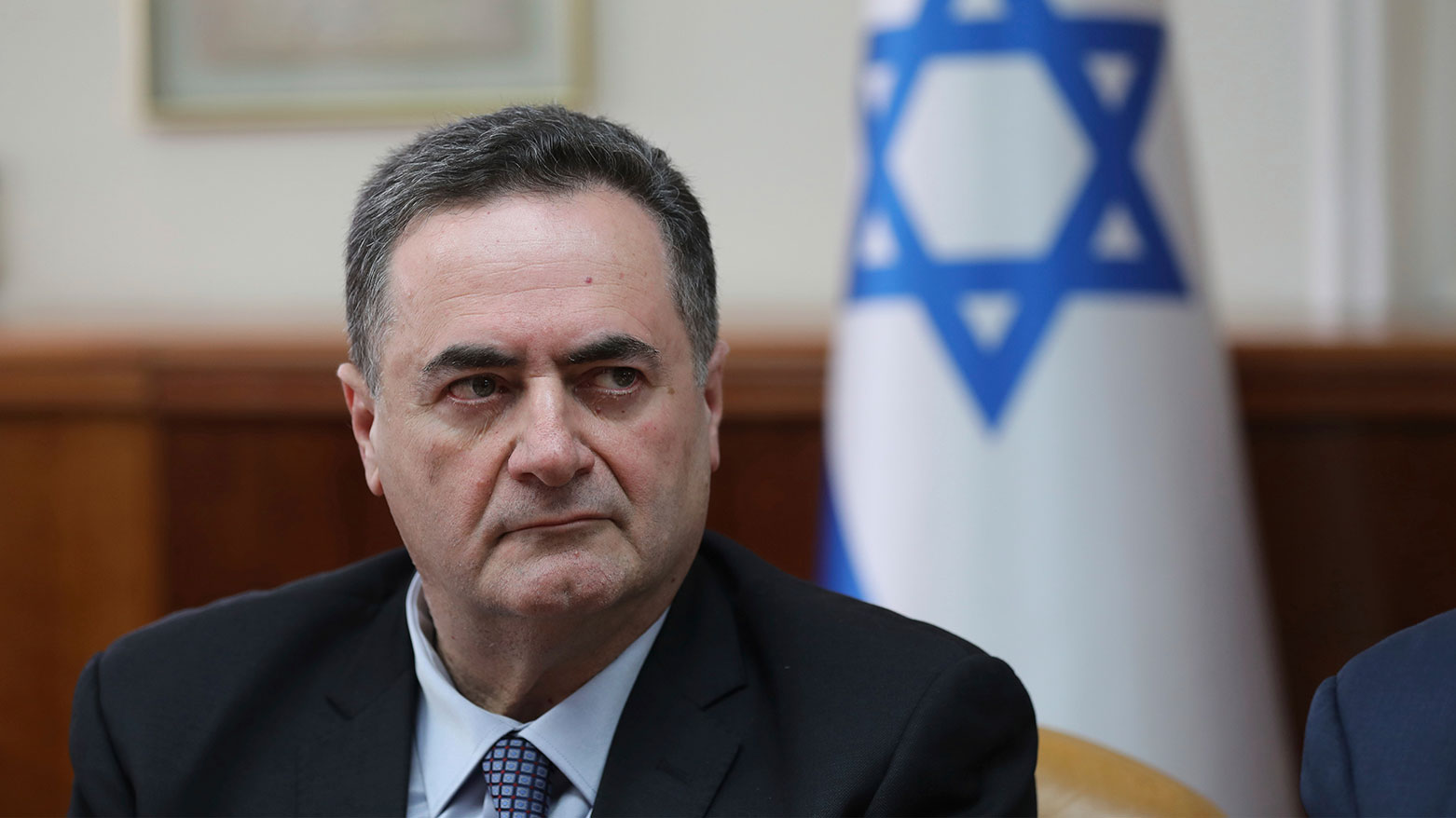
ERBIL (Kurdistan24) - Israel’s Defense Minister Israel Katz said Saturday that the war between Israel and Iran is entering a “decisive phase,” praising United States strikes on what Washington described as military targets on Iran’s Kharg Island, according to Agence France-Presse.
In a televised statement to Israel’s military leadership, Katz said the confrontation with Tehran was intensifying as part of a broader campaign involving the United States and Israel.
“The global and regional struggle against Iran, led by U.S. President Donald Trump and Israeli Prime Minister Benjamin Netanyahu, is escalating and entering the decisive phase that will continue as long as necessary,” Katz said, according to AFP.
His remarks came after U.S. forces carried out strikes on Iran’s Kharg Island, a strategic location that hosts the country’s main oil export terminal.
The Associated Press reported that Trump said U.S. forces “obliterated” military targets on the island, describing the operation as part of ongoing military action against Iran during the conflict that began in late February.
Kharg Island plays a central role in Iran’s oil exports, serving as the primary terminal for shipments leaving the country. Iranian officials said Saturday that oil operations on the island continued normally despite the strikes.
Ehsan Jahaniyan, deputy governor of Bushehr province, said export and import operations and the activities of companies on the island were ongoing, according to Iranian outlet NourNews, which is close to the country’s Supreme National Security Council.
Iranian semi-official media also reported that the U.S. strikes targeted military facilities rather than oil infrastructure.
The Fars News Agency reported at least 15 explosions on Kharg Island following the strikes, saying the targets included an air defense facility, a naval base, the airport control tower, and a helicopter hangar belonging to an offshore oil company. The agency added that oil infrastructure was not damaged.
The strikes came as fighting between Israel and Iran continued to expand across multiple areas of the region, according to the Associated Press. Iranian authorities say more than 1,200 people have been killed in Iran since the war began on Feb. 28.
Iran has also launched missile and drone attacks against Israel and several Gulf states during the conflict.
The Associated Press reported that Bahrain’s Defense Ministry said Iran fired 10 drones and three missiles toward the country on Saturday, bringing the total number of drones and missiles launched toward Bahrain since the start of the war to 203 and 124 respectively.
Regional tensions have also affected maritime trade. Iran has effectively closed the Strait of Hormuz, according to the Associated Press, a strategic waterway through which roughly one-fifth of the world’s traded oil normally passes.
Elsewhere in the Gulf, authorities in the United Arab Emirates reported a fire at Fujairah port following the interception of a drone on Saturday. Officials said no casualties were reported, and firefighters were working to control the blaze.
Video footage obtained by the Associated Press showed smoke rising over the port facility.
Iran’s military leadership has also issued warnings regarding potential attacks on regional infrastructure.
According to Iran’s state television, the Khatam al-Anbiya Central Headquarters said Saturday that cities in the United Arab Emirates could be targeted, alleging that U.S. forces had launched strikes on Iranian territory from locations inside the Emirates.
The Iranian command called on civilians to evacuate areas where U.S. forces may be present, including ports and docks in Emirati cities, though it did not provide evidence supporting the claim.
The conflict has also had repercussions beyond Iran and Israel.
In Iraq, an airstrike early Saturday struck a residential building in Baghdad’s Karrada district, killing at least one person and wounding two others, according to a security official and another individual affiliated with Iranian-backed armed groups who spoke to the Associated Press on condition of anonymity.
The Iraqi military condemned the strike in a statement, calling it “a blatant violation of all humanitarian values and a disregard for international conventions.”
Separately, a missile struck a helipad within the compound of the U.S. Embassy in Baghdad, according to two security officials who spoke to the Associated Press. The projectile landed inside the sprawling diplomatic compound located within the heavily fortified Green Zone.
There was no immediate comment from the U.S. Embassy following the strike.
The embassy had renewed its Level 4 security alert for Iraq on Friday, warning that Iran and Iran-aligned militia groups have previously targeted U.S. citizens, infrastructure, and interests and could continue to do so.
The Associated Press also reported that an earlier drone strike in northern Iraq killed a French soldier and wounded several others serving as part of an international coalition operating in the country.
In Iran, authorities said several cultural and historical sites have been damaged in strikes since the conflict began.
Iran’s Cultural Heritage Ministry reported that 52 sites, including museums and historic monuments, have been damaged across the country, according to Mizan, the judiciary’s official news agency.
Some of the most recent damage was reported in the city of Sanandaj in Iran’s Kurdistan province, where authorities said strikes caused serious damage to several historic mansions, including the Asef Mansion, Salar Saeid Mansion, and Khosro Abad Mansion.
Elsewhere in the region, diplomatic efforts continued amid the expanding conflict.
French President Emmanuel Macron said France was prepared to host direct talks between Israel and Lebanon. In a message posted on X, Macron said he had spoken with Lebanon’s president, prime minister, and parliament speaker, urging steps to prevent further escalation in the country.
Macron said Lebanese leaders had expressed willingness to engage in direct talks with Israel aimed at reaching a ceasefire and finding a lasting solution.
Lebanon’s President Joseph Aoun said Friday that he had expressed readiness to negotiate with Israel but had not received a response.
Katz’s statement on Saturday underscored Israel’s position that the conflict with Iran remains ongoing as U.S. and Israeli military operations continue targeting sites inside Iran.