Zelenskiy Says Russia Supplying Iran With Shahed Drones as IRGC Claims Attacks on U.S. Bases in Iraq and Kuwait
Ukraine’s Volodymyr Zelenskiy said Russia supplied Iran with Shahed drones used against U.S. and Israeli targets. The IRGC claimed strikes on U.S. bases in Iraq and Kuwait, while reports say Israel is running low on missile interceptors.
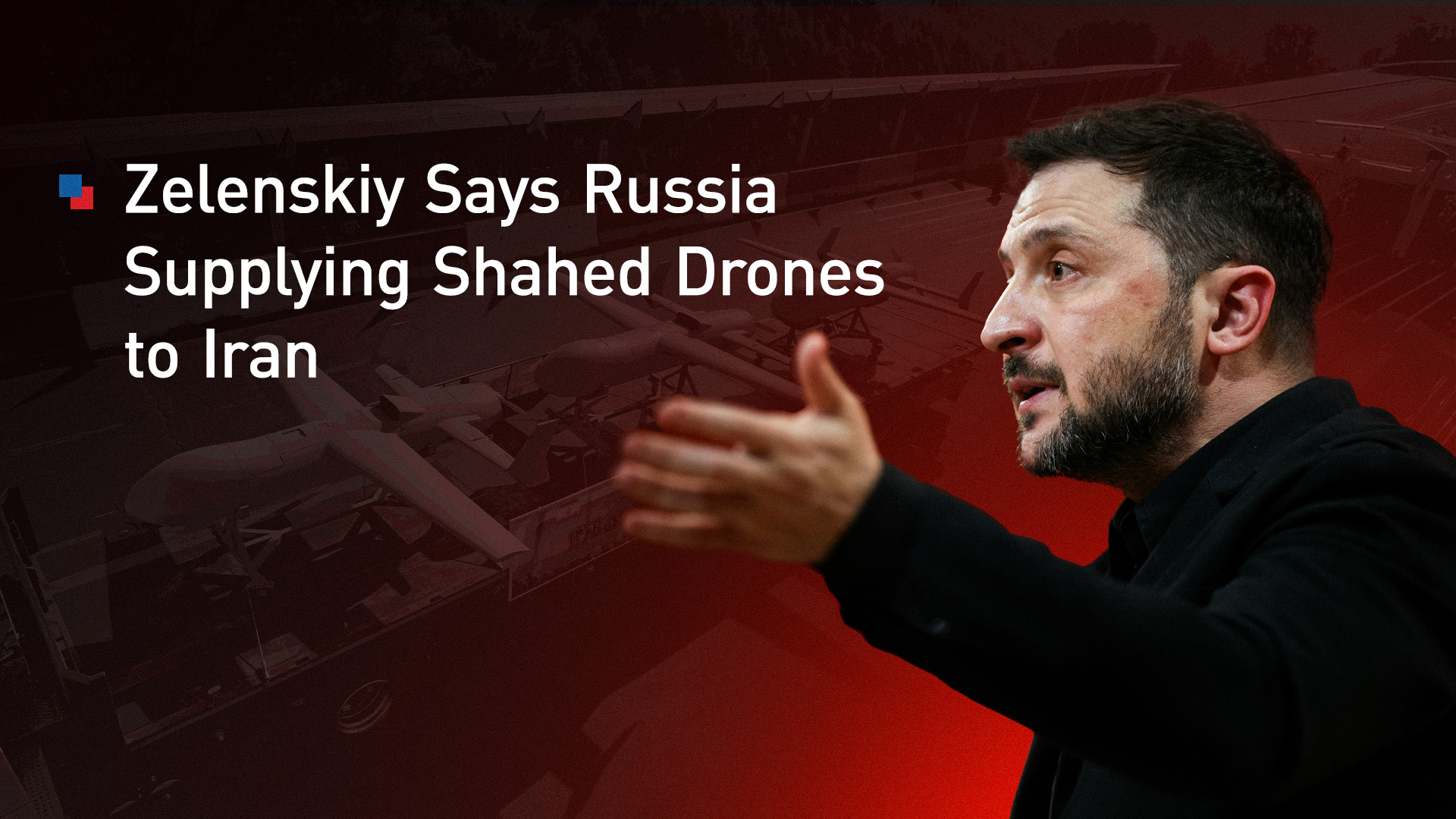
ERBIL (Kurdistan24) - Ukrainian President Volodymyr Zelenskiy said Russia is supplying Iran with Shahed drones that have been used to attack U.S. forces and Israeli targets, according to an interview aired by CNN on Saturday, as Iranian military officials accused the United States of copying the Shahed drone design for its own operations and the Islamic Revolutionary Guard Corps (IRGC) said it carried out missile and drone attacks on American bases in Iraq and Kuwait.
Separate reporting by Semafor citing U.S. officials said Israel has informed Washington that it is running critically low on ballistic missile interceptors amid ongoing hostilities with Iran.
In an interview excerpt broadcast on CNN’s program hosted by journalist Fareed Zakaria, Zelenskiy said Moscow has supplied Tehran with Shahed drones and that Iranian forces have used them in attacks targeting U.S. positions. The Ukrainian president said it is “100% facts” that Iran has deployed Russian-made Shahed drones in strikes against U.S. bases, according to CNN.
The Shahed drone family, including the widely referenced Shahed-136 model, has become associated with unmanned aerial attacks across several theaters in recent years.
According to the CNN report, Iran pioneered the Shahed drone concept as a relatively inexpensive alternative to traditional missiles. The drones gained widespread attention during Russia’s invasion of Ukraine, where Ukrainian authorities say thousands have been launched by Russian forces since the fall of 2022.
CNN reported that although Iran initially supplied Russia with Shahed drones, Russia now manufactures its own versions domestically.
The report also noted that armed forces from other countries have adopted similar systems, including the United States military, which has said that drones derived from Shahed-type technology are part of current military operations against Iran.
The remarks by Zelenskiy came amid continued tensions across the Middle East following U.S. and Israeli strikes against Iranian targets earlier this year.
Iranian military officials responded to recent developments with accusations directed at Washington regarding the use of drone technology. A spokesperson for Iran’s Khatam al-Anbiya Central Headquarters said the U.S. military has copied the Iranian Shahed drone design and deployed a similar system during operations in the region.
According to the statement issued by the Iranian military official, the United States has developed a kamikaze drone named “Lukas,” which the official said was derived from the Shahed-136 platform.
The spokesperson said the U.S. military had resorted to what the statement described as copying Iranian drone technology following what the official characterized as “military and political failures.”
The official further alleged that Washington was using the drone system to carry out attacks inside regional countries in an attempt to implicate Iran and create tensions between Tehran and neighboring states.
The Iranian statement said the United States had announced roughly nine months ago that it had developed the Lukas drone and that the system incorporates technology derived from the Shahed drone.
According to the statement, the United States used the drone for the first time on March 3 during an operation identified as “Epic Fury,” which the Iranian official said targeted Iran.
The spokesperson for the Khatam al-Anbiya Central Headquarters also said Iran officially acknowledges responsibility for any military actions it conducts and stated that Iranian forces limit their targets to what the official described as “U.S. and Israeli interests.”
“The Islamic Republic officially claims responsibility for any attack it conducts,” the spokesperson said in the statement, adding that Iranian military operations are directed exclusively at U.S. and Israeli targets.
The statement also addressed recent attacks reported across the region since late February.
According to the Iranian military official, strikes that have affected friendly or neighboring countries are not attributable to Iranian forces and instead represent what the spokesperson described as attempts to frame the Iranian military.
The statement included denials by Tehran regarding several incidents reported in recent days.
Iran denied launching a missile toward Türkiye after NATO and the Turkish Ministry of Defense reported that a ballistic missile fired from Iranian territory had been intercepted and destroyed. Tehran said it had not directed missiles toward Türkiye, which it described as a friendly neighbor.
Iran also denied responsibility for an incident involving the port of Salalah in the Oman, which Iranian officials described as suspicious and said they were investigating.
The Iranian statement said that since February 28, several Gulf countries have experienced missile and drone strikes affecting airports, ports, and residential areas. Iranian officials said their operations are intended to target U.S. military bases in response to earlier U.S. and Israeli strikes on Iranian territory.
Gulf governments have condemned the attacks and have emphasized their right to respond, according to the statement.
Separately, the Islamic Revolutionary Guard Corps announced on Sunday that it had carried out attacks on three U.S. military bases in the region.
In a statement, the IRGC said the attacks were part of what it described as the “commencement of the 52nd wave of military operations against Israel.”
The IRGC said the operation included strikes on a location within Israeli territory as well as attacks on three American bases in the region.
According to the statement, two of the bases were located in Kuwait: the Ali al-Salem Air Base and the Camp Arifjan. The statement also said another U.S. base in Iraq was targeted during the operation, though it did not specify the installation.
The IRGC said missiles and drones were used during the attacks.
The statement also included threats directed at Israeli leadership, referring specifically to Israeli Prime Minister Benjamin Netanyahu.
“If that criminal is still alive, we will continue to track and target him,” the IRGC statement said.
The Iranian military statement further claimed that uncertainty about Netanyahu’s status reflected what it described as internal instability within Israel.
The IRGC announcement followed earlier strikes carried out by the United States and Israel against Iranian targets on February 28.
According to the IRGC statement, those attacks struck several locations within Iranian territory, causing damage to infrastructure and resulting in deaths and injuries among civilians.
The statement said the strikes killed Iran’s Supreme Leader, Ali Khamenei, along with several commanders of the Revolutionary Guard and the Iranian armed forces.
The IRGC presented the attacks on U.S. bases as part of its response to those earlier strikes.
The broader conflict has also placed pressure on missile defense systems in the region.
According to a report published by Semafor on March 14, Israel informed the United States this week that its supply of ballistic missile interceptors is critically low.
Semafor cited U.S. officials who said Israel had already entered the current conflict with reduced interceptor reserves after expending significant quantities during last summer’s conflict with Iran.
The officials told Semafor that Israel’s long-range missile defense system has been under strain as Iranian missile attacks have continued.
The report also cited earlier reporting by CNN that Iran had incorporated cluster munitions into some missile strikes, a factor that may accelerate the depletion of interceptor stocks.
One U.S. official told Semafor that Washington had anticipated the possibility that Israel’s interceptor supplies could decline during the conflict.
“It’s something we expected and anticipated,” the official said.
The official added that the United States does not face similar shortages in its own missile defense inventory.
“We have all that we need to protect our bases and our personnel in the region and our interests,” the official said, according to Semafor.
The report said it remains unclear whether the United States could sell or transfer interceptors to Israel, which could place additional demands on U.S. defense stockpiles.
Semafor noted that the United States has previously supplied Israel with missile defense equipment as part of military assistance programs.
The report also said Israel retains other defensive options against Iranian missiles, including fighter aircraft. However, interceptors remain among the most effective tools for countering long-range missile attacks.
Semafor also cited statements from the administration of Donald Trump, who said earlier this month that the United States maintains what he described as a “virtually unlimited” supply of munitions.
Analysts cited in the report said U.S. stockpiles have been lower than the military would prefer in recent years.
According to the Center for Strategic and International Studies, the United States fired more than 150 THAAD interceptors during a 12-day war with Iran last June. The report said this represented roughly a quarter of the U.S. inventory at the time.
Semafor also reported that approximately $2.4 billion worth of Patriot missile interceptors were used during the first five days of the current conflict.
The Pentagon has begun efforts to increase production of the THAAD missile defense system, according to the report.
Sean Parnell said in a statement to Semafor that the Defense Department has the resources required to carry out military operations ordered by the U.S. president.
“The department has everything it needs to execute any mission at the time and place of” Trump’s choosing, Parnell said.
Following publication of the report, White House Press Secretary Karoline Leavitt said U.S. military stockpiles remain sufficient to support the administration’s objectives.
She told Semafor that American stockpiles are “more than enough” to achieve the administration’s goals against Iran and beyond.
Leavitt added that the president continues to focus on strengthening the U.S. armed forces and encouraging defense contractors to accelerate weapons production.
The report also noted that the U.S. State Department recently announced the sale of 12,000 BLU-110A/B general-purpose bomb bodies to Israel.
According to Semafor, the Trump administration bypassed congressional approval for the sale by citing the emergency circumstances created by the war between the United States, Israel, and Iran.
Officials from the Israel Defense Forces did not immediately respond to requests for comment from Semafor regarding the report on interceptor supplies.
President Trump said recently that the conflict could end soon but also stated that the United States, Israel, and Iran are prepared to continue fighting if necessary.
Speaking Friday evening, Trump said the war would continue “as long as it’s necessary.”
Iranian officials have similarly indicated they are prepared for an extended conflict.
An adviser to Iran’s foreign policy leadership told CNN that Tehran currently sees no possibility for diplomacy and is ready to sustain a prolonged confrontation.
U.S. Defense Secretary Pete Hegseth told reporters that Iran’s ballistic missile production capacity has been significantly weakened by the strikes carried out during the conflict.
Across the region, drone and missile strikes have continued amid heightened military activity involving the United States, Israel, and Iran.
Zelenskiy’s remarks about Russia supplying Shahed drones to Iran, the IRGC’s claim of attacks on U.S. bases in Iraq and Kuwait, and reports of pressure on Israel’s interceptor supply highlight the continuing escalation in the conflict.
Iranian officials have denied responsibility for several incidents affecting neighboring countries while maintaining that their operations target U.S. and Israeli positions.
The latest statements from Ukrainian, Iranian, and U.S. officials illustrate the widening scope of military activity connected to the ongoing confrontation between Iran, the United States, and Israel.