White House Reviews Endgame Scenarios as Iran War Widens
The U.S. has outlined options to end or escalate the Iran conflict as fighting expands and the Strait of Hormuz remains disrupted.
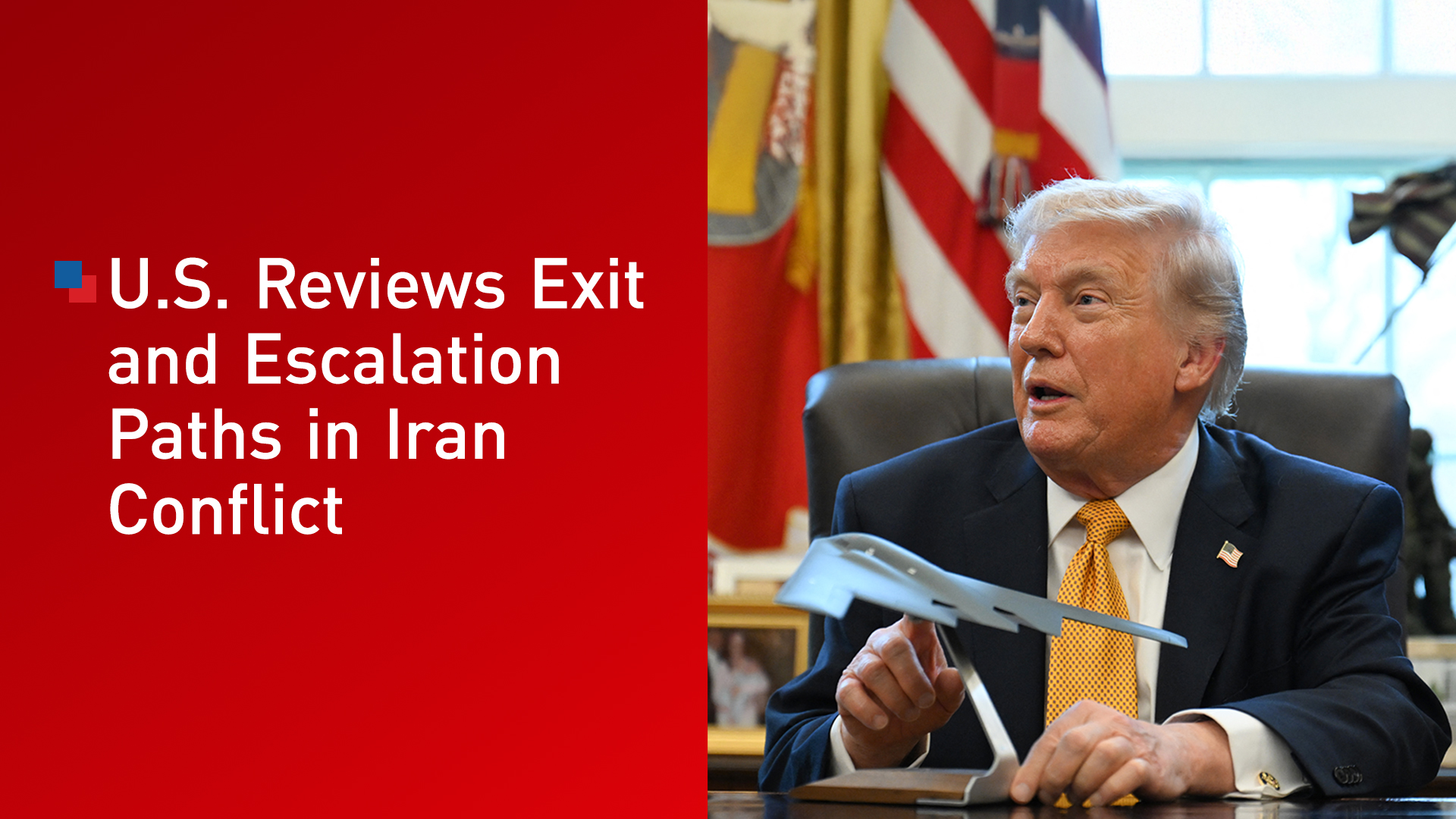
ERBIL (Kurdistan24) - U.S. military planners have developed options for President Donald Trump to end the ongoing conflict with Iran, alongside escalation scenarios, even as fighting intensifies across the Middle East and the Strait of Hormuz remains effectively closed to tanker traffic, according to six people familiar with the planning who spoke to NBC News.
The report said the “off-ramps” are embedded in daily war planning processes, providing the White House with potential pathways to conclude the conflict should the president choose to do so. At the same time, planners have outlined options to increase pressure on Iran, reflecting continued uncertainty within the administration about how to proceed as the conflict evolves.
White House press secretary Karoline Leavitt said in a statement that the administration had initially estimated a timeline of four to six weeks “to fully achieve the clear military objectives.” She added that the operation would end when Trump determines that those objectives have been met and that the threats posed by Iran have been eliminated.
Despite that framework, officials cited in the report said the timeline remains fluid. “The timeline for the duration of the war could change every day,” one person familiar with the planning told NBC News.
The planning comes as the conflict expands geographically and economically. Iranian authorities have maintained restrictions on the Strait of Hormuz, a critical maritime route through which roughly 20% of the world’s oil supply typically passes. The waterway has been effectively shut to tanker traffic after multiple commercial vessels were struck by drones, according to U.S. officials cited in the report.
Iran’s new supreme leader, Mojtaba Khamenei, said in his first public address that the strait should remain closed, according to NBC News. U.S. officials said commercial shipping companies have requested naval escorts, but Gen. Dan Caine, chairman of the Joint Chiefs of Staff, said the situation remains too complex to guarantee safe passage.
Trump said he has asked several countries, including China, France, Japan, South Korea and the United Kingdom, to assist in securing the strait. “We are talking to other countries about working with us on the policing of the strait,” he said, adding that a positive response would be welcomed but not essential.
However, efforts to assemble an international coalition have encountered resistance. According to Axios, U.S. allies have been reluctant to join a maritime initiative aimed at reopening the strait, with some countries declining to commit naval assets. European Union foreign policy chief Kaja Kallas said after a meeting of EU foreign ministers that “there is no appetite” in the bloc to participate, adding that “this is not Europe’s war.”
Axios reported that the United Kingdom has circulated a draft plan for a multinational task force, but discussions remain inconclusive. A European diplomat described the situation as confused, saying that “a lot of people are confused” about how such a coalition would operate.
The difficulty in reopening the strait has emerged as a central challenge for the administration. As long as the waterway remains blocked and Gulf oil exports are constrained, officials cited by Axios said the White House faces obstacles in bringing the conflict to a close on terms it considers favorable.
Meanwhile, the United States has continued military operations targeting Iranian infrastructure and capabilities. NBC News reported that U.S. and Israeli forces have conducted a major bombing campaign against targets on Kharg Island, a key hub for Iran’s oil exports. Trump warned that the island’s oil infrastructure could be further targeted.
Iran had previously warned that attacks on Kharg Island would provoke escalated retaliation. According to NBC News, Iranian forces have carried out strikes and drone operations across the region, with officials in Saudi Arabia, Dubai and Kuwait reporting incidents. An oil export terminal in Oman was evacuated after attacks on tankers anchored off Iraq, and Iraq suspended operations at its own oil terminals.
Iran also called for the evacuation of three major ports in the United Arab Emirates, marking the first time it has threatened non-U.S. assets in neighboring countries, according to the report. One of those ports, Fujairah, was struck by drones on multiple occasions.
U.S. Defense Department officials said Iran’s military capabilities have been significantly degraded by sustained bombardment. Defense Secretary Pete Hegseth said during a briefing that Iran’s capabilities were “crumbling,” according to NBC News.
At the same time, U.S. intelligence assessments indicate that Iran’s governing system remains intact, with no immediate signs of collapse in the clerical or military leadership structure, the report said.
The administration has also faced internal divisions over how to proceed. Some aides have advocated for an exit strategy due to concerns about global economic instability, while others have emphasized the opportunity to weaken Iran’s regional influence, according to two people familiar with internal discussions cited by NBC News.
The economic impact of the conflict has become increasingly pronounced. Oil prices have surged and global markets have declined amid disruptions to supply chains. The International Energy Agency warned that the conflict is “creating the largest supply disruption in the history of the global oil market,” according to NBC News.
Trump has publicly downplayed the impact of rising oil prices, stating on social media that higher prices benefit U.S. revenues. At the same time, officials cited by NBC News said the administration is urging Israel to consider pausing strikes on Iranian oil fields to avoid further price increases and preserve leverage in potential negotiations.
The question of how and when the conflict might end remains unresolved. Trump told NBC News over the weekend that Iran was ready to end the war but said “the terms aren’t good enough yet.” He has previously suggested that acceptable terms could include “unconditional surrender,” regime change and the elimination of Iran’s nuclear capabilities.
However, Iranian Foreign Minister Abbas Araghchi said Tehran had not requested a ceasefire and would continue its response. “We did not send any message and did not request a ceasefire, but this war must end in a way that it will not be repeated,” he said, according to remarks reported by the semi-official Fars News agency and cited by NBC News.
In parallel with military operations, the U.S. State Department has intensified diplomatic efforts to increase pressure on Iran. According to Reuters, Secretary of State Marco Rubio instructed U.S. diplomats worldwide to urge allied governments to designate Iran’s Islamic Revolutionary Guard Corps and Lebanon-based Hezbollah as terrorist organizations.
The directive, sent to diplomatic posts on March 16, called for engagement “at the highest appropriate level” and emphasized coordination with Israeli counterparts. It cited an elevated risk of attacks linked to Iran and its allies and argued that collective action would be more effective than unilateral measures in influencing Tehran’s behavior.
“Joint pressure is more likely to compel behavior change by the regime than unilateral actions alone,” the cable stated, according to Reuters. It added that such designations would limit Iran’s ability to support militant activities internationally.
The diplomatic push comes amid broader challenges in securing international support for U.S. actions. Several allies have expressed skepticism about the conflict and have not committed to providing military assistance, including naval deployments to the Gulf, Reuters reported.
Trump has expressed frustration with allied responses, saying he was “greatly disappointed” by the lack of enthusiasm from countries he said had benefited from U.S. security support. He also warned that a failure by NATO members to assist could have consequences for the alliance’s future, according to Axios.
At the same time, the administration has sought to manage concerns about further escalation. During a press conference, Trump dismissed the possibility that Israel would use a nuclear weapon against Iran, stating, “Israel would never do that,” according to remarks reported by The Guardian.
The comment followed speculation raised by David Sacks, a White House adviser, who had warned in a podcast about the risk of escalation if the conflict continued. Trump said Sacks had not shared those concerns directly with him.
Internally, some officials have called for de-escalation. Sacks urged the president to consider ending the conflict, saying in a podcast that “this is a good time to declare victory and get out,” according to NBC News.
However, others within the administration have emphasized the strategic opportunity presented by Iran’s weakened position. The divergence reflects broader uncertainty about the end state of the conflict and the feasibility of achieving U.S. objectives.
Analysts cited by NBC News said Iran’s leadership is likely to prioritize regime survival above all else. Siamak Namazi, an analyst and former detainee in Iran, said the country’s leaders view the conflict as existential and believe they can withstand sustained pressure.
“They are banking that their threshold for pain is far higher than their opponents’,” Namazi said, adding that the regime’s objective is to remain in power when hostilities end.
Despite the availability of exit options in military planning, officials indicated that any decision to end the conflict would depend on both U.S. and Iranian calculations. Even if Washington were to declare victory, it remains unclear whether Tehran would accept the terms proposed by the United States, according to NBC News.
In the absence of an agreement, Iranian forces could continue targeting shipping in the Strait of Hormuz, maintaining pressure on global markets and complicating efforts to stabilize the situation.
The evolving dynamics underscore the complexity of the conflict, with military operations, economic considerations and diplomatic efforts unfolding simultaneously. While planning frameworks include both escalation and de-escalation pathways, officials said the ultimate trajectory of the war remains uncertain and subject to daily developments.