Trump Remarks on Cuba Surface Amid Renewed U.S. Sanctions, Cuban Criticism
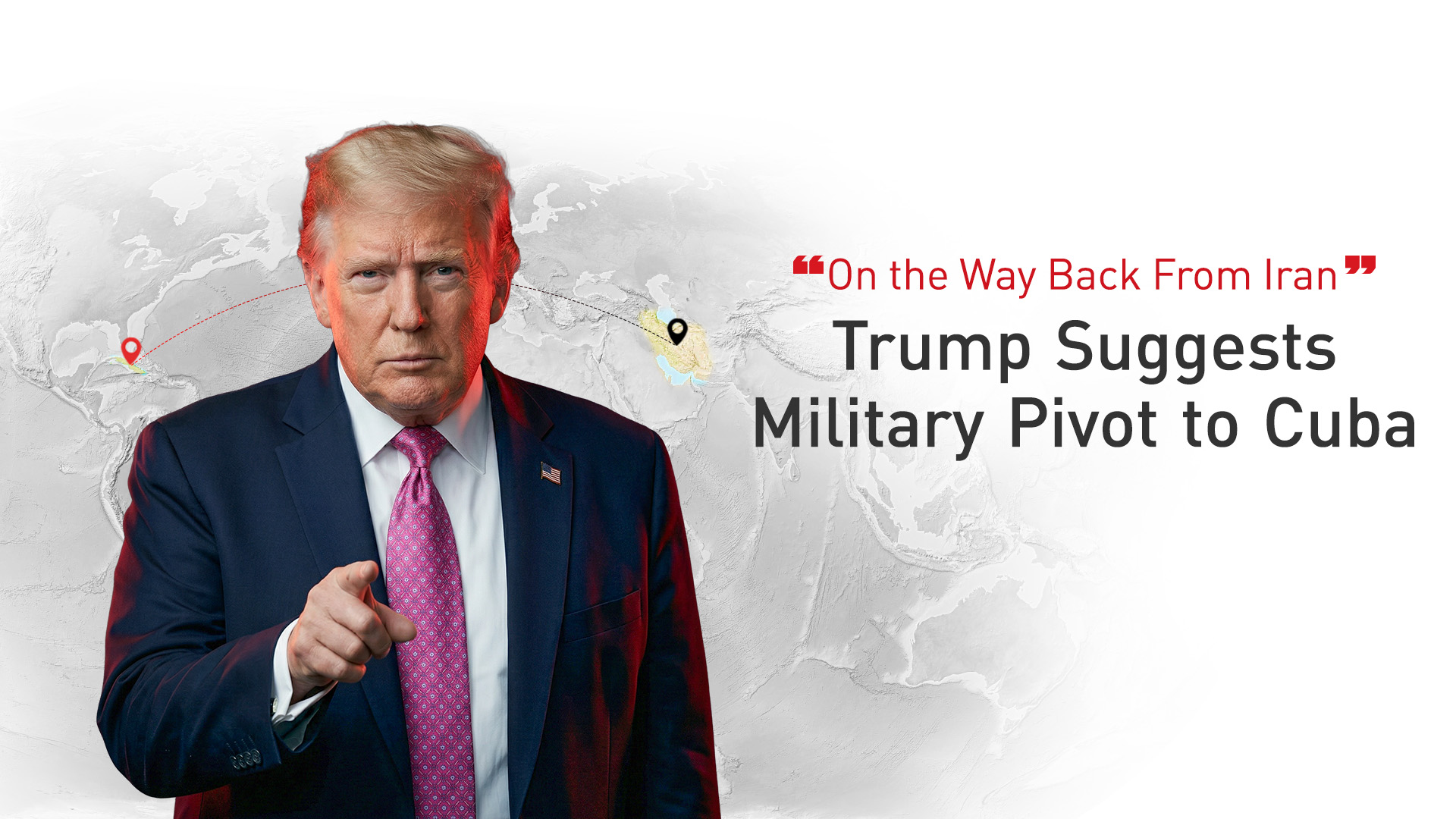
"[...] on the way back from Iran, we'll have one of our big, maybe the USS Abraham Lincoln aircraft carrier - the biggest in the world, will have that come in. Stop about 100 yards offshore, and they'll say, 'thank you very much. We give up'," U.S. President said about Cuba.
ERBIL (Kurdistan24) - U.S. President Donald Trump said on Friday the United States would be "taking over" Cuba "almost immediately" during a speech in Florida, remarks delivered at the Forum Club of the Palm Beaches and reported by Fox News.
According to Fox News, President Trump made the comment while acknowledging attendees at the event, including former Congressman Dan Mica, referencing Cuba in a brief aside without elaborating on specific policy intentions.
"[...] We will be taking over almost immediately. Now Cuba's got problems. We'll finish one first. I like to finish a job. On the way back from what we'll do... on the way back from Iran, we'll have one of our big, maybe the USS Abraham Lincoln aircraft carrier - the biggest in the world, will have that come in. Stop about 100 yards offshore, and they'll say, 'thank you very much. We give up'," The U.S. President said.
Fox News also reported that the president did not clarify whether the statement was rhetorical or indicative of a concrete policy direction, and the White House did not immediately respond to requests for clarification.
The remarks, as cited by Fox News, included a hypothetical scenario involving U.S. military presence near the island, though no operational details or official plans were outlined.
Policy context and bilateral tensions
The statement comes amid longstanding tensions in U.S.-Cuba relations, which have been defined for decades by sanctions, diplomatic friction, and periodic attempts at engagement.
According to Agence France-Presse (AFP), the United States has maintained a near-continuous trade embargo on Cuba since the 1959 revolution led by Fidel Castro, shaping the economic and political relationship between the two countries.
AFP reporting indicates that recent developments have continued this trajectory of pressure, even as limited diplomatic contacts have taken place.
Senior U.S. officials visited Cuba for talks in April, according to AFP journalists, suggesting intermittent engagement alongside ongoing policy enforcement measures.
At the same time, Trump's remarks in Florida align with broader rhetoric noted in AFP coverage, which reported that the president has previously "mused" about taking over the island, underscoring the persistence of hardline discourse in U.S. political messaging.
Cuban response and domestic framing
Cuban officials have strongly criticized recent U.S. actions, framing them as punitive measures targeting the country's population.
According to AFP, Cuba's Foreign Minister Bruno Rodriguez described newly announced U.S. sanctions as "collective punishment," rejecting the measures in statements issued during May 1 demonstrations in Havana.
AFP reported that large crowds gathered near the U.S. embassy during International Workers' Day events, where participants voiced opposition to U.S. policies under slogans emphasizing national defense and sovereignty.
The demonstrations were led by senior Cuban figures, including President Miguel Diaz-Canel and former leader Raul Castro, as detailed in AFP reporting.
Rodriguez, in remarks cited by AFP, characterized the sanctions as "illegal" and "abusive," asserting that they reflect a continued effort by Washington to exert economic pressure on the island.
According to AFP, Cuban authorities have linked these measures to broader economic challenges, including shortages, declining tourism, and energy constraints.
AFP journalists noted that Cuba's economic situation has deteriorated further following restrictions on fuel supplies earlier this year, contributing to ongoing supply disruptions and power outages.
U.S. sanctions measures
The policy backdrop to Trump's remarks includes a new round of sanctions targeting key sectors of the Cuban economy.
According to AFP, Trump signed an executive order authorizing measures against individuals involved in industries such as energy, defense, mining, financial services, and security.
As detailed in AFP reporting, the sanctions also apply to Cuban officials accused by the United States of involvement in corruption or human rights abuses.
Those designated under the measures are barred from entering the United States.
AFP further reported that the sanctions extend beyond individuals, with provisions targeting foreign financial institutions that conduct business with those listed under the order.
This expands the scope of enforcement by potentially affecting international banking relationships connected to Cuba.
The measures represent part of a broader U.S. strategy aimed at increasing economic pressure on Havana, according to AFP, which noted that the island is already facing significant economic strain.
Broader bilateral context
Despite the escalation in sanctions and rhetoric, AFP reporting highlights that diplomatic engagement has not been entirely absent.
Talks between U.S. and Cuban officials in April signaled limited avenues for dialogue, even as tensions persist.
However, the combination of Trump's public remarks, new sanctions, and Cuba's strong response illustrates the continuing volatility in bilateral relations.
AFP journalists emphasized that both policy actions and political messaging remain central to the evolving dynamic between Washington and Havana.
Fox News reported that Trump did not expand further on his Florida remarks, leaving their precise intent unclear within the broader policy framework.
The developments collectively reflect an ongoing cycle of pressure and response, as both governments maintain firm positions on key issues shaping their relationship.