Trump Said Not Satisfied with Iran Proposal: Latest Updated about U.S.-Iran Talks
With the Strait of Hormuz still closed, Lebanon under Israeli bombardment, and Iran's economy on the brink, a ceasefire that has silenced the guns has done little to end the war.
ERBIL (Kurdistan24) - Nearly a month into a fragile ceasefire that stopped the shooting but resolved nothing, the United States and Iran remain locked in a diplomatic stalemate — one that is bleeding Iran's economy dry, keeping the world's most critical oil artery shut, and straining Washington's own political and legal architecture.
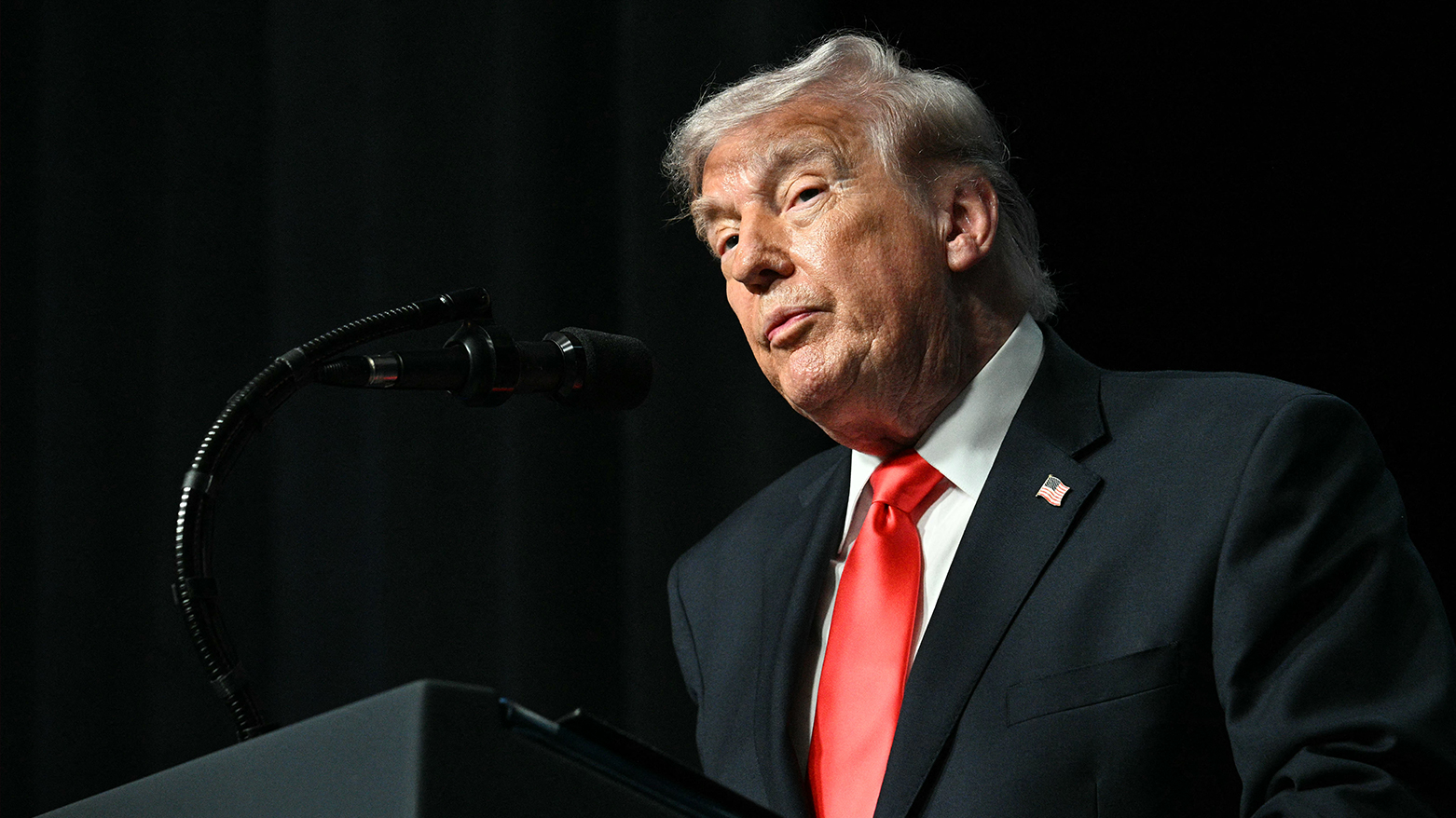
US President Donald Trump said Friday he was "not satisfied" with a new Iranian negotiating proposal submitted to mediator Pakistan the previous evening, offering the starkest public signal yet that the path to a formal peace agreement remains treacherous.
"At this moment I'm not satisfied with what they're offering," Trump told reporters, attributing the impasse to "tremendous discord" within Iran's own leadership.
He then posed a binary that captured the raw tension of the moment: "Do we want to go and just blast the hell out of them and finish them forever — or do we want to try and make a deal?" He said he would "prefer not" to choose the former option, he added, "on a human basis."
Iran's state news agency IRNA confirmed that Tehran had delivered the draft proposal to Islamabad on Thursday evening but did not detail its contents.
The conflict was launched by the United States and Israel with surprise strikes on Feb. 28, and has been officially on hold since April 8. Only one round of direct talks has taken place since the ceasefire began, and it ended without agreement.
Trump, facing mounting pressure at home to secure congressional authorization for the military campaign, wrote to lawmakers Friday declaring hostilities "terminated" — even as the US military posture in the region remained unchanged and the Strait of Hormuz stayed closed.
Officials in Washington have argued that the ceasefire effectively pauses the 60-day clock under which the president is required to seek legislative approval — a position contested by opposition Democrats.
Trump faces a politically corrosive combination of rising inflation, no clear military victory, and midterm elections on the horizon.
"There has been no exchange of fire between United States Forces and Iran since April 7, 2026," Trump wrote in letters to congressional leaders, asserting that hostilities "have terminated."
In a separate development with geopolitical undertones, the Pentagon announced it would withdraw around 5,000 troops from Germany over the coming year.
The move followed remarks by German Chancellor Friedrich Merz, who said this week that Iran was "humiliating" Washington at the negotiating table.
Nuclear demands and a divided Tehran
Iran's judiciary chief Gholamhossein Mohseni Ejei sought to frame Tehran's position as principled rather than obstructionist, saying Friday that his country had "never shied away from negotiations," while warning it would not accept any "imposition" of peace terms.
The White House declined to disclose the contents of the Iranian proposal.
However, news site Axios reported that US envoy Steve Witkoff had submitted amendments placing Tehran's nuclear program back at the center of the negotiations — including demands that Iran neither move enriched uranium from bombed sites nor resume activity there while talks continue.
Trump himself has previously stated that Iran cannot be permitted a nuclear weapon — a position that, if non-negotiable, leaves little room for the kind of sequenced or phased deal that Tehran appears to be seeking.
For ordinary Iranians, the diplomatic limbo carries a biting personal dimension. "This feels like we are stuck in purgatory," said Amir, a Tehran resident speaking to AFP journalists based in Paris.
Dismissing the latest proposal as a stalling tactic, he predicted: "They will attack again."
On top of the military and diplomatic pressures, Iran's economic situation is deteriorating at an alarming rate.
Washington imposed fresh sanctions Friday on three Iranian currency firms and issued warnings to others against paying what it described as a "toll" for safe passage through the Strait of Hormuz.
The US military says its counter-blockade has halted $6 billion in Iranian oil exports, while inflation inside Iran has now surged past 50 percent.
"For many people, paying rent and even buying food has become difficult, and some have nothing left at all," said Mahyar, a 28-year-old Iranian, speaking to an AFP reporter based outside Iran.
Supreme Leader Ayatollah Mojtaba Khamenei sought to hold the social fabric together Friday, releasing a statement urging business owners to "avoid, as much as possible, layoffs and separation of their workforce," while vowing to wage "economic and cultural jihad" against Iran's enemies.
Fourteen members of Iran's Revolutionary Guard were separately reported killed while defusing unexploded cluster bombs and aerial mines in the northwestern Zanjan province — munitions that Iran has accused the United States and Israel of deploying, and which can remain dangerous for years after initial use.
News of the Iranian proposal briefly sent oil prices down nearly five percent, though prices remain roughly 50 percent above their prewar levels amid the sustained closure of the Strait of Hormuz.
The ceasefire between Iran and the United States has not extinguished violence elsewhere in the region. In Lebanon, Israel has continued to carry out deadly strikes despite a separate ceasefire with Iran-backed Hezbollah that took hold in mid-April after more than six weeks of fighting.
Lebanon's health ministry said 13 people were killed in strikes in the south, including in the town of Habboush — an area for which the Israeli army had issued an evacuation order shortly before the attack.
Late Friday, Washington announced the approval of major arms sales to regional allies: a $4 billion Patriot missile deal with Qatar and nearly $1 billion in precision weapons systems for Israel.
The moves came as international efforts to reopen the Strait of Hormuz — a waterway through which a significant share of global oil, gas, and fertilizer flows — remained divided.
France and Britain have led European efforts to assemble a coalition to reopen the strait once peace is achieved. But a US official said Washington was now pursuing its own separate coalition to restart shipping through the passage.
French Foreign Minister Jean-Noel Barrot sought to soften the optics of the rift, saying the American mission would "complement" European initiatives rather than replace them.
The USS Gerald R. Ford aircraft carrier departed the Middle East on Friday after participating in operations against Iran, a US official confirmed, though two other carriers remain in the region — a reminder that Washington's military posture, whatever the diplomatic language, is far from unwound.