Iran to Hold Funeral for Security Chief Ali Larijani as War Escalates
Funeral for top official killed in Israeli airstrike set for Wednesday amid Iranian missile retaliation
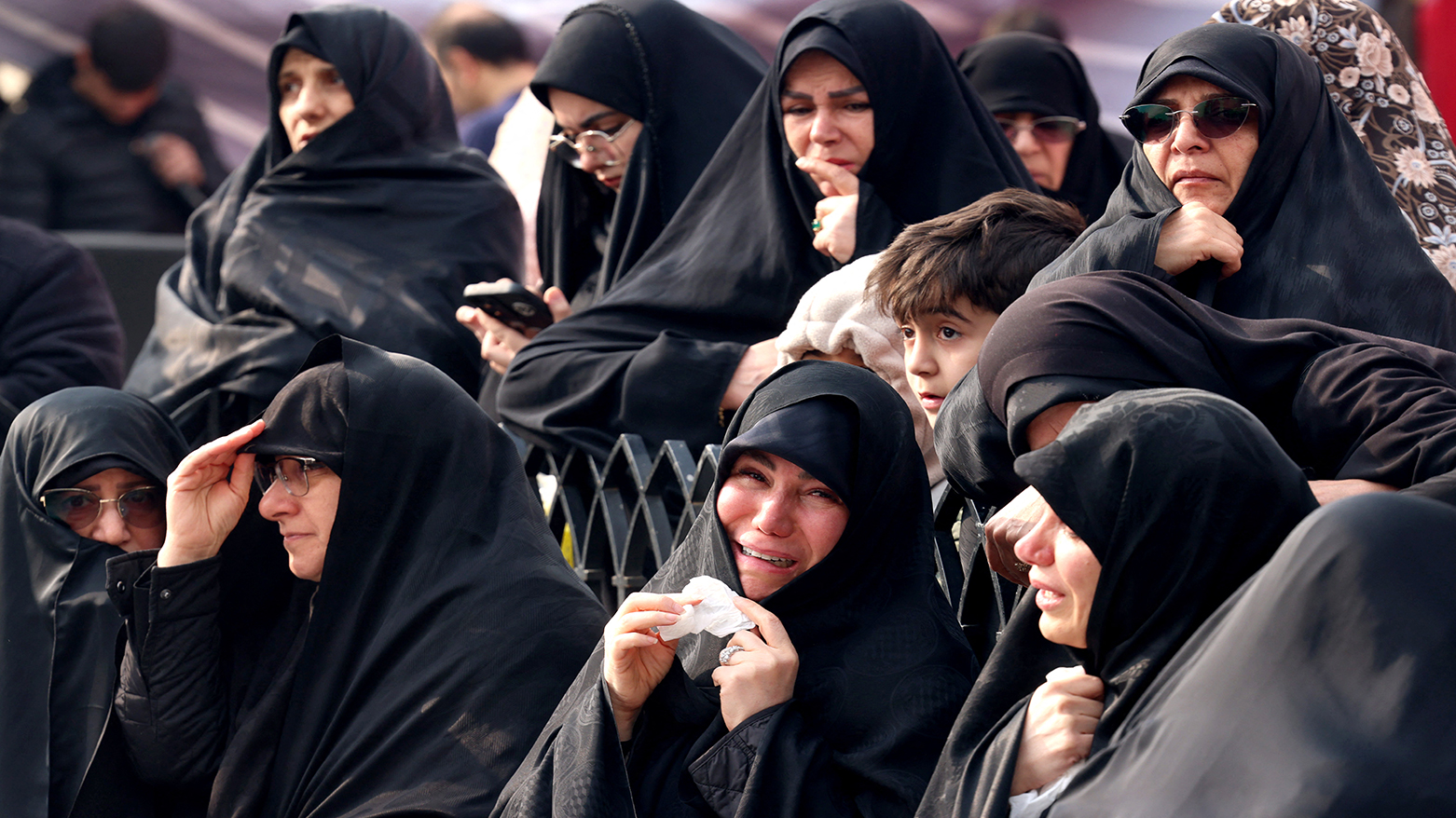
ERBIL (Kurdistan24) — Iran will hold a funeral on Wednesday for its security chief Ali Larijani, whose killing in an airstrike by Israel has intensified the ongoing Middle East war, prompting Tehran to fire a wave of missiles at Israeli territory and other regional targets.
Larijani’s death was confirmed by Iranian authorities after Israeli officials said he was killed in a series of airstrikes on Tehran. He was the most prominent Iranian figure to be killed since the war erupted following joint Israeli and U.S. strikes that killed Iran’s supreme leader, Ayatollah Ali Khamenei, on February 28.
In retaliation for Larijani’s assassination, Iran launched a barrage of missiles that struck areas near Tel Aviv, killing at least two civilians, according to Israeli reports.
Gulf nations also intercepted rockets and drones headed toward strategic targets, including U.S. military bases, as tensions continued to mount across the region.
The funerals for Larijani and another senior official killed in the same attack, Gholamreza Soleimani, are scheduled to begin Wednesday morning, Iranian state media reported Wednesday.
Iran’s army chief Amir Hatami warned that Tehran’s response to the assassination would be “decisive and regrettable,” underscoring the regime’s determination to retaliate.
The powerful Islamic Revolutionary Guards also declared that Larijani’s death would inspire further attacks and described him as a martyr whose sacrifice would fuel a “national awakening.”
Beyond the immediate military escalation, the conflict has had significant global repercussions. Iran’s near closure of the Strait of Hormuz has disrupted international oil shipments and contributed to elevated crude prices, which have hovered near $100 per barrel.
In response, U.S. forces dropped heavy ordnance on Iranian missile sites along the coast to protect commercial shipping lanes. U.S. President Donald Trump criticized allied reluctance to assist in securing the strait but insisted the United States did not need outside help.
Regionally, the war has drawn in neighboring states. Turkey condemned what it termed Israel’s “political assassinations” of Iranian leaders, while Israel vowed to target Iran’s newly appointed supreme leader, Mojtaba Khamenei.
Meanwhile, clashes between Israeli forces and Hezbollah in Lebanon have killed scores of civilians as both sides exchange strikes.
The funeral for Larijani — a key architect of Iran’s national security strategy — is being carefully observed as a pivotal moment in an increasingly volatile conflict that shows no sign of abating.