U.S. Strikes on Iranian Power Assets Likely to Target Natural Gas Plants: WSJ
U.S. threats against Iran could focus on natural-gas power plants, which generate 80% of the country’s electricity. The Wall Street Journal reports facilities like the 3,000 MW Damavand plant may be targeted amid the fourth week of U.S.-Israel-Iran conflict.
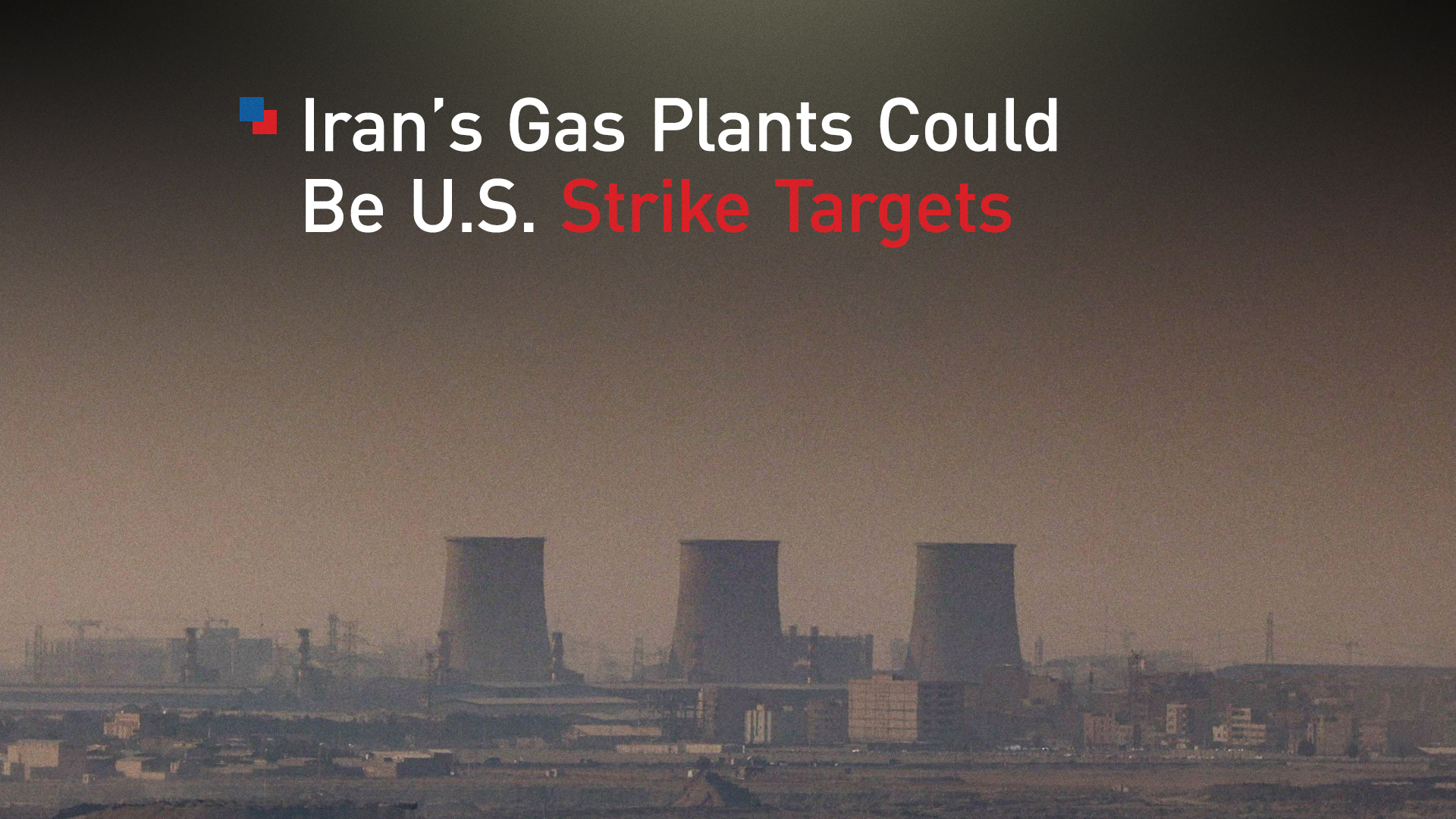
ERBIL (Kurdistan24) - If U.S. President Donald Trump follows through on his threat to attack Iranian power assets, the strikes would almost certainly target plants in the country that generate electricity from natural gas, The Wall Street Journal (WSJ) reported.
Around 80% of power generation in Iran came from natural gas as of 2023, according to the International Energy Agency, or around 303,000 gigawatt-hours. Total generation in the country jumped by more than 65% between 2010 and 2023, according to the IEA. As of 2023, it was the second largest electricity producer in the region, behind Saudi Arabia, the IEA said.
One potential U.S. target is the Damavand combined-cycle power plant, southeast of Tehran. With a capacity believed to be around 3,000 megawatts, it likely has accounted for as much as 4% of Iran’s total capacity in recent years.
The significance of natural gas in Iran’s electricity production has grown substantially. The jump of more than 65 percent in total generation between 2010 and 2023 underscores the expansion of the country’s power infrastructure, according to figures from the International Energy Agency cited in the Wall Street Journal report. This development positioned Iran as a major regional producer of electricity, second only to Saudi Arabia in 2023.
The Damavand plant stands out among potential targets because of its substantial capacity. Located southeast of Tehran, the combined-cycle facility is believed to contribute a notable share to the national grid. Its approximate 3,000-megawatt capacity represents as much as 4 percent of the country’s overall electricity capacity in recent years, the Wall Street Journal indicated.
Nuclear power accounts for a tiny fraction of Iran’s overall generation, though its Bushehr nuclear-power plant has already been ensnared in the war. In recent days, a drone struck a complex where the nuclear plant is located. Rafael Grossi, head of the International Atomic Energy Agency, said the nuclear power plant and its reactors were not damaged.
The Wall Street Journal report on potential targets comes amid escalating tensions as U.S. President Donald Trump rejected any agreement with Iran on Sunday and warned of strikes on power plants within 48 hours if the Strait of Hormuz is not reopened.
Trump’s remarks came in response to an analytical report by The New York Times, which examined the trajectory of the war with Iran and suggested that the U.S. president was considering reducing military operations despite not achieving all initial objectives.
The report, titled “Trump Is Finally Eyeing an Exit From Iran. But Will He Take It?” cited analysis indicating that Washington might seek to scale down operations even as key war goals remain unmet.
Reacting to the report early Sunday, Trump published a series of posts on Truth Social, sharply criticizing both the publication and its journalist.
“The United States has blown Iran off of the map, and yet their lightweight analyst, David Sanger, says that I haven’t met my own goals. Yes I have, and weeks ahead of schedule!” Trump wrote.
He added: “Their leadership is gone, their navy and air force are dead, they have absolutely no defense, and they want to make a deal. I don’t! We are weeks ahead of schedule… The Failing New York Times always gets it wrong!”
In a subsequent post, Trump issued a direct ultimatum to Tehran, warning of imminent military action if maritime routes remain restricted.
“If Iran doesn’t FULLY OPEN, WITHOUT THREAT, the Strait of Hormuz, within 48 HOURS… the United States of America will hit and obliterate their various POWER PLANTS, STARTING WITH THE BIGGEST ONE FIRST!”
As the conflict enters its fourth week, discussions within the U.S. administration have explored potential diplomatic pathways, even as military operations are expected to continue. According to available information, early-stage internal talks have focused on a possible negotiation framework addressing key issues such as reopening the Strait of Hormuz, limiting Iran’s nuclear and missile programs, and ending support for regional groups.
Indirect communication has been facilitated through intermediaries including Egypt, Qatar, and the United Kingdom, though no direct contact between Washington and Tehran has been reported in recent days.
Iran has indicated openness to negotiations but has demanded conditions including an immediate ceasefire, guarantees against future attacks, and financial compensation—demands U.S. officials have largely rejected.
At the same time, Washington has outlined sweeping conditions for any potential agreement, including a halt to missile development, zero uranium enrichment, dismantling nuclear facilities, and strict international monitoring.
Iran’s military issued a stark warning on Sunday, declaring it would target critical infrastructure across the region if the United States proceeds with threats to strike Iran’s energy facilities.
In a statement carried by Fars News Agency, the Khatam al-Anbiya Central Headquarters, the operational command of the Iranian army, said that any attack on Iran’s oil and energy infrastructure would trigger a broad response.
“If the enemy targets Iran’s oil and energy infrastructure, all energy, information technology, and water desalination infrastructure belonging to the United States and the system in the region will be targeted,” the statement said, without specifying which “system” it was referring to.
The significance of targeting power plants lies in the dominance of natural gas facilities in Iran’s electricity sector. The 80 percent share and substantial generation volume of 303,000 gigawatt-hours highlight the central role these plants play in the country’s energy supply, as detailed in the Wall Street Journal analysis drawing from International Energy Agency data.
The growth in Iran’s electricity production over the years, exceeding 65 percent from 2010 to 2023, reflects the expansion of infrastructure that could be affected by any such strikes. Iran’s position as the second largest producer in the region after Saudi Arabia further emphasizes the potential impact.
Facilities like the Damavand power plant could be among the first affected, given its large capacity of approximately 3,000 megawatts and its contribution of up to 4 percent to national capacity. The combined-cycle technology at such plants is key to the country’s power output.
The developments occur as the U.S.-Israel-Iran war continues into its fourth week, with both military threats and limited diplomatic efforts underway.