Iran Threatens Regional Infrastructure as Strait of Hormuz Tensions Escalate
Warnings raise fears of wider conflict and economic disruption amid US-Israel strikes
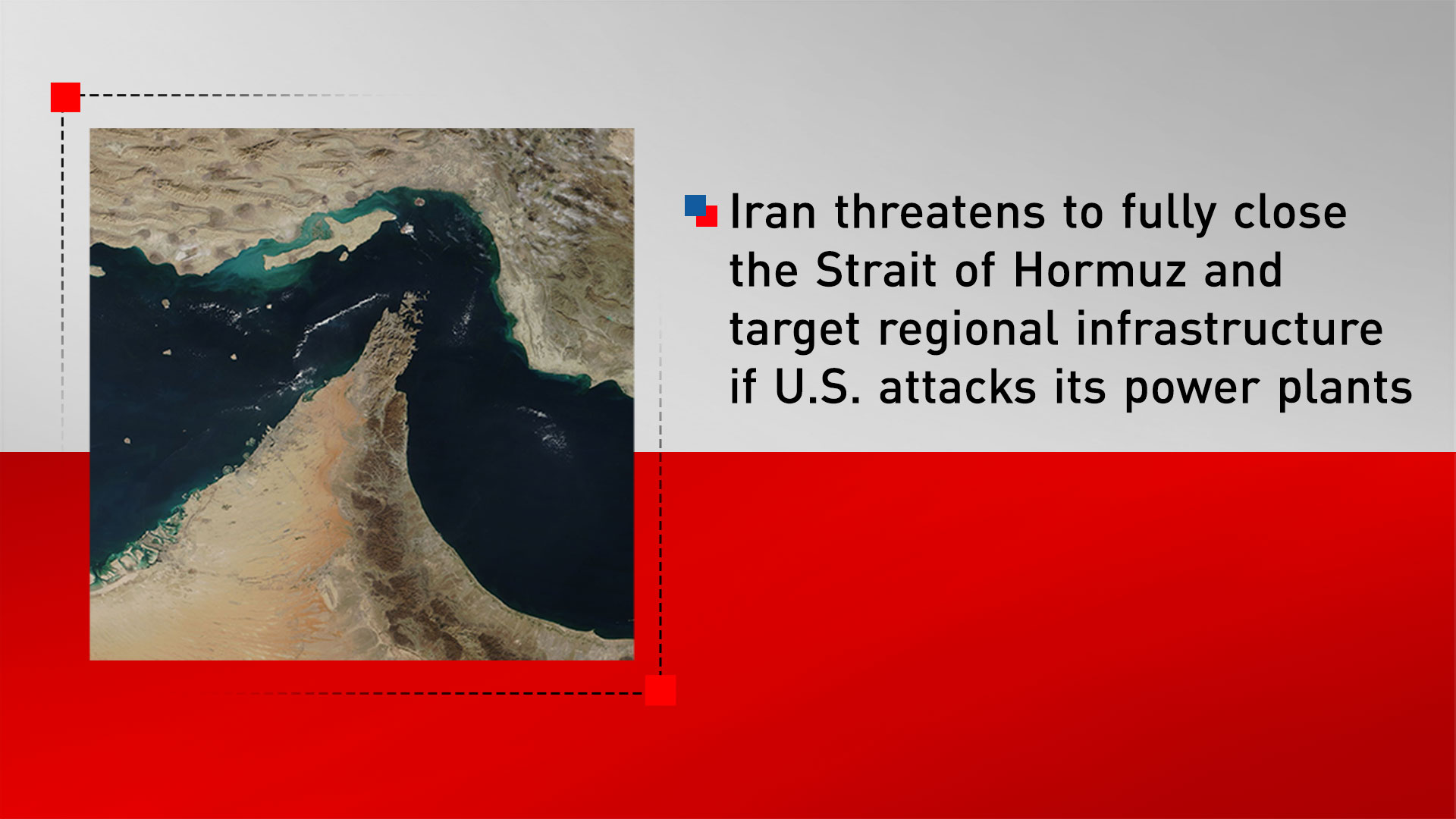
ERBIL (Kurdistan24) — Iran on Sunday vowed to “irreversibly” destroy key infrastructure across the Middle East if Donald Trump carried out his threat to target Iranian power plants, escalating fears of a broader regional confrontation. Tehran also warned it would fully close the Strait of Hormuz, effectively halting oil and gas traffic, should the ultimatum be executed.
The tit-for-tat threats mark the fourth week of the US-Israel military campaign against Iran, which has already caused widespread alarm over energy and water infrastructure, as well as Iran’s nuclear facilities.
Trump, under pressure from rising global fuel prices, posted on Truth Social that the U.S. would “obliterate” Iranian power plants if Tehran did not lift its de facto blockade of the strait within 48 hours.
“If the United States’ threats regarding Iran’s power plants are carried out... the Strait of Hormuz will be completely closed, and it will not be reopened until our destroyed power plants are rebuilt,” said the operational command Khatam Al-Anbiya in a statement carried by Iranian state television.
The military added that it would also target Israeli energy facilities, ICT infrastructure, and power plants in regional countries hosting U.S. bases or companies with American shareholders.
Mohammad Bagher Ghalibaf, Speaker of the Iranian Parliament, said that any attack on Iranian plants would make critical regional infrastructure “legitimate targets” for irreversible destruction. Iran’s Energy Minister added that US-Israeli strikes had already inflicted “heavy damage” on the country’s water and energy systems since February 28.
The threats followed a missile strike that evaded Israel’s air defenses and hit southern towns, including Dimona, near Israel’s widely believed nuclear facility. Dozens were injured. “We thought we were safe,” said Galit Amir, a 50-year-old care provider in Dimona.
Prime Minister Benjamin Netanyahu vowed to pursue senior commanders of Iran’s Revolutionary Guards “personally” after inspecting damage in Arad, another town struck. While Israel claims Dimona is a research facility, the strike demonstrated that Iran’s missile arsenal still poses a regional threat, including near potential nuclear sites.
The missile landed approximately five kilometers from Dimona’s nuclear facility. Iran described the strike as retaliation for an alleged earlier attack on its Natanz nuclear site, though the Israeli military said it was “not aware of a strike.”
World Health Organization chief Tedros Adhanom Ghebreyesus warned that the conflict “has reached a perilous stage” and urged restraint to avoid a potential nuclear incident.
Iran’s partial blockade of the Strait of Hormuz, through which roughly a fifth of global oil and liquefied natural gas passes, has sent crude prices soaring. Brent crude recently traded above $105 per barrel, fueling concerns about inflation and slower global growth.
While Tehran has allowed some vessels from allied countries to pass, it has threatened to block ships from states participating in what it terms “aggression.” Iranian lawmakers are reportedly considering imposing tolls on maritime traffic, with Ghalibaf stating that shipping “will not return to its pre-war status.”
Patrick Pouyanne, CEO of French oil giant TotalEnergies, warned that prolonged conflict could severely impact global economies. “If it’s more than six months, we will have some real impacts. All the economies of the world will be damaged,” he told CGTN.
The escalating standoff underscores the intertwined nature of military action and global economic stability, with energy markets and regional security hanging in the balance as Iran signals its willingness to retaliate against perceived threats.