Iranian FM: US and Israel Failed to Divide Us, Conflict Marks Turning Point
Iran’s foreign minister says US and Israel failed to divide the country, highlighting internal unity, control over Hormuz, and Iran’s stance on ending the war.
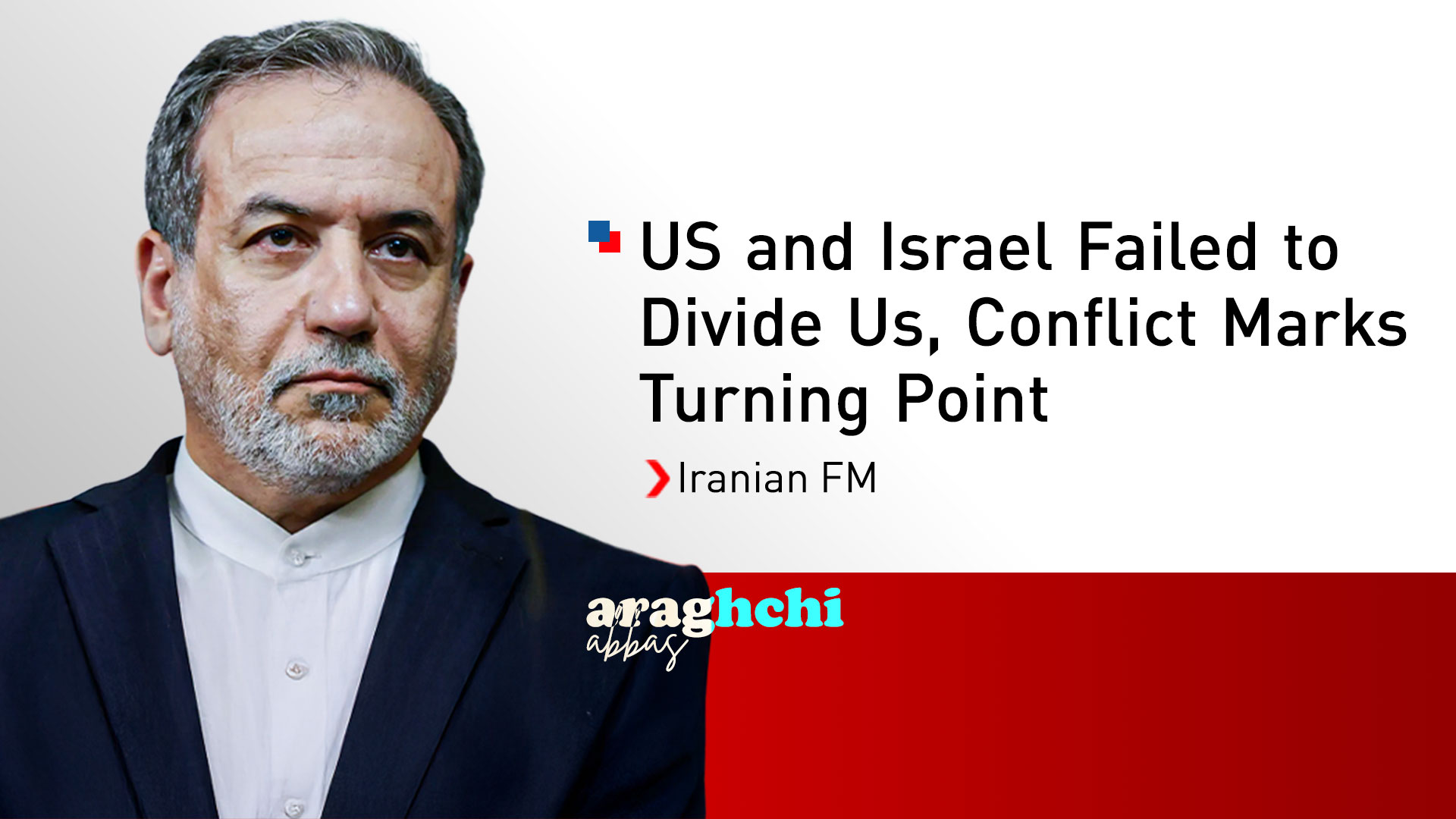
ERBIL (Kurdistan24) - Iran’s foreign minister declared that efforts to weaken and divide the country have failed, presenting the ongoing conflict as a defining moment while outlining Tehran’s position on regional control and diplomacy.
On Wednesday, Iran’s Foreign Minister Abbas Araghchi said in a televised interview that his country had succeeded in preventing the United States and Israel from achieving their objectives.
He described the conflict as a “golden point” in Iran’s history, stating that the enemy had failed in attempts to divide the country, change the regime, and secure a rapid victory.
Araghchi emphasized that Iran’s internal unity remains strong, adding that all efforts to undermine this cohesion and achieve military success have been neutralized.
He also revealed that Tehran is pursuing a distinct policy in the Strait of Hormuz, stating: “We have only allowed countries we consider friends to pass through the strait,” identifying them as China, Russia, India, Iraq, and Pakistan.
The minister criticized countries in the region, saying there is evidence that some have provided support to US forces.
He added: “Regional countries must distance themselves from the United States and its aggression against Iran, as we had warned them, but those warnings were not taken seriously.” He also expressed concern that those countries had not even verbally condemned the attacks.
Addressing reports of negotiations, Araghchi said: “What the United States is now presenting as negotiations is an admission of defeat; those who once spoke of unconditional surrender are now using all their diplomatic capacity to pursue dialogue.”
He further noted that the US withdrawal from a 48-hour deadline came as a result of Iran’s military stance and diplomatic warnings, which stressed that if war began, its end would be unpredictable.
Araghchi reiterated that Iran seeks an end to the war in a way that prevents its recurrence, rather than a temporary ceasefire.
He stated: “We have proven to the world that no one can confront the Islamic Republic, and playing with Iran’s interests will have very serious consequences.”
According to the timeline he provided, on Feb. 28, 2026, the United States and Israel launched airstrikes on Iran, resulting in the killing of several of the country’s leaders.
He added that Iran responded quickly by launching missiles toward Israel and targeting several US military bases across countries in the region.
Araghchi’s remarks reflect Iran’s firm stance on both the battlefield and diplomacy, framing the conflict as a turning point while warning of continued consequences for any escalation.