Israel, Iran Exchange Airstrikes and Missiles as War Enters Day 27
Israel’s military said it carried out wide-scale strikes across Iran and activated air defenses to intercept missiles launched from Iran, according to statements reported by AFP.
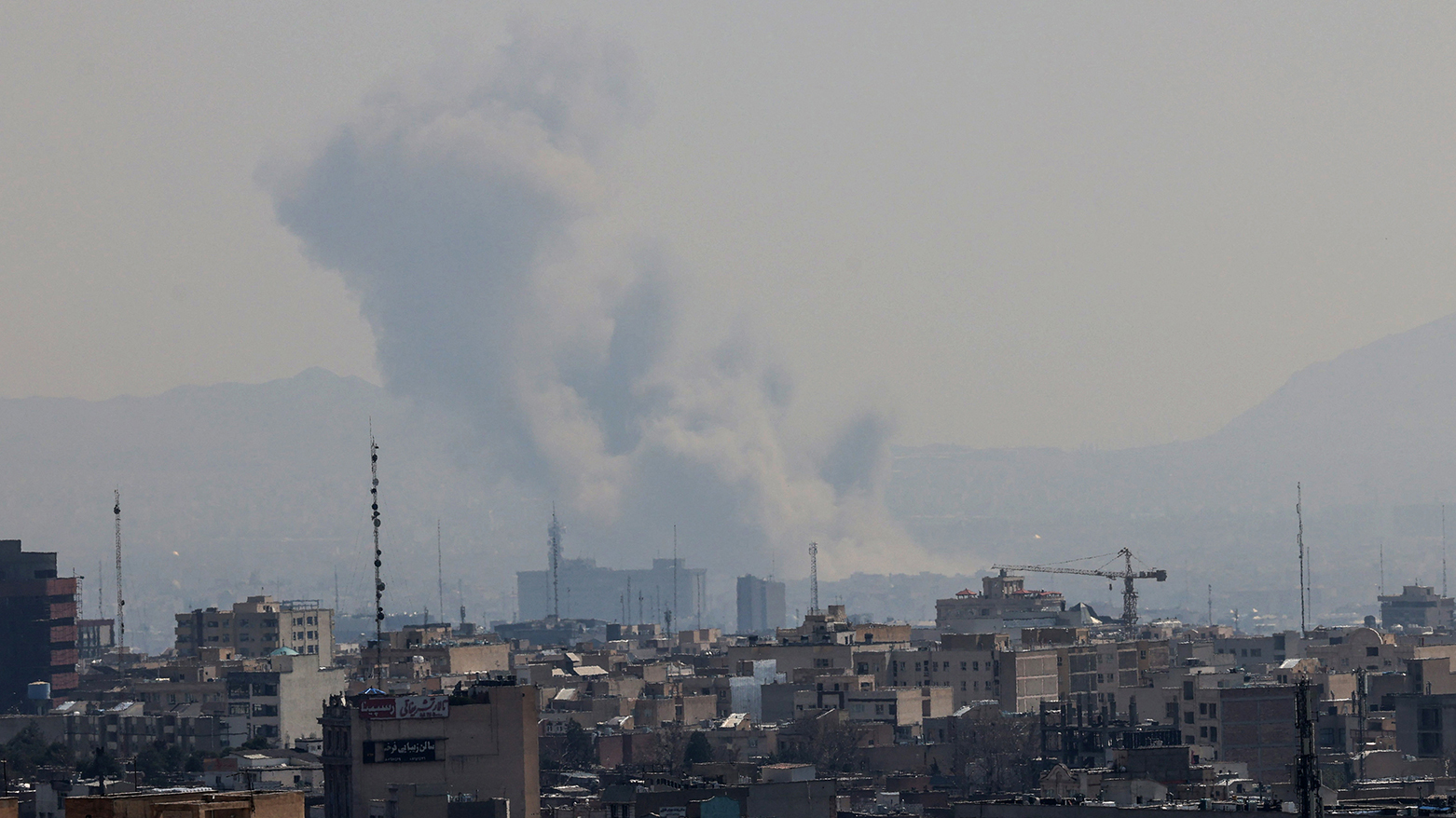
ERBIL (Kurdistan24) - Israel’s military said Thursday it carried out a wide-scale wave of strikes across Iran, including in the central city of Isfahan, while separately reporting that its air defense systems were responding to missiles launched from Iran, according to statements cited by AFP.
In a brief statement, the Israeli military said its forces “completed a wide-scale wave of strikes targeting infrastructure of the Iranian terror regime in several areas across Iran,” AFP reported. The strikes included locations in Isfahan, a key city in central Iran, according to the same report.
In a separate development, the Israeli military said early Thursday that air defenses were actively intercepting incoming projectiles after missiles were launched from Iran, AFP said. Sirens were activated across central Israel, parts of Jerusalem, and the occupied West Bank as defensive systems responded to the threat, the agency reported, citing a military statement.
“Defensive systems are operating to intercept the threat,” the military said, according to AFP, indicating that interception efforts were ongoing more than 14 hours after a previously reported missile attack.
The dual announcements reflect continued exchanges between Israel and Iran as the conflict expands across multiple domains, with both offensive operations and defensive responses occurring within a short timeframe.
Additional details on the scope and impact of the Israeli strikes were not immediately disclosed in the military’s initial statement, AFP reported. The Israeli military did not provide specific information on targets beyond describing them as infrastructure linked to Iran.
Developments reported by AFP indicate that the strikes and missile activity form part of a broader escalation in the ongoing war, with multiple countries and actors involved.
According to AFP’s overview of the latest developments, oil prices edged higher amid continued uncertainty tied to the conflict, with Brent crude rising to $103.25 per barrel and West Texas Intermediate to $91.41 per barrel in early trading. Markets have shown mixed reactions as investors monitor the evolving situation, the agency noted.
Diplomatic signals have also emerged alongside the military escalation. China’s Foreign Minister Wang Yi said there was a “glimmer of hope” for de-escalation, urging dialogue in separate calls with counterparts from Türkiye and Egypt, AFP reported. The comments suggest that some international actors see potential openings for negotiations despite ongoing hostilities.
At the same time, statements from U.S. and Iranian officials reflect differing positions on diplomatic efforts. U.S. President Donald Trump said Iran was engaged in talks and “want to make a deal so badly,” according to remarks cited by AFP. However, Iran’s Foreign Minister Abbas Araghchi rejected that characterization, stating on state television that “we do not intend to negotiate,” and adding that “so far, no negotiations have taken place,” AFP reported.
Military assessments from the United States indicate a significant impact on Iran’s capabilities. Admiral Brad Cooper, head of U.S. Central Command, said strikes had hit two-thirds of Iran’s production facilities for missiles and drones, with launch rates reduced by 90 percent, AFP reported. He also said the operations had impaired Iran’s ability to rebuild those capabilities.
Regional tensions have extended beyond Israel and Iran. Several Gulf countries, including the United Arab Emirates, Saudi Arabia, Qatar, Kuwait, Bahrain, and Jordan, issued a joint statement calling on Iraq to prevent its territory from being used for attacks by armed groups aligned with Iran, AFP reported.
Meanwhile, developments in Lebanon underscore the widening scope of the conflict. Israeli Prime Minister Benjamin Netanyahu said Israel was expanding a “buffer zone” in southern Lebanon, while Hezbollah continued to carry out attacks, AFP reported.
Security concerns have also prompted actions in other countries. Kuwait said it had arrested six individuals allegedly linked to Hezbollah who were planning attacks, according to AFP.
Iranian officials have warned of additional risks, including the possibility of attempts to occupy an Iranian island with support from a regional state, AFP reported, citing a statement by parliament speaker Mohammad Bagher Ghalibaf.
The latest Israeli strikes and missile interceptions come amid these broader military, diplomatic, and economic developments, reflecting a complex and evolving conflict with regional and international implications.