KRG Green Belt Initiative Expands as Hundreds of Thousands of Trees Take Root Around Erbil
Director General of Erbil Agriculture, Hemin Said Murad, say the first phase of the Kurdistan Region’s flagship environmental initiative is progressing rapidly
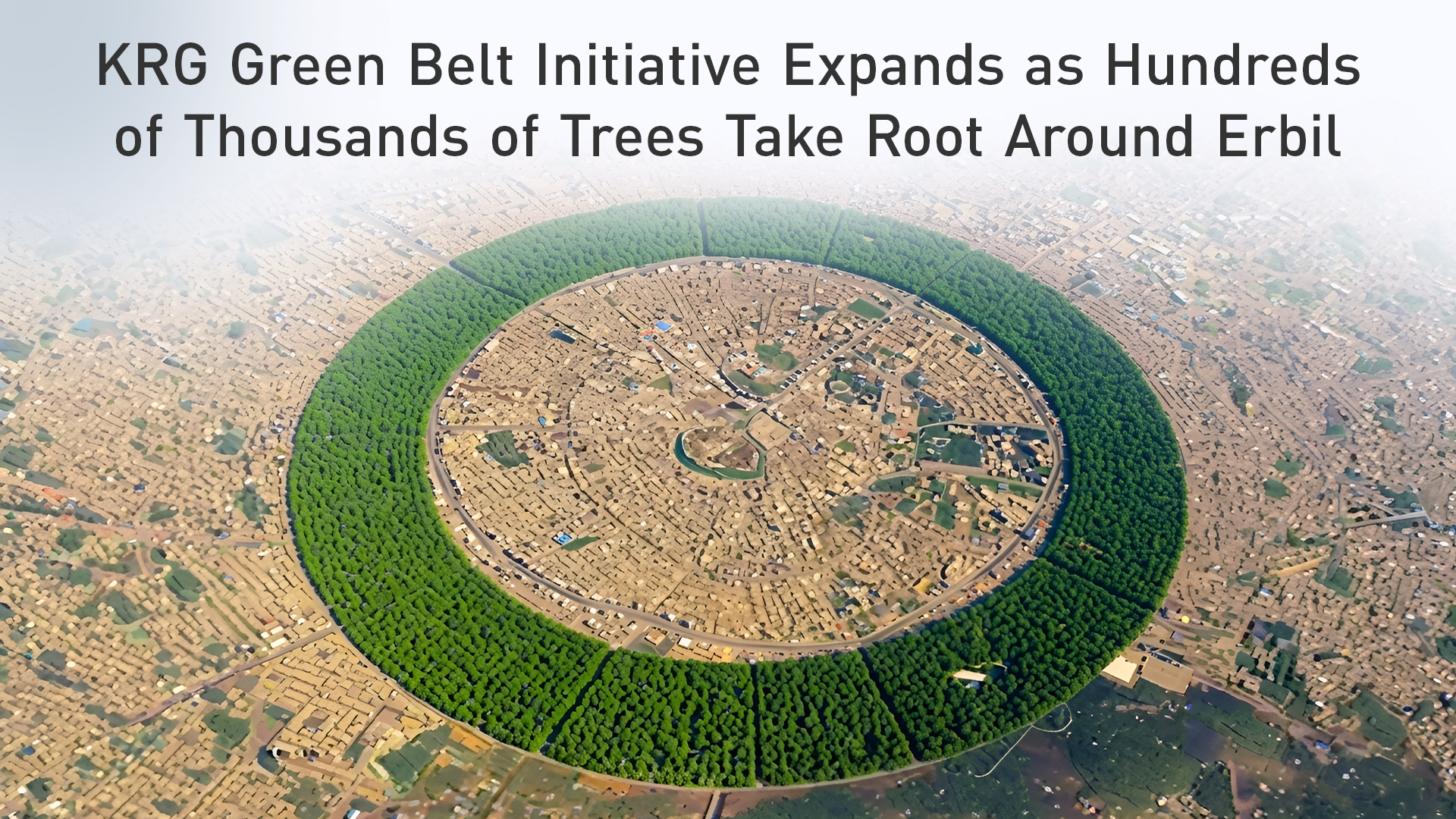
ERBIL (Kurdistan24) - A sweeping environmental transformation is gradually taking shape around Erbil as the Kurdistan Region’s ambitious Green Belt project moves deeper into implementation, with officials confirming that nearly 700,000 trees have already been planted in the capital’s outskirts.
Hemin Said Murad, Director General of Erbil Agriculture, told Kurdistan24 on Sunday, May 10, 2026, that the figure represents the first phase of the project, with olive trees accounting for the majority of the saplings planted so far.
The initiative forms part of a broader plan to plant seven million trees across Erbil province under the Kurdistan Regional Government’s strategic Green Belt program.
Murad said the project is expected to generate substantial agricultural benefits, particularly through olive production for food consumption and olive oil manufacturing. He added that the environmental impact would also be significant, describing the expanding tree belt as a natural filter capable of improving Erbil’s air quality.
According to the agriculture official, the implementation process is being carried out in coordination with environmental authorities, while planting locations are selected carefully based on the ecological needs of each area.
The Green Belt project is considered one of the flagship strategic initiatives of the Kurdistan Regional Government’s ninth cabinet. Designed as a circular environmental corridor surrounding Erbil, the project spans 83 kilometers in length with a width of two kilometers and is divided into eight separate zones.
The first phase alone covers approximately 13,000 dunams.
Background information provided to Kurdistan24 indicated that the initial implementation phase is nearing completion, with 700,000 saplings planted across 4,200 dunams of land. The long-term plan aims to establish a vast forested perimeter around the capital in an effort to combat desertification, reduce dust storms, and strengthen climate resilience.
The project prioritizes drought-resistant and productive tree species, including olive, pistachio, and orange trees, combining environmental protection with economic sustainability.
Environmental assessments cited in the background material project that the completed Green Belt could eliminate up to 210,000 tons of harmful greenhouse gases annually while significantly expanding green space across the capital.
Officials have also linked the project to wider urban development and infrastructure reforms underway in the Kurdistan Region.
The Green Belt initiative operates alongside the KRG’s Emergency Water Project, which was completed in under 550 days and now supplies 240,000 cubic meters of water daily to 20 neighborhoods in Erbil.
According to the background information, the environmental corridor is also expected to regulate urban expansion and stimulate economic growth in districts surrounding the capital, where property values have reportedly surged following infrastructure upgrades and land formalization measures.
The project was originally proposed in 2010 but later revived under the direct guidance of Prime Minister Masrour Barzani, who planted the first tree of the initiative on Oct. 30, 2025.
During the inauguration ceremony, Barzani stressed that the project would create employment opportunities for young people and provide specialized training to ensure effective participation in the environmental initiative.
He also noted that the trees planted under the program would become economically productive over time, allowing private sector companies participating in the project to commercially benefit from agricultural output generated by the Green Belt.