Iran’s President Warns Its Neighbors Against Letting Enemies 'Run the War' From Their Lands
"To the countries of the region: If you want development and security, don't let our enemies run the war from your lands," Pezeshkian stated.
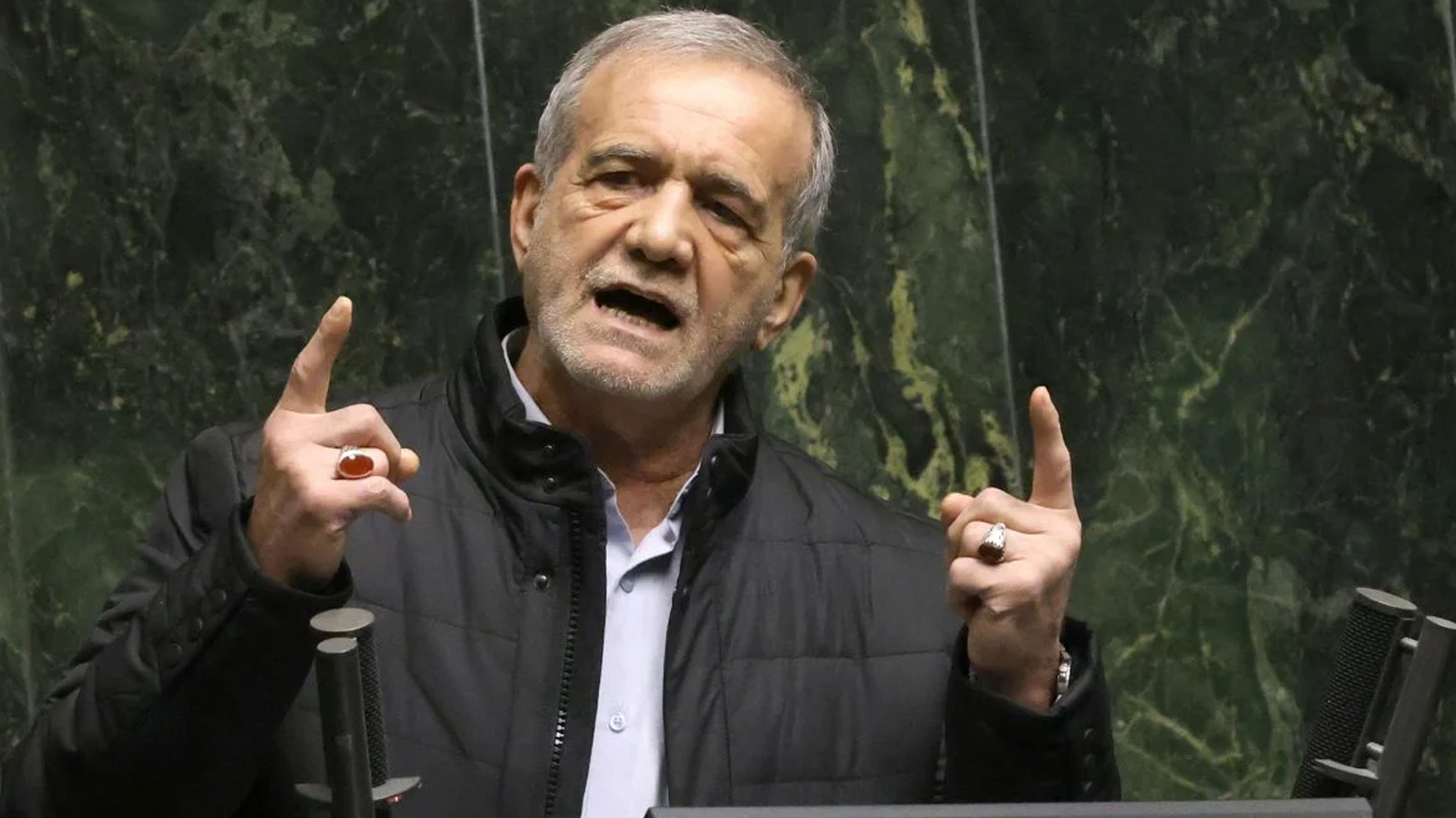
ERBIL (Kurdistan24) - Iranian President Masoud Pezeshkian said on Saturday that Iran does not carry out preemptive attacks but would respond strongly if its infrastructure or economic centers are targeted, while also warning regional countries against allowing what he described as adversaries to conduct operations from their territory.
“We have said many times that Iran doesn't carry out preemptive attacks, but we will retaliate strongly if our infrastructure or economic centers are targeted,” Pezeshkian wrote in a post on X. Addressing neighboring states, he added: “If you want development and security, don't let our enemies run the war from your lands.”
We have said many times that Iran doesn't carry out preemptive attacks, but we will retaliate strongly if our infrastructure or economic centers are targeted.
— Masoud Pezeshkian (@drpezeshkian) March 28, 2026
To the countries of the region:
If you want development and security, don't let our enemies run the war from your lands.
The remarks came as Iran’s military said it had targeted a U.S. logistics vessel near the Omani port of Salalah, according to a statement reported by AFP and carried by Iranian state television. Ebrahim Zolfaghari, a spokesman for Iran’s central military command, said the vessel was struck at a “considerable distance” from the port.
“A logistics vessel supporting the aggressive U.S. army was targeted by the armed forces of the Islamic Republic of Iran at a considerable distance from the port of Salalah in Oman,” Zolfaghari said in the statement.
No immediate details were provided regarding damage to the vessel or whether there were casualties. U.S. officials have not publicly responded to the claim.
The reported targeting of the vessel follows a series of developments across the region linked to the ongoing conflict, according to AFP’s latest summary of events. The report noted that tensions have extended across multiple countries, involving strikes, drone attacks, and diplomatic initiatives.
In Kuwait, the radar system at the country’s international airport was heavily damaged in a drone attack, though no casualties were reported, a civil aviation spokesperson told the country’s official news agency, according to AFP. Authorities did not specify the origin of the drone.
In the United Arab Emirates, officials said missile and drone attacks from Iran caused fires in an industrial zone, leaving five people injured. The UAE defense ministry said its air defenses were responding to incoming threats, AFP reported.
Separately, Yemen’s Iran-backed Houthi group claimed its first strike on Israel, according to AFP, after previously warning it would join the conflict under certain conditions tied to developments involving Iran.
In Lebanon, Israeli forces carried out airstrikes on several towns in the south, Lebanese state media reported, as both Israel and Hezbollah said they continued to exchange attacks.
AFP also reported that an explosion was heard near the international airport in Erbil, in Iraq’s Kurdistan Region. An AFP journalist reported hearing the blast, while a witness said smoke was visible. The airport hosts military advisors linked to a U.S.-led coalition, and such incidents have previously involved drone attacks that were intercepted by air defenses.
Elsewhere, a strike occurred near Iran’s Bushehr nuclear power plant late Friday, though the International Atomic Energy Agency said there was no radiation leak or damage to the reactor. The incident was the third reported strike in Iran within a 10-day period, according to the agency, AFP reported.
Israel’s military said it had launched strikes on what it described as Iranian “regime targets,” with an AFP journalist in Tehran reporting multiple explosions and visible smoke in the capital.
In Saudi Arabia, an Iranian attack on Prince Sultan Air Base wounded at least 12 U.S. soldiers, including two seriously, according to reports by The New York Times and The Wall Street Journal cited by AFP. The attack involved at least one missile and several drones, according to the reports.
AFP also reported diplomatic developments, including plans for talks in Islamabad involving foreign ministers from Pakistan, Saudi Arabia, Türkiye and Egypt. Pakistan’s government said the meeting would address the ongoing conflict.
Separately, Thailand said it had reached an agreement with Iran to allow Thai oil tankers to transit safely through the Strait of Hormuz. Thai Prime Minister Anutin Charnvirakul said the arrangement was intended to ease concerns over fuel imports.
Ukraine and the United Arab Emirates have also agreed to cooperate on defense matters, Ukrainian President Volodymyr Zelensky said, following a meeting with UAE President Mohamed bin Zayed Al Nahyan.
The developments come amid a broader escalation in the region, with multiple incidents reported across different countries, according to AFP’s summary.