IRGC Spokesperson Warns U.S. Troops Could Become ‘Food for Sharks’ in Gulf
Iran’s Revolutionary Guard spokesperson warned Sunday that U.S. troops are being turned into “food for the sharks of the Gulf,” blaming President Trump and PM Netanyahu and urging U.S. military caution.
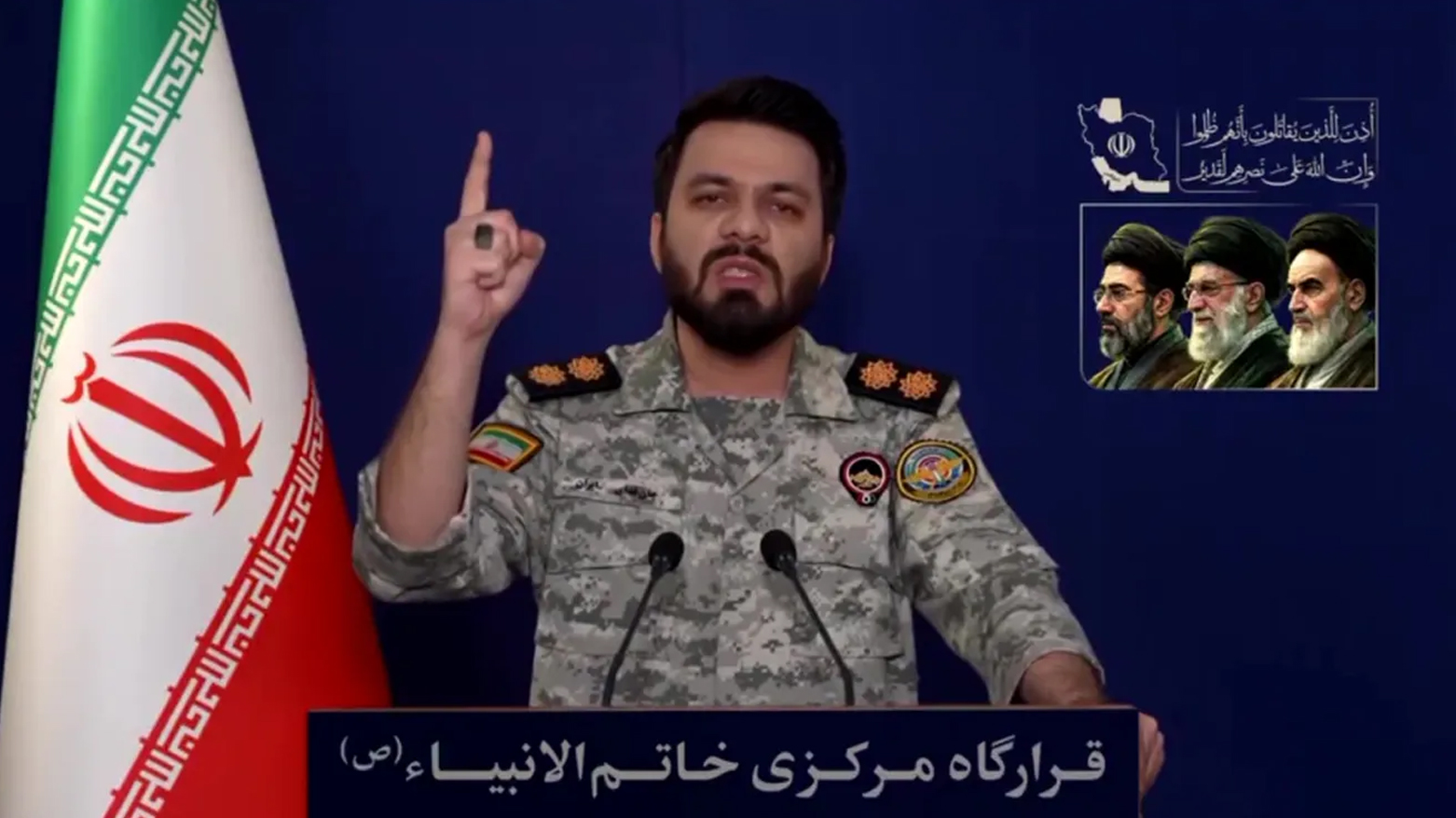
ERBIL (Kurdistan24) - The spokesperson for the Khatam al-Anbiya Headquarters, Ibrahim Zolfaghari, said Sunday that U.S. President Donald Trump and Israeli Prime Minister Benjamin Netanyahu are turning American soldiers into “food for the sharks of the Gulf.”
Zolfaghari, speaking on behalf of the Revolutionary Guard-affiliated Khatam al-Anbiya Headquarters, made the remarks amid rising tensions in the Strait of Hormuz and regional waters.
In a statement, Zolfaghari described Trump as “an unbalanced individual and a liar who has caused significant harm to the people of America, Europe, and the nations of the world, particularly the countries of West Asia.” He added, “Trump is making American soldiers food for the sharks of the Gulf waters,” and said that the U.S. president has become a “puppet in Netanyahu’s hands” due to pressure from the Mossad.
Zolfaghari also directed comments at U.S. military leadership, urging them to study Iranian history to avoid leading their forces “toward death and captivity just to please their president.” He emphasized, “The Iranian armed forces are waiting for the opportunity to tear your army to pieces.”
The comments came as tensions in the region have escalated following a series of military developments.
Iran’s navy chief, Shahram Irani, on Sunday warned that the USS Abraham Lincoln aircraft carrier would be targeted if it entered Iranian strike range, in retaliation for the destruction of the Iranian frigate Dena on March 4.
“As soon as the USS Abraham Lincoln carrier strike group comes within firing range, we will avenge the blood of the martyrs of the Dena warship by launching various types of sea-to-sea missiles,” Irani said in a statement broadcast on state television.
The Iranian threat represents a sharp escalation in rhetoric between Tehran and Washington, amid an ongoing conflict involving U.S. and Israeli forces on one side and Iran on the other. Officials noted that Iran has repeatedly emphasized its naval capabilities in the Gulf and surrounding waters, particularly its anti-ship missile arsenal capable of targeting large naval vessels.
According to a report by The Washington Post, the U.S. Department of Defense is preparing for potential multi-week ground operations in Iran, focusing on targeted missions rather than a full-scale invasion. Potential operations could include raids on Kharg Island and coastal areas near the Strait of Hormuz.
The report noted that Trump had not yet authorized any deployment of U.S. forces. Pentagon officials cited in the report described the planned operations as limited, involving special forces and conventional infantry units aimed at strategic targets.
Iranian officials have repeatedly accused Washington of duplicity. Parliament speaker Mohammad Bagher Ghalibaf stated that the United States is publicly promoting diplomacy while secretly preparing military escalation.
“The enemy publicly sends messages of negotiation and dialogue while secretly planning a ground attack,” Ghalibaf said in remarks carried by the Islamic Republic News Agency.
The remarks by Zolfaghari and other Iranian officials underscore the heightened risks of direct confrontation in regional waters and the Strait of Hormuz, a key international shipping lane. Analysts have noted that rhetoric from Tehran appears intended to signal readiness and deter potential U.S. military action.
U.S. military movements in the region, including the presence of the USS Abraham Lincoln, have prompted repeated Iranian warnings. The Pentagon’s planning for potential limited ground operations reflects a broader assessment of regional security challenges and potential escalation, according to U.S. officials cited in reporting.
Zolfaghari’s comments mark a continuation of public Iranian statements condemning U.S. and Israeli policies, while framing American military personnel as vulnerable in the Gulf. The Khatam al-Anbiya spokesperson linked these warnings to allegations of U.S. political weakness, asserting that Trump’s leadership is compromised by prior scandals and influence from external actors.