UN Nuclear Watchdog Says Iranian Heavy Water Plant Damaged After Israeli Strike
The IAEA confirmed the Khondab heavy water plant is non-operational following an Israeli strike, amid ongoing U.S.-Israel military operations and diplomatic negotiations with Iran.
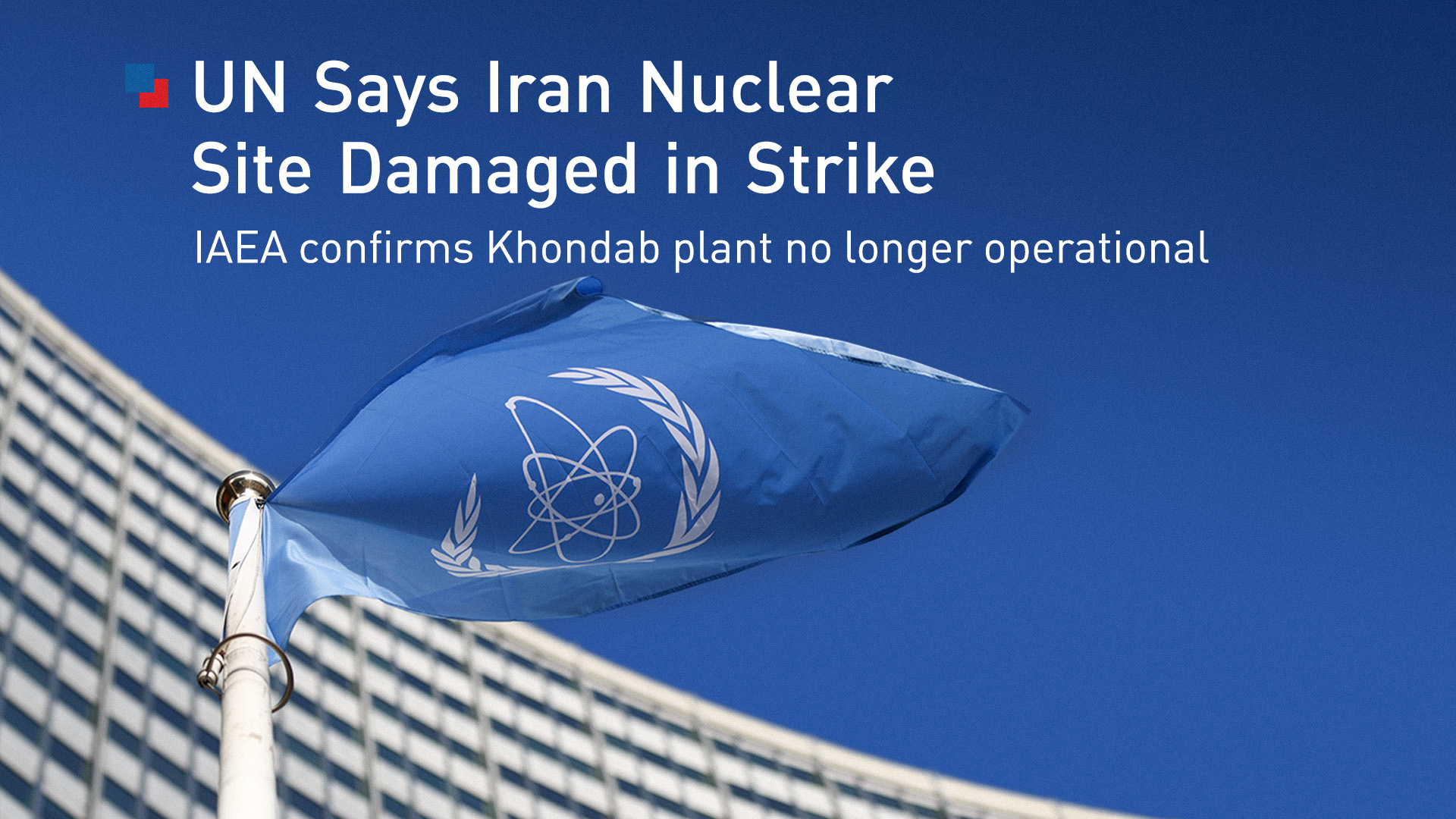
ERBIL (Kurdistan24) - The International Atomic Energy Agency announced on Sunday that Iran's heavy water production plant in Khondab is no longer operational following a recent Israeli military strike, according to a dispatch from Agence France-Presse.
The United Nations nuclear watchdog confirmed the facility's functional incapacitation through the independent analysis of satellite imagery.
According to the official assessment cited by Agence France-Presse, the Khondab facility, which the Iranian government reported was attacked on March 27, has "sustained severe damaged [sic] and is no longer operational." The French news agency further noted the international regulatory body's clarification that the targeted "installation contains no declared nuclear material."
The confirmation from the UN agency follows an earlier announcement by the Israeli military.
On Friday, Israeli defense officials stated that their forces had carried out a targeted strike against the heavy water plant situated in Arak, located in central Iran. As reported by Agence France-Presse, the Israeli military explicitly described the facility as a "key plutonium production site for nuclear weapons."
The facility at Khondab, formerly recognized as the Arak site, was originally constructed to support an adjacent reactor designed for plutonium production, an element that can be utilized in the development of a nuclear weapon.
According to comprehensive reporting by The Wall Street Journal, the reactor itself remains inactive and was never fully completed. However, the American publication noted that the Iranian government did not convert the facility into an alternative operational form, which was a strict requirement stipulated under the terms of the 2015 nuclear agreement.
Israel had previously targeted the Khondab heavy-water plant in June of the preceding year.
The Wall Street Journal cited the Israeli military stating that the most recent strike on Friday was executed specifically in response to ongoing Iranian efforts to reconstruct the damaged facility.
Meanwhile, Iranian media outlets reported on the incident, confirming that the Friday strike resulted in no casualties, with officials publicly verifying that the attack posed no risk of radiation exposure to the surrounding areas, the newspaper added.
In addition to the Khondab facility, the Israeli military confirmed it had also struck a secondary nuclear-related site.
As detailed by The Wall Street Journal, Israeli forces hit the Shahid Rezayee Nejad yellowcake production facility, located at Ardakan in the Yazd province. This specific facility, which commenced operations in 2013, was identified by the Israeli military as the only plant of its kind in Iran dedicated to the extraction of uranium.
Regarding the Ardakan operation, The Wall Street Journal reported that the Israeli military struck "the main infrastructure used for the unique production processes."
The facility was responsible for converting yellowcake from its powdered state into an oxide form, representing the initial step required in the uranium enrichment cycle.
According to documentation reviewed exclusively by The Wall Street Journal, the Iranian government formally notified the International Atomic Energy Agency of the Friday attack on the yellowcake facility.
These targeted military actions against Iranian nuclear infrastructure coincide with broader regional hostilities and significant geopolitical developments.
During a recent press gaggle aboard Air Force One, U.S. President Donald Trump addressed the escalating situation, asserting that recent U.S. military operations had effectively resulted in what he characterized as “regime change” within Iran.
The U.S. President told reporters that American forces had decimated multiple tiers of Iranian leadership, necessitating engagement with a new group of interlocutors whom he described as "much more reasonable."
President Trump confirmed that the United States is currently participating in both direct and indirect negotiations with Tehran. He stated that the Iranian representatives had already conceded "most of the points" within a proposed 15-point U.S. framework.
Furthermore, President Trump detailed extensive American military operations that he claimed had severely degraded Iran's conventional military capabilities, stating that U.S. forces had "knocked out their entire Navy" and "their entire Air Force."
Despite these military actions, the U.S. President indicated that a diplomatic resolution might be imminent, noting that the negotiations were progressing "very nicely," though he cautioned that an agreement was not guaranteed.
He reiterated his position that Iran must not acquire nuclear weapons, stating that U.S. actions had prevented such an outcome.
Addressing questions about the decimated Iranian leadership, the U.S. President said that one figure believed to be associated with the country’s high command may still be alive but was "seriously wounded."
The ongoing diplomatic and military maneuvers also involve strategic energy transit routes. The U.S. President referenced recent Iranian oil shipments through the Strait of Hormuz, describing the transit of 20 oil tankers as a gesture of respect linked to the ongoing negotiations.
When asked about reports that Iran might assert control over the passage, he emphasized U.S. capabilities in the region, stating American forces could secure the waterway rapidly.
Addressing broader international dynamics, President Trump emphasized that regional countries including Saudi Arabia, Qatar, the United Arab Emirates, Kuwait, and Bahrain were actively responding to Iranian actions and remained fully aligned with the United States.
In separate remarks during the briefing, the president addressed developments involving Cuba, describing it as a failing country that would likely require U.S. involvement soon.
He also stated he had no objection to reports indicating that a Russian oil tanker might be permitted to deliver fuel to Cuba, dismissing concerns over the geopolitical impact of such humanitarian shipments and arguing that the loss of a single shipment would not significantly affect Moscow.