Iranian Strike on Kuwait Power Station Kills Indian Worker Amid Expanding Regional Hostilities
An Iranian strike on a Kuwaiti power and desalination plant killed one Indian worker, marking a further regionalization of the ongoing Middle East conflict.
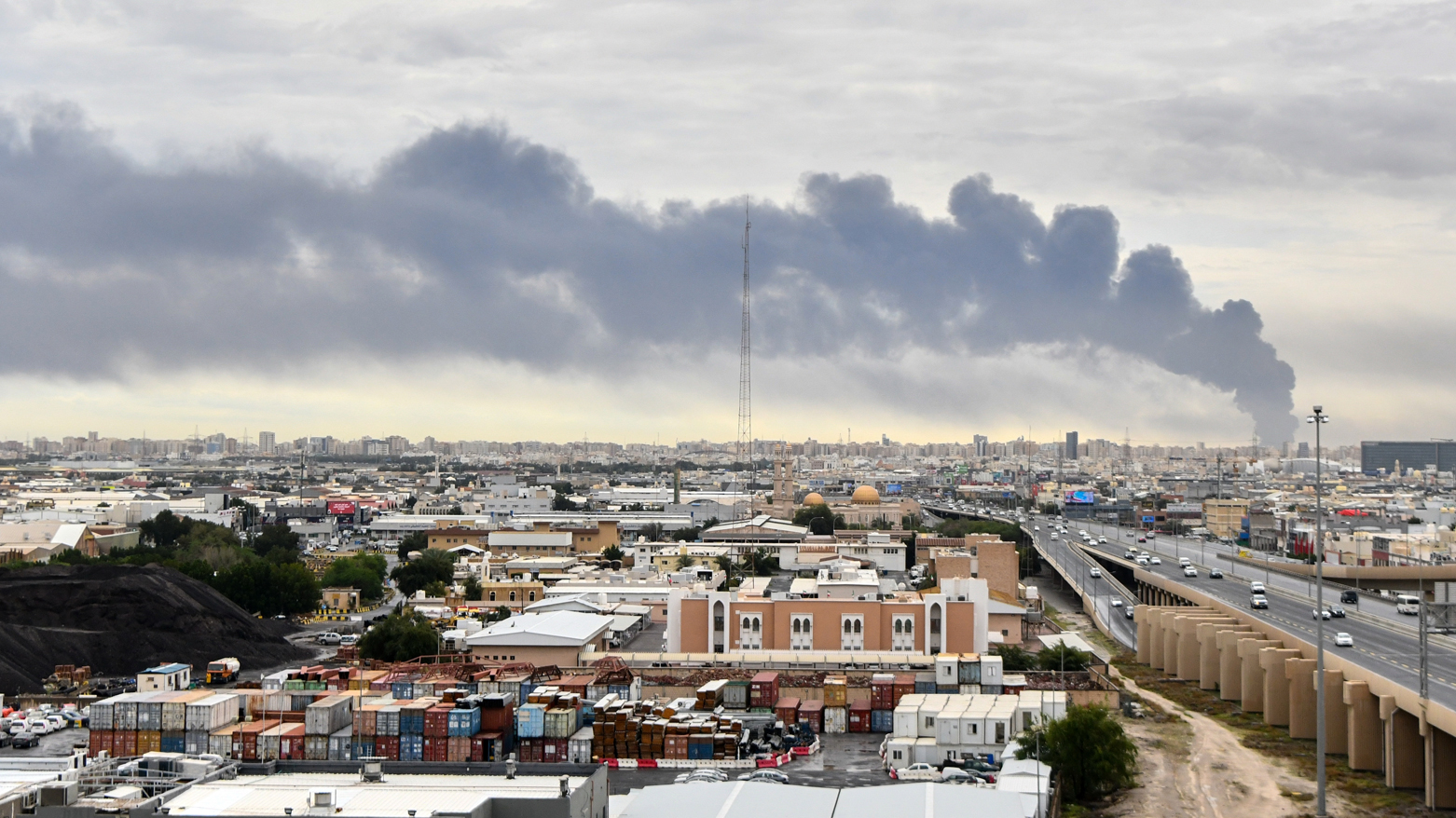
ERBIL (Kurdistan24) - An Iranian strike targeting a power station in Kuwait resulted in the death of one Indian worker and caused structural damage to the facility, according to an early Monday statement from the Gulf state's electricity ministry reported by Agence France-Presse.
The localized attack occurred at a combined power and water desalination plant within Kuwaiti territory. Fatima Abbas Jawhar Hayat, acting as the official spokesperson for the Kuwaiti Ministry of Electricity, confirmed the details of the incident. "A service building at a power and water desalination plant was attacked as part of the Iranian aggression against the State of Kuwait, resulting in the death of an Indian worker and significant material damage to the building," Hayat stated, as cited by Agence France-Presse.
The strike on the civilian infrastructure facility in Kuwait is part of a broader escalation of violence across the Middle East, characterized by widespread military engagements involving multiple state and non-state actors.
According to an operational summary released by Agence France-Presse later on Monday morning, the Israeli military announced it was conducting strikes against Iranian military infrastructure located across Tehran. Concurrently, the Israeli army reported it was actively intercepting missiles launched from within Iranian territory.
The regional conflict has also impacted international peacekeeping operations. Indonesia's foreign ministry confirmed that one of its peacekeepers stationed in Lebanon was killed, and three others were wounded, by "indirect artillery fire" near the town of Adchit al Qusayr. The fatality was corroborated by the United Nations force, which stated that a projectile had struck one of its established positions.
In a separate development regarding Iranian strategic assets, U.S. President Donald Trump addressed the potential vulnerability of Kharg Island during an interview with The Financial Times on Sunday. Commenting on the Iranian defense capabilities at the island, which serves as a vital oil export terminal, the U.S. President stated, "I don't think they have any defence. We could take it very easily."
President Trump also asserted on Sunday that the ongoing U.S.-Israel military campaign had effectively resulted in regime change within Iran. "We're dealing with different people than anybody's dealt with before. It's a whole different group of people. So I would consider that regime change," he remarked.
The conflict's regional dimensions were further highlighted by the Saudi Arabian defense ministry, which announced via the social media platform X that its forces had detected and intercepted five ballistic missiles targeting the kingdom's Eastern Province. The official statement did not specify the geographic origin of the intercepted projectiles.
In addition to the strike on the power station, Kuwaiti security forces have faced direct military engagement. The Kuwaiti defense ministry reported that 10 service members sustained injuries during a separate attack on a military encampment.
The hostilities have significantly degraded infrastructure within Iran. The Iranian energy ministry reported widespread power outages in the capital, Tehran, attributing the disruptions to targeted "attacks on electricity industry facilities." Furthermore, an Iranian university located in the central city of Isfahan reported being struck by U.S.-Israeli airstrikes for the second time since the conflict began. The conflict has also resulted in a severe restriction of communications, with a nationwide internet blackout in Iran now extending into its 30th day.
Strategic nuclear facilities have also been targeted. The International Atomic Energy Agency verified that Iran's heavy water production plant in Khondab sustained severe damage and is no longer operational following an Israeli military strike. The Israeli military had previously announced on Friday that it struck a heavy water plant in Arak, describing it as a "key plutonium production site for nuclear weapons." Additionally, the Israeli military reported attacking a key production facility in Tehran utilized by the Iranian defense ministry for manufacturing ballistic missile components.
The economic toll of the conflict is reflected in Israel's recent fiscal decisions. The Israeli parliament approved its 2026 budget, which incorporates approximately $10 billion in new military expenditures, elevating the national defense budget to roughly $45 billion.
In Lebanon, the humanitarian impact continues to escalate. The Lebanese health ministry reported that Israeli strikes have resulted in 1,238 fatalities across the country since the commencement of the latest conflict involving the Iran-backed group Hezbollah on March 2. Amid these developments, Israeli Prime Minister Benjamin Netanyahu announced he had directed the military to "further expand" a designated security zone within Lebanon.
Diplomatic tensions are also rising in Beirut. According to an Iranian diplomatic source cited by Agence France-Presse, Iran's ambassador to Lebanon has refused to vacate the country despite being formally declared persona non grata. The Lebanese foreign ministry ordered his expulsion, accusing the envoy of issuing statements that constituted "interfering in Lebanon's internal politics."
Amid the expanding conflict, international diplomatic efforts are emerging. Pakistan announced its readiness to broker and host "meaningful talks" between the United States and Iran aimed at terminating the hostilities. Pakistani officials cited growing support for these peace initiatives from the United Nations and China, following a meeting of foreign ministers from Pakistan, Saudi Arabia, Egypt, and Turkey in Islamabad.