Iran Confirms Ambassador Remains in Beirut After Expiration of Lebanese Expulsion Order
"Our ambassador ... will continue his work as Iran's ambassador in Beirut and remains present there," Esmaeil Baqaei, the Iranian foreign ministry spokesman, stated during a weekly press briefing. Baqaei further confirmed that the Iranian embassy facility in Beirut remains fully "operational."
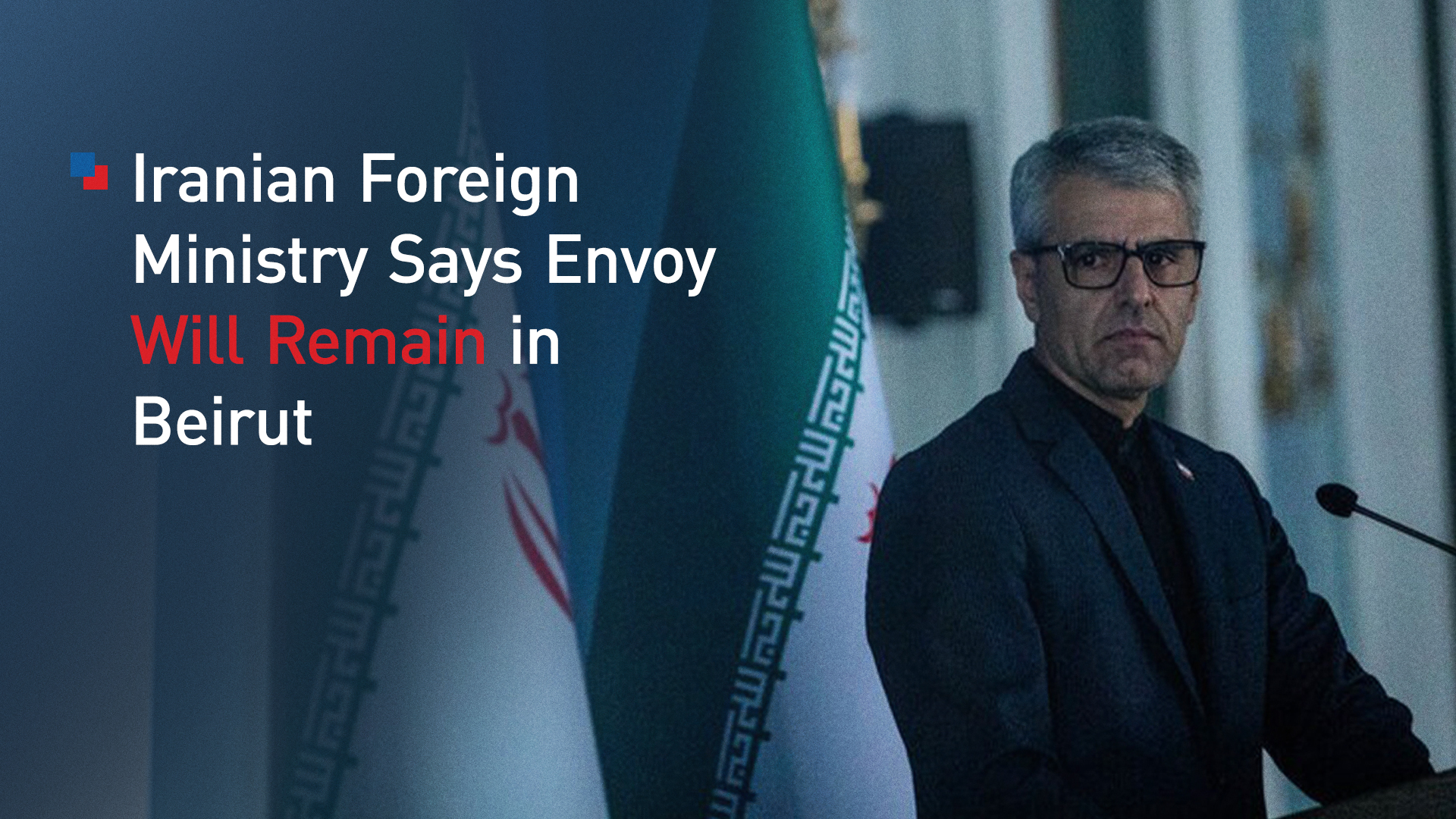
ERBIL (Kurdistan24) - The Iranian government announced on Monday that its ambassador to Lebanon will remain at his post in Beirut, explicitly defying a formal expulsion order issued by the Lebanese state that declared the envoy persona non grata.
According to a dispatch from Agence France-Presse, the Iranian foreign ministry confirmed the envoy's continued presence in the Lebanese capital.
"Our ambassador ... will continue his work as Iran's ambassador in Beirut and remains present there," Esmaeil Baqaei, the Iranian foreign ministry spokesman, stated during a weekly press briefing. Baqaei further confirmed that the Iranian embassy facility in Beirut remains fully "operational."
The diplomatic confrontation centers on Mohammad Reza Shibani, the designated Iranian ambassador to Lebanon. The refusal to withdraw the diplomat directly contravenes a formal directive issued the previous week by the Lebanese government.
On Tuesday, March 24, Youssef Raggi, Lebanon’s Minister of Foreign Affairs, announced the official decision to expel the Iranian representative.
At the time of the expulsion order, Foreign Minister Raggi detailed the diplomatic procedure on his official X account.
He stated he had instructed the ministry to summon the Iranian Chargé d’Affaires to communicate the decision to withdraw the agreement for Shibani. The directive officially declared the envoy persona non grata and explicitly requested that he depart Lebanese territory no later than March 29, 2026.
The expiration of the March 29 deadline without the ambassador's departure drew immediate international response, notably from Israeli officials. On Monday, Israeli Foreign Minister Gideon Sa'ar criticized the Lebanese government's failure to enforce its sovereign directive.
In a statement published on his X account, Sa'ar highlighted the diplomatic impasse.
"Last week, the Lebanese Foreign Ministry ceremoniously declared the Iranian ambassador 'persona non grata' and allocated time for his expulsion," the Israeli official wrote. Noting that the deadline had expired on Sunday, Sa'ar added, "This morning, the Iranian ambassador is drinking his coffee in Beirut and making a mockery of the 'host' country."
The Israeli Foreign Minister utilized the ambassador's continued presence to assert that Iran exercises functional control over Lebanon. Sa'ar pointed to the continued participation of Hezbollah ministers within the Lebanese government as further evidence of this dynamic. "Lebanon is a virtual country that is effectively occupied by Iran. An overt occupation that almost no one talks about," he stated.
Sa'ar directly linked the diplomatic situation in Beirut to the ongoing military conflict occurring along the Israel-Lebanon border. According to the figures he provided, "5,000 missiles, rockets, and UAVs have been fired at Israel from Lebanese territory since March 2." He specified that a significant portion of these munitions originated from areas south of the Litani River—territory the Lebanese army had claimed to have under its operational control since early January.
The Israeli Foreign Minister concluded that Lebanon would not regain its sovereignty without a firm decision in Beirut to confront Iranian influence and its proxy, Hezbollah. Sa'ar had previously welcomed the initial March 24 expulsion order, describing it as a necessary step against indirect occupation.
The diplomatic friction surrounding the Iranian envoy is unfolding against the backdrop of an intensifying war between Israeli forces and Hezbollah in southern Lebanon.
The ongoing military conflict is characterized by fierce clashes around strategic border towns as both combatant forces expand their tactical operations.
Israeli ground and air units are currently conducting operations intended to dislodge Hezbollah from entrenched border positions and establish a formalized buffer zone extending up to the Litani River. Conversely, Hezbollah has vowed to maintain staunch resistance against the advancing forces, warning that deeper incursions pose a direct threat to Lebanese territorial integrity.
The sustained hostilities have precipitated mass displacement, with over a million individuals fleeing their residences amid widespread infrastructural destruction. To date, international diplomatic initiatives aimed at halting the fighting have not succeeded.
The initial decision by the Lebanese Foreign Ministry to expel Shibani was viewed by international observers as a rare assertion of state sovereignty.
Brett McGurk, a former White House special envoy, noted at the time that the expulsion order "extraordinarily breaks a relationship long shaped by Iran’s influence inside Lebanon."
However, the Iranian foreign ministry's confirmation that its ambassador will remain in Beirut has renewed scrutiny regarding the Lebanese government's capacity to execute sovereign diplomatic decisions concerning Iranian representatives operating within its borders.