Syria will Not Enter Regional War Unless Directly Attacked, Al-Sharaa says
Syria’s president says the country will not join regional conflict unless directly attacked, criticizes Iran’s role, stresses border control, and emphasizes reconstruction over war.
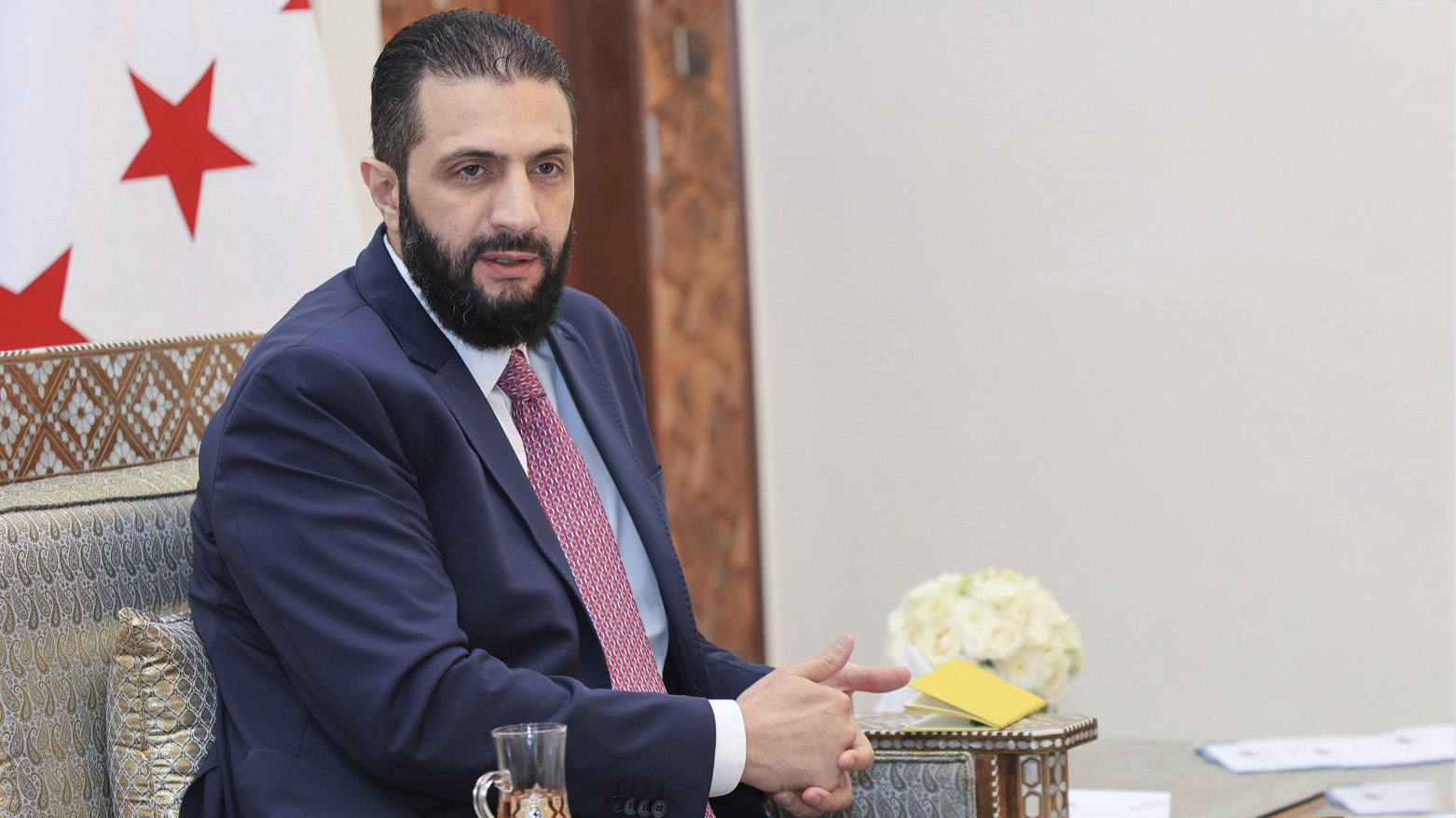
ERBIL (Kurdistan24) - In a decisive declaration shaped by the weight of past conflicts, Syria’s president drew a firm line: the country will not be drawn into the region’s escalating tensions unless it faces a direct attack, emphasizing a national priority of recovery over confrontation.
Syrian President Ahmad Sharaa stated that Syria has paid an exceptionally heavy price during previous wars and is no longer willing to become a battlefield for regional rivalries. He underscored that Damascus seeks to avoid entanglement in ongoing tensions, unless aggression is directly imposed upon it.
Sharaa sharply criticized Iran’s four decades of intervention in Syria, asserting that such involvement supported the former regime in displacing the Syrian population. He stated, “Our issue with Iran is not in Tehran, but in Damascus, because they occupied our cities and villages and displaced our people.”
Addressing the ongoing tensions between the United States and Iran, the Syrian president pointed to Tehran’s efforts to acquire nuclear weapons and ballistic missiles as a source of instability in the region. He said, “We propose negotiations, not military force, because war only increases risks. Syria will remain outside this conflict unless one side directly attacks us.” He reaffirmed that the Syrian people have grown weary of war and are now focused on healing and reconstruction.
Responding to a question about the transfer of Iranian weapons to Hezbollah through Syrian territory, Sharaa emphasized state responsibility over national borders. He stated, “It is Syria’s duty to protect its borders. No state allows its borders to remain open for weapons smuggling.”
On relations with Israel, Sharaa said that Israel has consistently dealt negatively with Syria and has violated the 1974 agreement. He revealed that previous attempts at both direct and indirect dialogue had reached promising stages, but ultimately collapsed at the last moment due to Israeli withdrawal.
In another part of his remarks, Sharaa reflected on his past association with al-Qaeda, stating, “I did not agree with al-Qaeda’s policies. If I had, I would have continued with them. I believe their actions do not serve the interests of the people, so I chose a different political path and paid the price.”
The Syrian president also expressed solidarity with the people of Gaza, noting that Syria shares in their suffering. However, he stressed that the country is currently in a phase of reconstruction and cannot engage in any new military escalation that could endanger its future.
Syria, he made clear, stands at a crossroads—determined to rebuild, while firmly resisting being pulled back into the cycles of war that once defined its recent history.
Syria’s leadership is drawing a clear boundary: recovery first, conflict only if imposed.