KRG Nears Completion of ‘Runaki’ Project in Bardarash
The strategic electricity reform project is expected to provide round-the-clock power to Bardarash and more than 120 surrounding villages by the end of June.
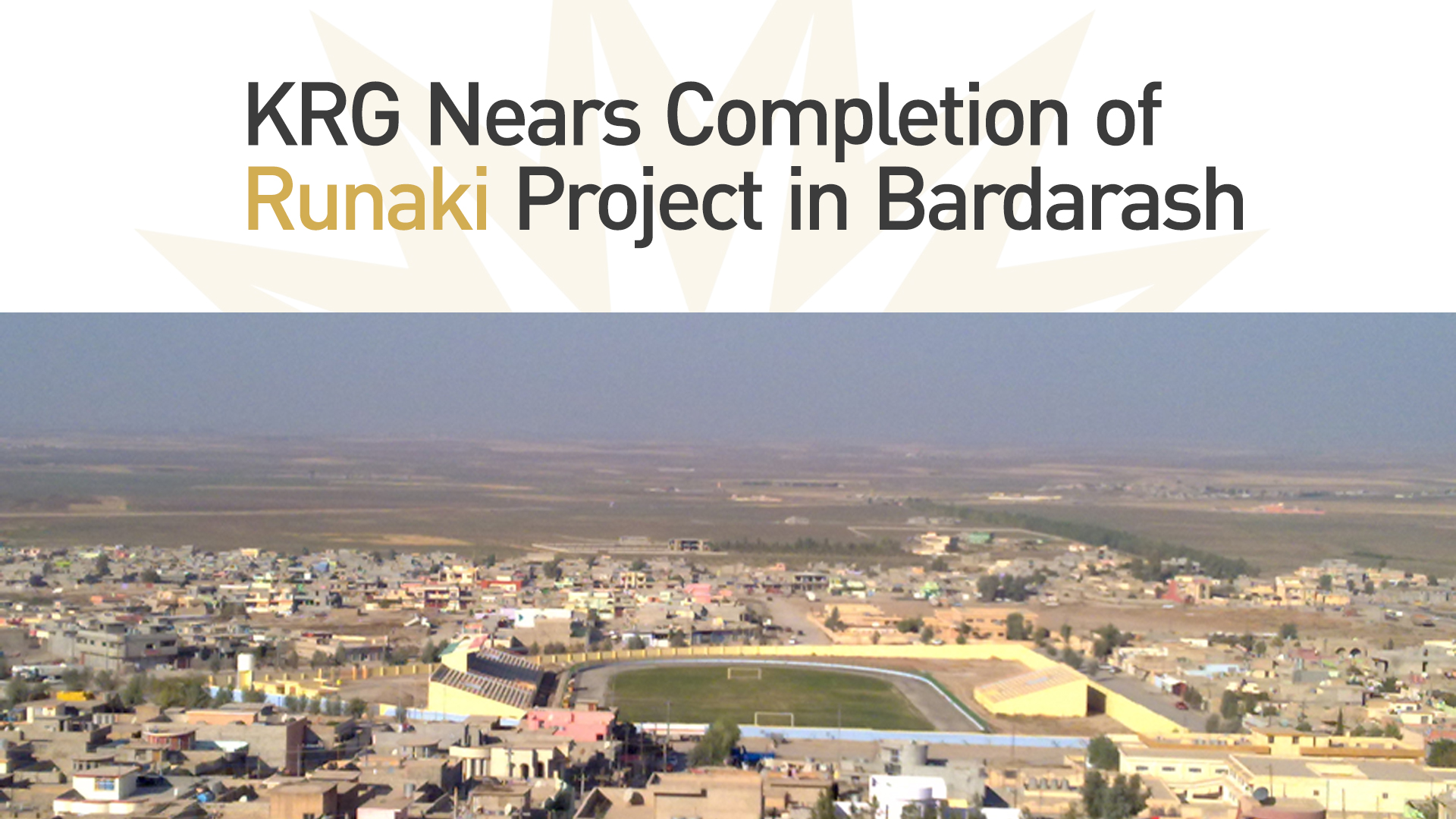
ERBIL (Kurdistan24) - The Kurdistan Regional Government’s ambitious Runaki electricity project is nearing a major milestone in Bardarash district, where authorities say preparations are in their final stages to provide 24-hour electricity service and phase out reliance on private generators.
On Saturday, the Directorate of Electricity in Bardarash, located in Duhok province, announced that technical teams have been working at an accelerated pace for the past month to complete the strategic project, which will supply uninterrupted electricity to the district center, residential complexes, and more than 120 surrounding villages.
Arshad Mohammed Ali, Director of Electricity in Bardarash, told Kurdistan24 that the implementation process is moving forward in two phases.
He said 90 percent of transformer maintenance and modernization work has already been completed, while the second phase will focus on installing smart meters for the remaining 14,000 subscribers out of a total of 39,000 across the district.
As the new system approaches launch, local authorities have also introduced financial incentives aimed at easing the transition for residents moving away from the long-standing dependence on private generators.
According to the electricity directorate, subscribers will receive gradual discounts on electricity consumption fees during the first three months of implementation. The discounts will begin with a 50 percent reduction during the first month, followed by 25 percent in the second month and 15 percent in the third month.
Officials say the measures are intended to encourage residents to adapt to the unified electricity system while reducing the financial burden on households.
Expanding the Runaki Project
The Runaki project, launched by Kurdistan Region Prime Minister Masrour Barzani in November 2024, is considered one of the flagship sovereign initiatives of the ninth cabinet.
The program aims to deliver continuous electricity service to homes and businesses across the Kurdistan Region by the end of 2026.
The project is designed to replace the decades-old dual system of national electricity and private generators, which has imposed significant financial costs on citizens and contributed to environmental pollution.
Following the success of the project in Erbil, authorities have expanded implementation into Bardarash, a strategically important district located on the main road linking Erbil and Duhok. Full operational service is expected to begin by the end of June.
Earlier this month, Kurdistan Region Minister of Electricity Kamal Mohammed Salih chaired a high-level meeting attended by Aziz Ahmed, Deputy Head of the Prime Minister’s Office, senior officials, project teams, and electricity sector leaders to review the latest stages of the Runaki initiative and discuss future expansion plans.
Discussions focused on infrastructure development, increasing electricity demand, and accelerating implementation across the region.
Officials also reviewed public complaints and feedback, stressing the importance of responding rapidly to service issues and warning against violations that could damage the electricity network.
Authorities say the project includes upgrading electricity grids, expanding distribution networks, installing smart systems to monitor consumption, and improving billing transparency to ensure fair distribution and protect infrastructure from overload.
According to government figures, around 5.5 million citizens — representing more than 85 percent of the Kurdistan Region’s population — are already benefiting from the Runaki project, with electricity supply becoming increasingly stable in many areas.
Officials also say the initiative has helped reduce pressure on the power grid, improve environmental conditions by limiting generator use, and enhance energy efficiency, while additional infrastructure projects continue to expand alongside growing demand.
The Bardarash phase now represents another major step in the KRG’s broader effort to reshape the Kurdistan Region’s electricity sector and establish a stable, around-the-clock power system.