Kurdistan PM Masrour Barzani Urges Lasting Peace After U.S.-Iran Ceasefire
Premier calls for end to attacks on civilians and infrastructure, says Kurdistan Region ready to support de-escalation efforts
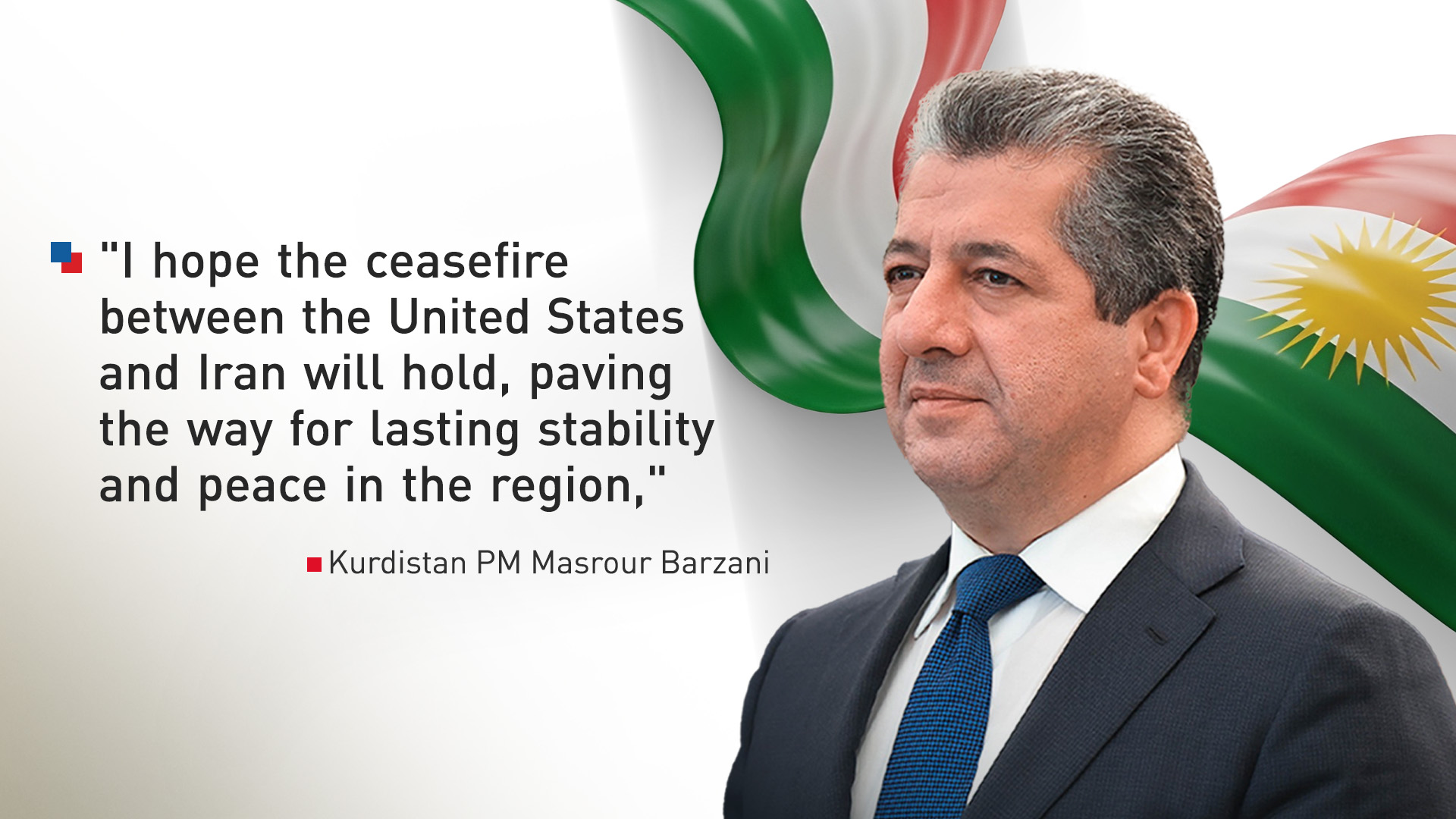
ERBIL (Kurdistan24) — Kurdistan Region Prime Minister Masrour Barzani on Wednesday expressed hope that the ceasefire between the United States and Iran will hold, urging an end to attacks on civilians, security forces, and critical infrastructure while calling for a broader path toward lasting regional peace.
In a post on his official X account, Barzani said he hoped the truce would “pave the way for lasting stability and peace in the region,” while thanking those who supported and helped protect the Kurdistan Region during the recent escalation.
He stressed that “the attacks on Kurdistan were never justified” and voiced hope that all violence targeting civilians, the Peshmerga, infrastructure, and diplomatic missions would now cease.
I hope the ceasefire between the United States and Iran will hold, paving the way for lasting stability and peace in the region.
— Masrour Barzani (@masrourbarzani) April 8, 2026
I thank all those who stood by us and helped to protect the Kurdistan Region. The attacks on Kurdistan were never justified. I hope all attacks on…
The statement comes amid a two-week ceasefire agreed between Washington and Tehran following weeks of intense confrontation that brought the region to the brink of wider conflict.
The escalation had disrupted vital trade routes, threatened global energy supplies, and heightened security risks across Iraq and the broader Middle East.
For the Kurdistan Region, the conflict carried immediate consequences. Iranian and Iran-backed Iraqi militia groups launched repeated rocket and drone attacks targeting Peshmerga positions, civilian areas, diplomatic missions' facilities, and key infrastructure.
These strikes caused casualties among Peshmerga fighters and civilians, damaged energy facilities, and forced disruptions to electricity supply and daily life, leaving communities under sustained threat.
Critical assets such as the Khor Mor Gas Field—the region’s largest source of natural gas for power generation—were affected, contributing to reduced electricity supply and fuel shortages. Airspace closures and security concerns also disrupted transportation and economic activity.
Barzani’s remarks place particular emphasis on civilian protection and the safeguarding of infrastructure, reflecting the heavy toll the conflict has taken on non-combatants. His call for an end to attacks on diplomatic missions also underscores concerns over the broader implications for international presence and stability in Iraq.
The prime minister’s statement aligns with wider international appeals to preserve the ceasefire and prevent further escalation. While the truce has temporarily reduced hostilities, its durability remains uncertain, with underlying tensions between the United States, Iran, and allied groups still unresolved.
Barzani affirmed that the Kurdistan Region is ready to support efforts aimed at sustaining de-escalation and building momentum toward a more permanent peace. His statement reflects a broader regional push to use the current pause in fighting as an opportunity to advance dialogue and stabilize key sectors, including energy and infrastructure.
With communities across the region seeking relief after weeks of violence, the coming days will be critical in determining whether the ceasefire can evolve into a lasting framework for security and cooperation.
For now, Barzani’s message underscores a clear priority: ending attacks, protecting civilians, and turning a fragile truce into a durable peace.