US-Iran Talks in Islamabad: Five Things to Know About High-Stakes Negotiations
Pakistan hosts indirect negotiations as Washington and Tehran seek to stabilize a two-week truce after a brief but destructive war that reshaped regional dynamics and global energy flows.
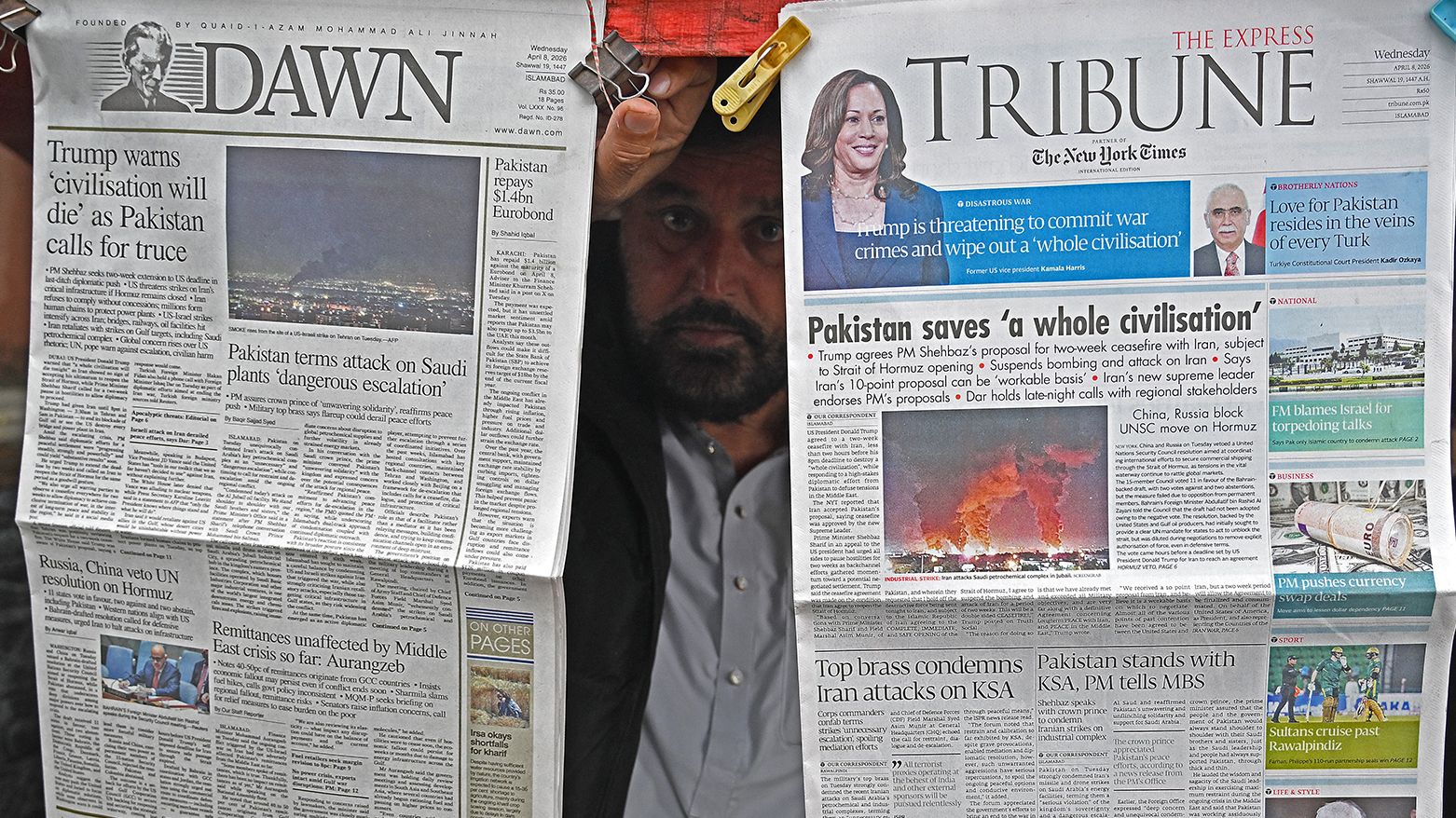
ERBIL (Kurdistan24) - The United States and Iran are holding their highest-level talks in years in Islamabad, in Pakistan-brokered negotiations aimed at transforming a fragile two-week ceasefire into a more durable settlement after a conflict that disrupted global energy markets and escalated regional tensions.
According to reporting from AFP, the discussions come as both sides remain deeply divided on core political, military, and economic demands.
Here are five key things to know about the Islamabad talks:
1. The war that set the stage for negotiations
The talks are unfolding against the backdrop of a short but intense conflict that reshaped the regional balance.
The United States and Israel launched coordinated strikes on Feb. 28 that killed Iran’s Supreme Leader Ali Khamenei and targeted Iranian military and nuclear infrastructure, resulting in more than 2,000 deaths over a five-week period.
Tehran responded by effectively closing the Strait of Hormuz, a critical global energy corridor through which roughly one-fifth of global oil and gas flows.
The move, as noted in the AFP report, triggered a sharp increase in global energy prices and widespread disruption in international trade.
On April 8, Washington and Tehran agreed to a two-week ceasefire brokered by Pakistan.
Iran’s Supreme National Security Council said the talks could continue for up to 15 days, with the truce currently expected to expire on April 22.
2. Pakistan’s expanded diplomatic role
Pakistan has emerged as the central mediator in a conflict far beyond its traditional diplomatic scope.
The country, often associated internationally with internal security challenges and economic instability, is now hosting the first direct proximity negotiations between the United States and Iran since the war began.
The report highlights that Pakistan’s mediation role is anchored in its unusually broad diplomatic positioning.
Iran was the first country to recognize Pakistan after its independence in 1947, and the two share a 900-kilometre border along with deep cultural and religious ties, including Pakistan’s large Shia population, estimated at over 20 million.
At the same time, Islamabad has maintained working relationships with Washington, Riyadh, and Beijing.
Pakistani Foreign Minister Ishaq Dar recently traveled to Beijing for consultations with Chinese Foreign Minister Wang Yi, who reportedly supported Islamabad’s mediation efforts as aligned with “the common interests of all parties,” according to the report.
U.S. President Donald Trump also told AFP that China played a role in facilitating Iran’s participation in talks.
A senior Pakistani official, speaking on condition of anonymity, said Beijing intervened at a critical moment during ceasefire negotiations, helping secure Iranian agreement when discussions were faltering.
3. Deep divisions over what comes next
Despite the ceasefire, the gap between Washington and Tehran remains substantial.
The report states that the U.S. proposal includes 15 points addressing Iran’s uranium enrichment activities, ballistic missile program, sanctions relief, and the reopening of the Strait of Hormuz.
In contrast, Iran has presented a counterproposal with 10 points, including demands for operational control over the strait, the imposition of transit tolls on vessels, an end to regional military operations targeting its allies, and comprehensive sanctions relief.
Regional dynamics—particularly Lebanon—have further complicated the agenda. Israel has continued strikes in Lebanon targeting Hezbollah even after the ceasefire, with Israeli Prime Minister Benjamin Netanyahu rejecting claims by Pakistan’s leadership that Lebanon was included in the truce framework.
U.S. Vice President JD Vance, however, suggested the disagreement may reflect “a legitimate misunderstanding” regarding the scope of the ceasefire, according to the report.
Iranian President Masoud Pezeshkian, writing on X, warned that continued Israeli strikes in Lebanon risk undermining the negotiations, stating that such developments render diplomacy “meaningless.”
He also emphasized that Iran would maintain its regional commitments, adding that “our hands remain on the trigger,” as cited in the report.
4. Who is at the negotiating table
The composition of the delegations underscores the political weight of the talks.
On the U.S. side, Vice President JD Vance is leading the delegation, accompanied by special envoy Steve Witkoff and Jared Kushner, the son-in-law of Donald Trump.
The report notes that this marks the most senior level of U.S. engagement with Iran since the 2015 nuclear negotiations led by then–Secretary of State John Kerry.
Witkoff had previously engaged in Oman-mediated discussions with Iranian Foreign Minister Abbas Araghchi before the outbreak of war interrupted the diplomatic track.
Iran’s delegation is expected to be led by Parliament Speaker Mohammad Bagher Ghalibaf and Foreign Minister Abbas Araghchi.
Ghalibaf, a former commander in the Islamic Revolutionary Guard Corps (IRGC), represents the hardline institutional wing of Iran’s political system, though it remains unclear whether any active IRGC officials will participate directly in the talks, according to the report.
5. Islamabad under tight security as talks proceed indirectly
The negotiations are taking place in Pakistan’s capital under strict security and deliberate ambiguity.
Officials have not formally confirmed the exact venue, though preparations have centered around high-security areas of Islamabad.
Pakistan’s leadership had indicated the talks would begin on Friday, while the White House suggested the first round would start on Saturday, reflecting lingering coordination gaps.
The Serena Hotel, located near the foreign ministry within the heavily secured Red Zone, reportedly requested guests vacate rooms ahead of the talks.
Authorities also declared a two-day public holiday, further tightening access to the capital’s administrative core.
The format of the discussions is indirect: the U.S. and Iranian delegations are seated in separate rooms while Pakistani intermediaries shuttle messages between them, mirroring earlier Oman-mediated negotiation structures.
Security across Islamabad has been visibly heightened, with armed personnel deployed across key intersections, traffic restrictions imposed, and checkpoints established throughout the city. The report notes that the capital, typically already subdued, has become even quieter as the talks proceed.
The outcome of the Islamabad negotiations remains uncertain, but the stakes are high: stabilizing a fragile ceasefire, preventing renewed conflict, and attempting to bridge a diplomatic divide that has widened dramatically since the outbreak of war.