Trump Stands Firm on Nuclear Red Lines as War Secretory Signals Military Readiness
Washington says it remains ready to restart military operations against Iran while negotiations continue over a potential agreement
ERBIL (Kurdistan24) - The prospect of a diplomatic breakthrough between the United States and Iran remained uncertain on Saturday as Washington warned it was fully capable of resuming military action, while Tehran insisted that no final agreement had yet been reached.
The warning came after US President Donald Trump reiterated that any peace agreement must comply with his administration’s core conditions, including a permanent guarantee that Iran will never develop nuclear weapons.
Following a two-hour meeting in the White House Situation Room on Friday, no final decision was announced regarding a proposed agreement that US sources told AFP was awaiting Trump’s approval.
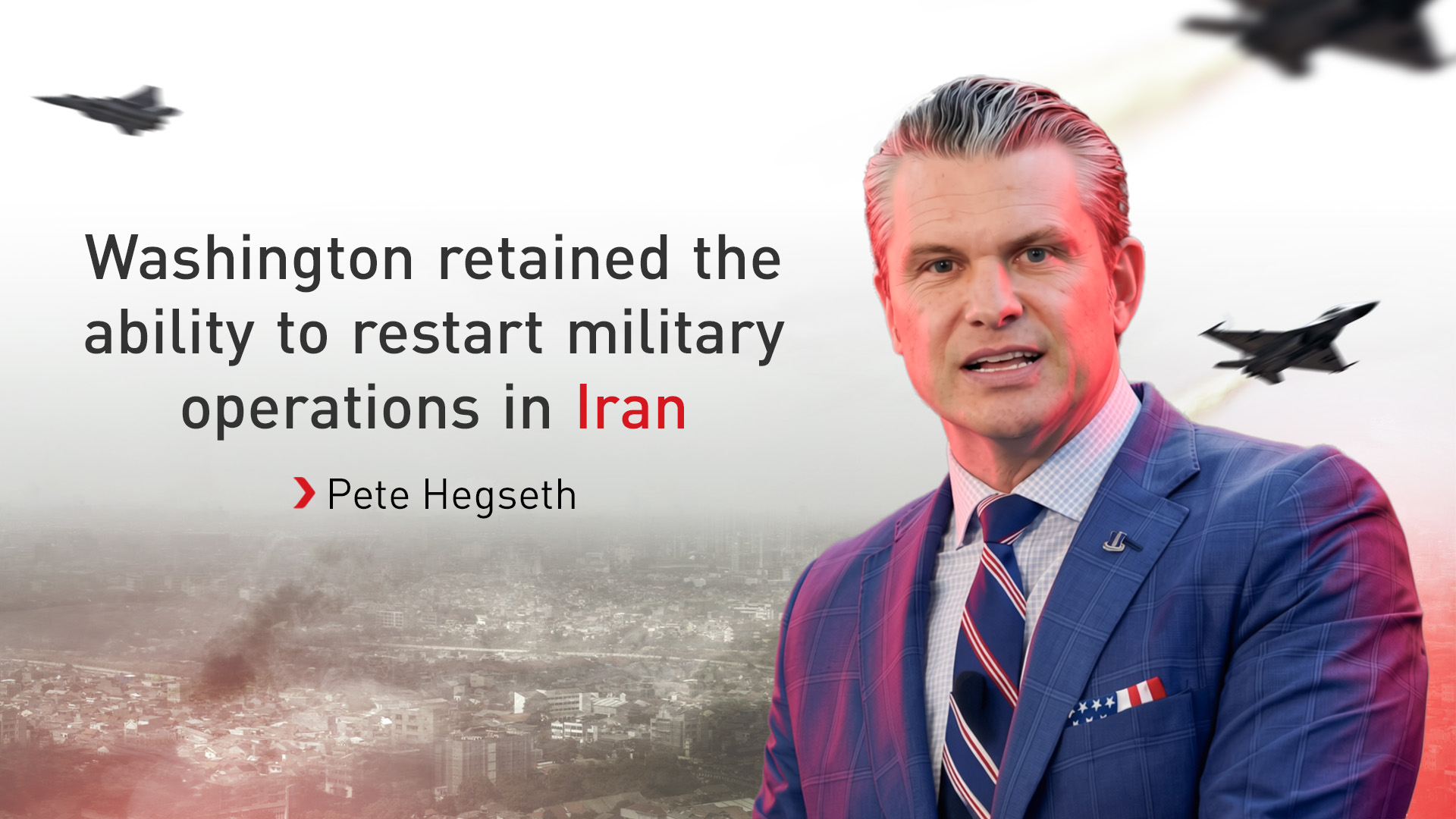
Speaking at a major defense summit in Singapore, US Defense Secretary Pete Hegseth said Washington retained the ability to restart military operations if necessary.
“Our ability to recommence if necessary is that we are more than capable. Our stockpiles are more than suited for that, both there and around the globe because of how we balance exquisite and more plentiful munitions,” Hegseth said.
His remarks echoed a statement by US Central Command, which said American forces “remain present and vigilant across the region.”
Despite the military rhetoric, negotiations continued through mediation efforts led by Pakistan.
The diplomatic process faced new uncertainty following US strikes on the southern Iranian port of Bandar Abbas and subsequent retaliatory Iranian fire earlier this week.
At the same time, discussions continued regarding Lebanon, which Iran has insisted must be included in any formal agreement to end the conflict.
Trump stated that his priorities included preventing Iran from obtaining nuclear weapons and reopening the Strait of Hormuz to maritime traffic.
“President Trump will only make a deal that is good for America and satisfies his red lines,” a White House official told AFP after the Situation Room meeting.
“Iran can never possess a nuclear weapon,” the official added.
Iranian Foreign Ministry spokesperson Esmaeil Baqaei rejected Trump’s conditions, saying the Islamic Republic had “said goodbye to the language of ‘must’ 47 years ago.”
Baqaei confirmed that exchanges of messages between the two sides were continuing but stressed that “no final agreement has been reached yet.”
Meanwhile, Iranian President Masoud Pezeshkian told the Emir of Qatar during a phone conversation that Iran remained ready to achieve a “dignified framework” to end the war, according to Iran’s state news agency IRNA.
Trump also said Iran would remove mines from the Strait of Hormuz and reopen the strategic waterway without tolls, while the United States would lift its blockade of Iranian ports.
He further stated that both countries would coordinate on removing and destroying Iran’s enriched uranium and that “no money will be exchanged, until further notice.”
Iran’s Fars News Agency reported that Tehran was demanding the immediate release of $12 billion in frozen Iranian assets before proceeding to the next phase of negotiations.
According to sources cited by the agency, no provision regarding toll-free passage through the Strait of Hormuz exists in the proposed text, while Trump’s remarks about destroying Iran’s nuclear material were described as “fundamentally baseless.”
While diplomatic efforts intensified, fighting continued on another major front of the conflict in Lebanon.
Israeli Prime Minister Benjamin Netanyahu announced on Friday that Israeli forces had advanced beyond a river located approximately 30 kilometers north of the Lebanon-Israel border.
Hezbollah said it had launched attacks on northern Israel and on Israeli troops advancing near the medieval Beaufort fortress, also known as Qalaat al-Chakif.
A ceasefire between Israel and Hezbollah was scheduled to take effect on April 17, but both sides have accused each other of violating the truce.
Lebanon became involved in the conflict in early March after the Iran-backed Hezbollah group launched rockets at Israel following the killing of Iran’s supreme leader in US-Israeli attacks, triggering Israeli airstrikes and a ground offensive.
Israel and Lebanon began direct talks in April, with a fourth round expected next week in Washington after military delegations from both sides met on Friday.
With military threats, competing demands, and ongoing battles across multiple fronts, prospects for a final agreement remain uncertain despite continued diplomatic engagement.
Negotiators now face the challenge of bridging significant differences over nuclear restrictions, frozen assets, regional security arrangements, and the broader terms of ending the conflict.