U.S. Oversight Report Warns of Looming ISIS Resurgence as Security Alliances Shift in Syria and Iraq
The 44th Lead Inspector General report on Operation Inherent Resolve warns of a heightened risk of ISIS resurgence following the collapse of security frameworks in Syria and escalating militia threats in Iraq. As U.S. forces realign, the report highlights critical gaps in regional stability.
ERBIL (Kurdistan24) - A comprehensive new oversight report submitted to the U.S. Congress warns that the risk of an ISIS resurgence has intensified significantly across the Middle East, fueled by a volatile mixture of shifting political alliances, large-scale prison escapes, and a deteriorating security environment in both Syria and Iraq.
The 44th quarterly report from the Lead Inspector General for Operation Inherent Resolve (OIR), covering the period from January 1 to March 31, 2026, paints a precarious picture of a region at a strategic crossroads.
While the Islamic State remains territorially defeated, the report, which synthesizes intelligence from the Department of War, the State Department, and the U.S. Agency for International Development (USAID), repeatedly emphasizes that the group is actively exploiting regional instability to rebuild its ranks and expand its clandestine networks.
The reporting period was defined by two seismic developments: the Syrian government's rapid reassertion of control over northeastern Syria and the launch of "Operation Epic Fury," a wide-ranging U.S. military offensive aimed at dismantling Iranian-linked security apparatuses.
These events have forced an accelerated realignment of U.S. forces, creating what oversight agencies describe as a "temporary vacuum" that ISIS operatives are now rushing to fill.
ISIS Fight Continues Despite Territorial Defeat
The central takeaway of the Inspector General's assessment is that the "enduring defeat" of ISIS is far from guaranteed.
According to the report, the Office of the Director of National Intelligence assessed that ISIS in Syria will probably seek to rebuild its support networks and solicit funds by leveraging the thousands of affiliates who have recently escaped or been released from detention facilities.
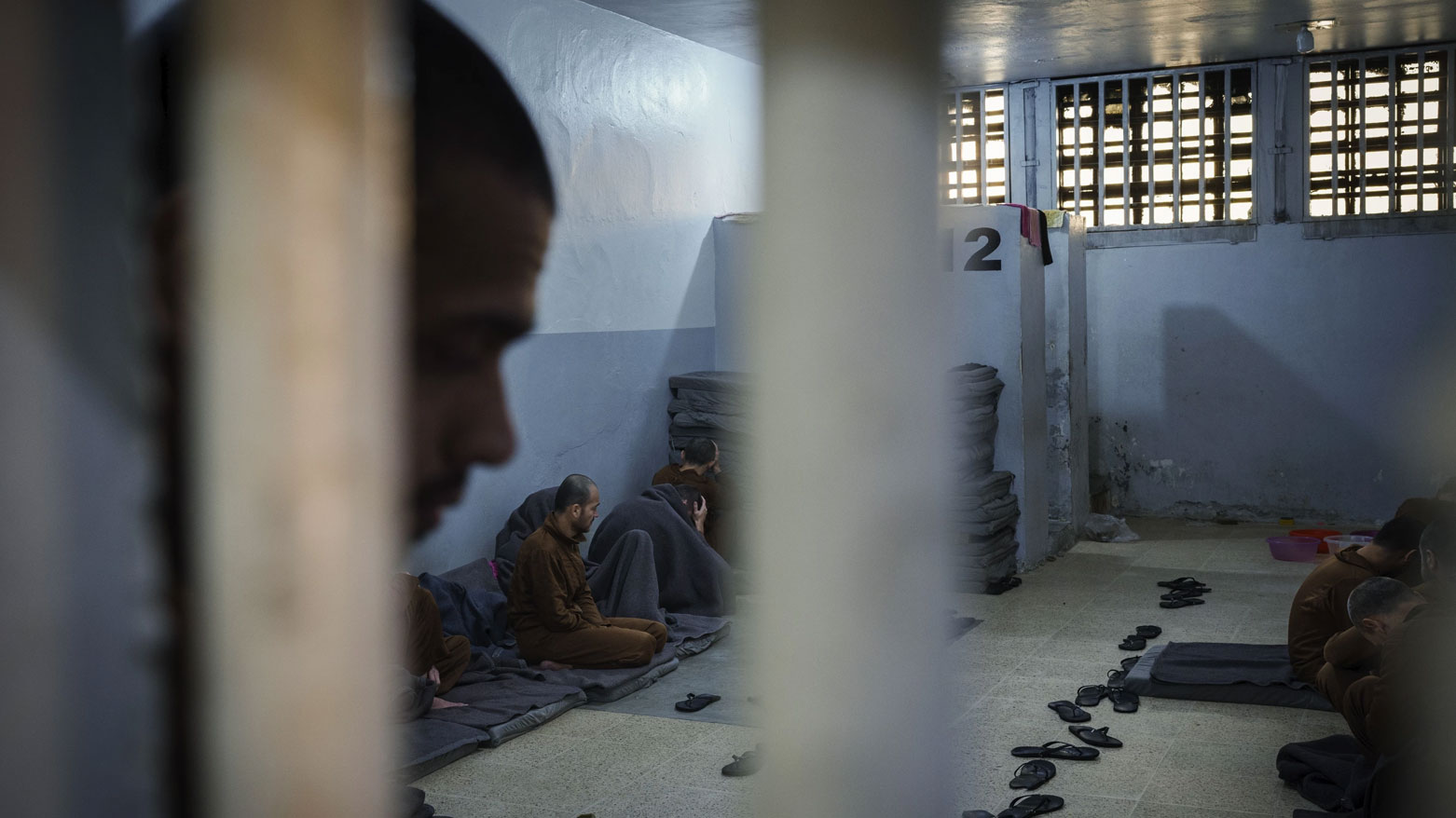
U.S. Central Command (USCENTCOM) continues to describe the population of detained ISIS fighters as an "ISIS army in detention."
This threat became a reality in January when at least 150 ISIS fighters escaped from the Shaddadi detention facility in northeastern Syria during the chaos of the Syrian government's offensive.
While Damascus later claimed to have recaptured some of the escapees, several dozen remain at large, presenting a clear and present danger of regeneration.
The report highlights that the primary objective of OIR, to advise, assist, and enable partner forces, has been complicated by these new regional realities.
Even as the mission attempts to transition toward a long-term bilateral security arrangement with Iraq and a nascent partnership with the central government in Syria, the underlying threat of militant regrouping remains the dominant concern for U.S. military planners.
A Fractured Partnership in Northeast Syria
One of the most significant shifts documented in the report is the effective end of the decade-long U.S. partnership with the Kurdish-led Syrian Democratic Forces (SDF) as an autonomous entity.
The report stated that, "as the Syrian government advanced," the Syrian Democratic Forces (SDF), described as the longtime U.S. forces' security partner, "collapsed."
It noted that SDF personnel guarding detention facilities holding ISIS detainees "redeployed to front lines," at times before government forces could take control.
The report further said that U.S. forces were instructed to "remain neutral and did not intervene in the hostilities." As security at the detention facilities "began to degrade," U.S. forces deployed to secure the Panorama detention facility.
As Syrian government forces captured most of northeastern Syria in January, the SDF agreed on January 29 to gradually integrate its military and governing bodies into the Syrian state.
This integration has left U.S. policy in a state of flux.
The Office of the Under Secretary of War for Policy reported that the accelerated departure of U.S. forces from former SDF-held areas has disrupted the military's ability to vet Syrian actors, leaving future counter-ISIS partnerships in "limbo."
U.S. officials, including Ambassador Thomas J. Barrack, have publicly welcomed the integration as a path toward a unified Syrian state, yet the Defense Intelligence Agency (DIA) warned that the Damascus government will almost certainly struggle with command and control over these newly absorbed brigades.
The report also reveals that the U.S. has been unable to fully account for equipment and weapons previously provided to the Syrian Free Army (SFA).
As these partner forces integrated into the Syrian government, the U.S. found it lacked a legal mechanism to seize or track previously transferred materiel, creating a potential gap in accountability for American-supplied hardware.
Detainee Escapes and the 'Army in Waiting'
The humanitarian and security situation at the al-Hol displaced persons camp reached a breaking point during the first quarter of 2026. Following the SDF's retreat, al-Hol was temporarily left without a formal security presence, leading to widespread looting and fires.
The report estimates that as many as 20,000 residents, including thousands of ISIS family members and loyalists, departed the camp unmonitored.
The Syrian government officially closed al-Hol on February 22, but the fallout from its dissolution continues to reverberate.
CJTF-OIR reported that the unmonitored departure of individuals with suspected ISIS affiliations signifies "broader regional security implications."
To mitigate the risk of further escapes, USCENTCOM successfully transferred 5,704 ISIS detainees from Syrian facilities to government-run prisons in Iraq.
However, the report notes that even these Iraqi facilities have come under threat, with drone strikes by Iran-aligned militias striking near the al-Karkh prison in March.
The Strategic Road Ahead
Despite the withdrawal of U.S. forces from key logistics bases like the Baghdad Diplomatic Support Center (BDSC) and the closure of all remaining bases in Syria, the Lead Inspector General report maintains that the U.S. remains committed to the enduring defeat of ISIS.
However, the report makes clear that the mission is entering its most challenging phase since the 2014 launch of OIR.
U.S. oversight agencies suggest that the success of the mission now depends on the ability of the Iraqi and Syrian governments to effectively manage their own borders, secure detention facilities, and integrate diverse military actors without succumbing to extremist infiltration.
As the quarter ended, the report concludes that the U.S. goal remains constant, but the tools available to achieve it have been significantly diminished by the "downward spiral" of regional security.
For the people of the Kurdistan Region and the broader international community, the Inspector General's findings serve as a stark warning: while the "caliphate" is gone, the conditions that birthed it are reappearing with alarming speed.