Islamabad Shuttle Diplomacy: Vance and Iranian Delegation Hold Separate Meetings with PM Sharif
Pakistan PM Shehbaz Sharif met US VP JD Vance in Islamabad as direct US-Iran talks began, with officials urging constructive engagement to sustain a fragile ceasefire and seek a lasting resolution.
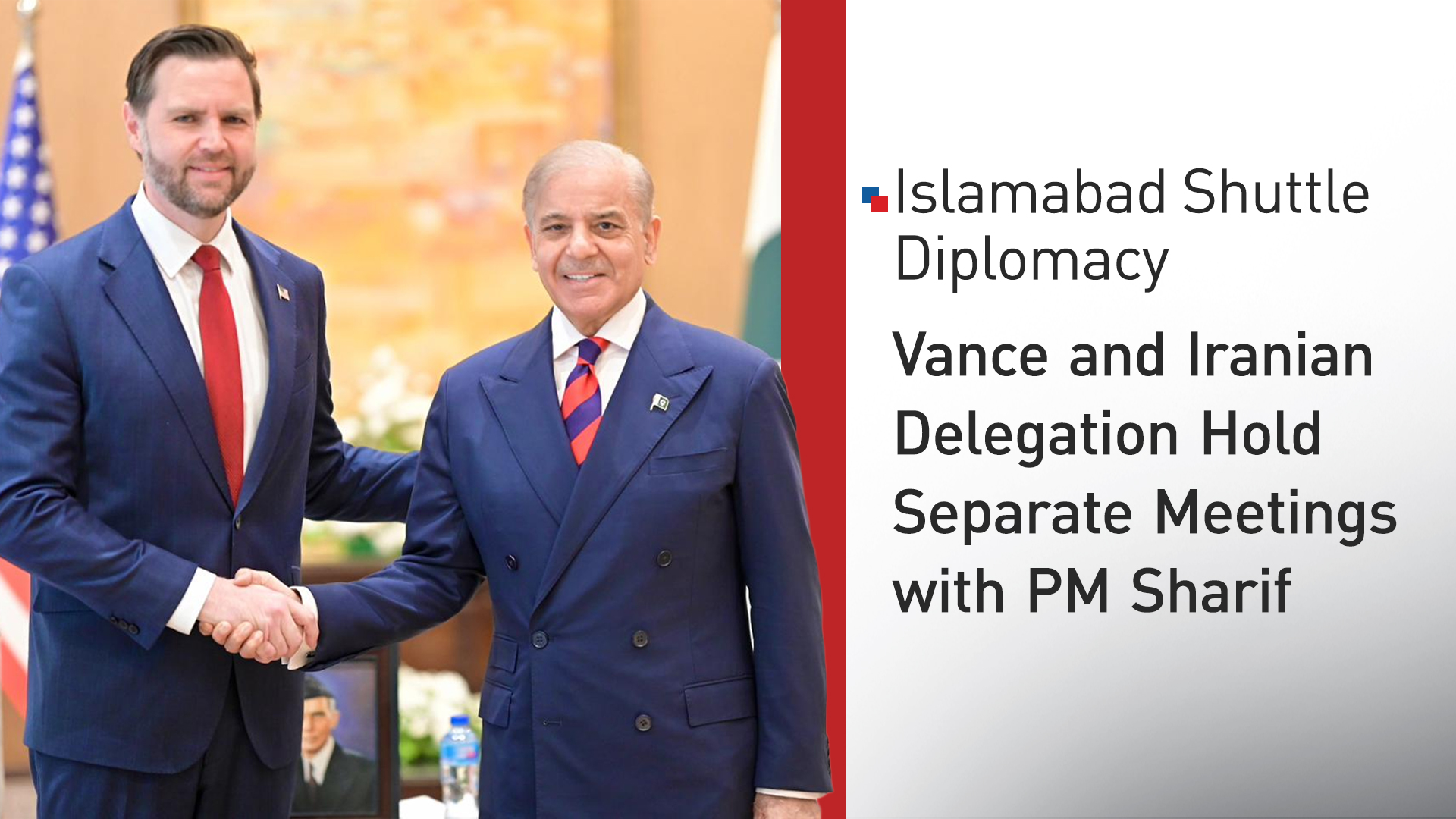
ERBIL (Kurdistan24) - Under tight security and global scrutiny, Pakistan’s capital became the focal point of high-stakes diplomacy on Saturday, as Prime Minister Muhammad Shehbaz Sharif met US Vice President JD Vance at the opening of direct negotiations aimed at ending more than a month of war in the Middle East.
As the Islamabad talks formally commenced, Sharif held talks with Vance, who was accompanied by Special Envoy Steve Witkoff and former White House adviser Jared Kushner. The Pakistani premier was joined by Deputy Prime Minister and Foreign Minister Sen. Mohammad Ishaq Dar and Interior Minister Sen. Syed Mohsin Raza Naqvi.
Pakistani Prime Minister's Office statement, commended “the commitment of both delegations to engage constructively” and expressed hope that the talks would serve as “a stepping stone toward durable peace in the region.” He reiterated that Pakistan would continue facilitating both sides in efforts toward a sustainable resolution.
The meeting came as delegations from the United States and Iran arrived in Islamabad for what has been described as the first direct negotiations between the two sides since the war began more than a month ago. Earlier the same day, a high-level Iranian delegation, led by Parliament Speaker Mohammad Baqer Qalibaf, also held a meeting with Sharif ahead of their scheduled engagement with US officials.
Pakistan’s Foreign Minister Ishaq Dar emphasized Islamabad’s position, stating that the country seeks to facilitate a “lasting and durable solution to the conflict,” while officials urged both sides to “engage constructively” despite acknowledging that no outcome could be predicted in advance.
Tahir Andrabi, spokesperson for Pakistan’s Ministry of Foreign Affairs, told Kurdistan24: “This round of negotiations is different, and we cannot predict whether it will lead to an agreement or not, but we are optimistic the meeting will produce a positive outcome.” He added, “We are prepared to host any additional rounds of negotiations, but for now, it is unclear whether there will be another session.”
The US delegation, led by Vance, arrived to discuss ways to reinforce the fragile ceasefire and move toward a permanent end to the fighting. The Iranian side, comprising a 70-member delegation including 26 negotiators and 23 media personnel, includes Foreign Minister Abbas Araghchi, Ali Akbar Ahmadian, Secretary of the Supreme National Security Council, and Central Bank Governor Abdolnaser Hemmati.
Ahead of the talks, Qalibaf indicated that progress would depend on conditions including a ceasefire in Lebanon and the release of Iranian assets. US President Donald Trump, meanwhile, wished Vance “good luck” before the meeting and said: “We’ll find out what’s going on. They’re militarily defeated.”
The negotiations are taking place amid a fragile ceasefire brokered by Pakistan, set to expire on April 22, 2026, unless an agreement is reached. Despite the pause, hostilities continue to exert pressure on diplomacy, with exchanges of fire reported between Israel and Hezbollah along the southern Lebanon border.
Islamabad itself has been placed under heightened security. Roads were sealed, residents were urged to remain indoors, and the city appeared subdued as security forces enforced strict measures around key locations. A state-of-the-art media center was established at the Jinnah Convention Center to support coverage, while visa-on-arrival arrangements were introduced for journalists and official delegations.
The talks are being hosted at the Islamabad branch of the Serena Hotel, which was fully reserved by the Pakistani government. All other guests were evacuated, and a three-kilometer security perimeter was imposed around the site.
The broader diplomatic effort unfolds against a backdrop of decades of strained relations between Washington and Tehran. Tensions escalated following the 1979 Islamic Revolution and subsequent hostage crisis, with diplomatic ties severed in 1980. Over the years, disputes deepened through sanctions, military confrontations, and the collapse of the 2015 nuclear agreement after the US withdrawal in 2018.
More recent escalations include the killing of Iranian commander Qasem Soleimani in 2020, the 12-day war between Israel and Iran in June 2025, and the February 2026 strikes by the US and Israel that killed Supreme Leader Ayatollah Ali Khamenei and targeted Iranian military and nuclear infrastructure. Iran responded with missile attacks across the region and imposed restrictions on the Strait of Hormuz.
Despite these developments, Pakistan has positioned itself as a facilitator rather than a participant, emphasizing dialogue and mediation at a moment when mistrust remains high and positions remain far apart.
With delegations now face-to-face in Islamabad, the talks mark a critical yet uncertain step toward de-escalation—where the fragile ceasefire holds, but the path to lasting peace remains contested and unclear.