UK to Ban Under-16s From Major Social Media Platforms as Court Upholds Palestine Action Terror Designation
Starmer unveils sweeping online safety measures for children while appeals court backs government's ban on pro-Palestinian activist group
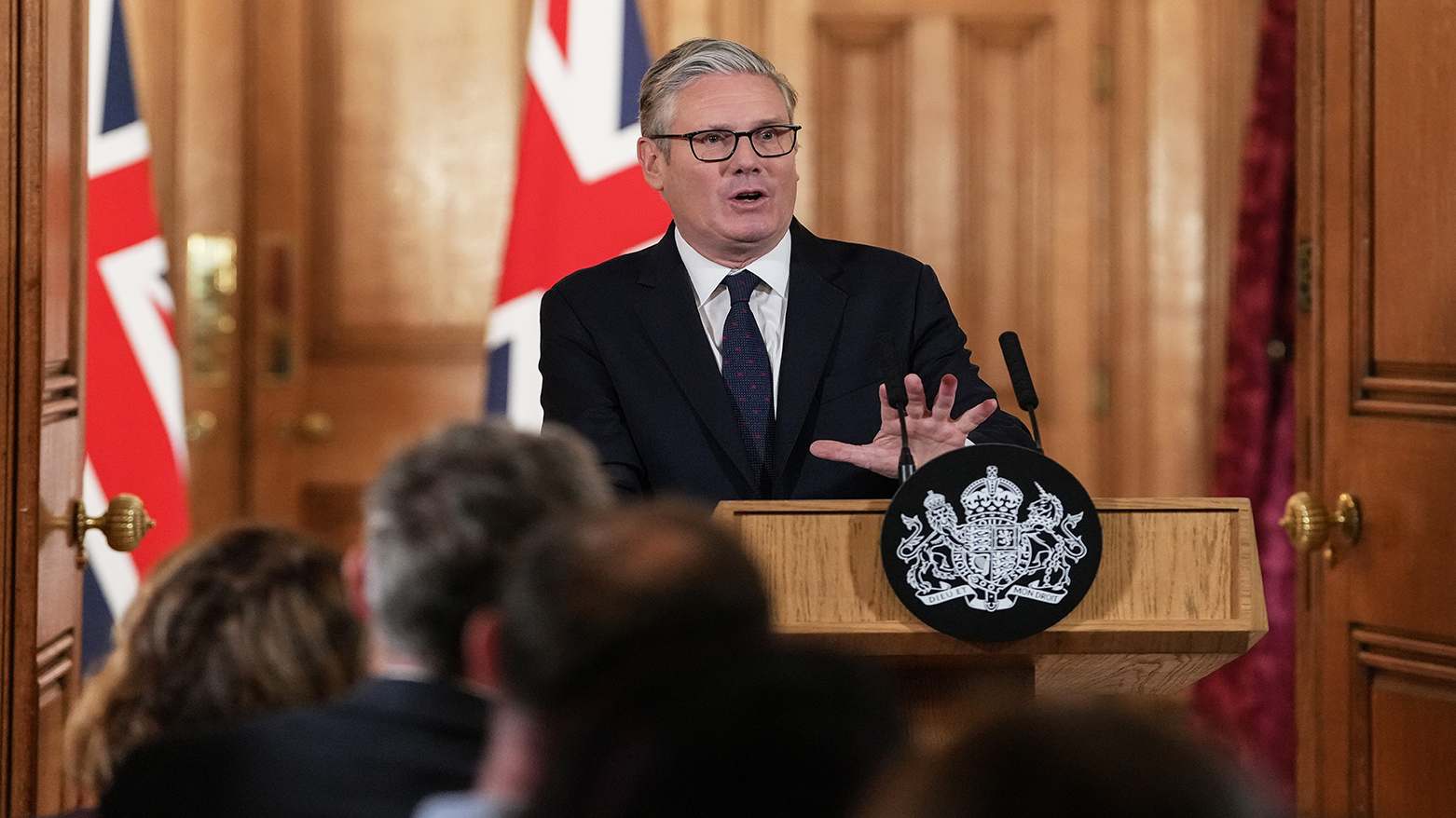
ERBIL (Kurdistan24) — Britain will prohibit children under the age of 16 from accessing major social media platforms including TikTok, Snapchat, YouTube, Instagram, Facebook, and X, Prime Minister Keir Starmer announced on Monday, unveiling one of the most far-reaching online safety measures introduced by a Western government.
The restrictions, expected to take effect early next year, are designed to shield young people from harmful online content, excessive screen time, and contact with strangers on digital platforms.
"Every parent can see it with their own eyes. Social media is making children unhappy," Starmer said during a news conference. "I've heard first hand from families crying out for change and we will do right by them."
The prime minister, who has two teenage children, pledged to push ahead even if technology companies oppose the measures, insisting he was "not prepared to compromise on the safety and happiness of our children."
Under the new policy, Britain will adopt a model similar to that introduced by Australia, which became the first country to ban social media accounts for children under 16. Companies that fail to take reasonable steps to prevent underage users from accessing their platforms could face multimillion-dollar fines.
British authorities said the restrictions will not apply to YouTube Kids or messaging services such as WhatsApp and Signal. Enforcement efforts will target technology companies rather than children themselves.
Starmer also signaled that the government intends to go beyond Australia's framework by introducing measures to prevent strangers from contacting children through gaming and livestreaming services. Officials are additionally considering overnight curfews and restrictions on infinite scrolling features for users under 18.
The initiative follows a nationwide public consultation that generated more than 116,000 responses from parents, children, and industry representatives. According to the government, more than 90 percent of respondents supported a ban on social media access for under-16s.
The announcement was welcomed by children's advocates, including Esther Ghey, whose daughter Brianna was murdered in 2023 by two teenagers who had reportedly accessed harmful content online.
The National Society for the Prevention of Cruelty to Children (NSPCC) also praised the government's ambition but urged authorities to ensure effective age verification systems are in place.
However, critics questioned both the practicality and privacy implications of the proposal. The Open Rights Group raised concerns about age-verification technology and data protection, while YouTube warned that broad restrictions could push children toward less regulated online spaces.
Jon Crowcroft, a communications systems professor at the University of Cambridge, argued that platform regulation would be more effective than restricting access.
"There is a real risk this will drive some users to worse sites," he said.
The move could also generate friction with the United States. The U.S. Embassy in London has previously warned that online regulations should not undermine free speech protections or impose disproportionate burdens on American technology companies.
Starmer said he expected to discuss the issue with U.S. President Donald Trump and other world leaders during the Group of Seven summit in France.
In a separate development on Monday, Britain's Court of Appeal ruled that the government acted lawfully when it designated Palestine Action as a terrorist organization.
Chief Justice Sue Carr rejected the group's argument that it was engaged in nonviolent civil disobedience, finding that the organization operated through covert cells that carried out attacks on defense facilities and military sites.
"In our judgment, that premise was seriously flawed. It was not a sustainable proposition to portray Palestine Action as a non-violent organization," Carr said.
The ruling overturned a February High Court decision that had found the scale of the group's activities did not justify proscription, despite some actions amounting to criminal offenses.
Palestine Action was banned after activists broke into a Royal Air Force base in June 2025 in protest against Britain's support for Israel's military campaign in Gaza.
The group has also targeted facilities linked to Israeli defense contractor Elbit Systems, with authorities alleging that its actions caused millions of pounds in damage.
The designation places Palestine Action in the same category as organizations such as al-Qaida and Hamas, making membership or support for the group punishable by up to 14 years in prison.
Co-founder Huda Ammori vowed to challenge the ruling before the UK Supreme Court and the European Court of Human Rights, calling the ban "one of the most extreme attacks on free speech and the right to protest in modern British history."
Civil liberties groups criticized the judgment, arguing that anti-terror legislation is being used against political dissent. More than 3,300 people have reportedly been arrested at demonstrations supporting Palestine Action, while over 700 have been charged under Britain's Terrorism Act.
The twin developments underscore the British government's increasingly assertive approach to issues involving public safety, national security, and regulation of online spaces, as Starmer seeks to advance major policy initiatives amid growing political pressure at home.