Trump Unveils Arch Plan as White House Adds Revolutionary Sculpture
On a Friday of curated history at the White House, a Revolutionary War bronze settled into the Rose Garden while renderings of a 250-foot arch rose across the Potomac in projection alone—two monuments advancing the same claim: that the nation’s 250th anniversary can be built in stone, and in skyline
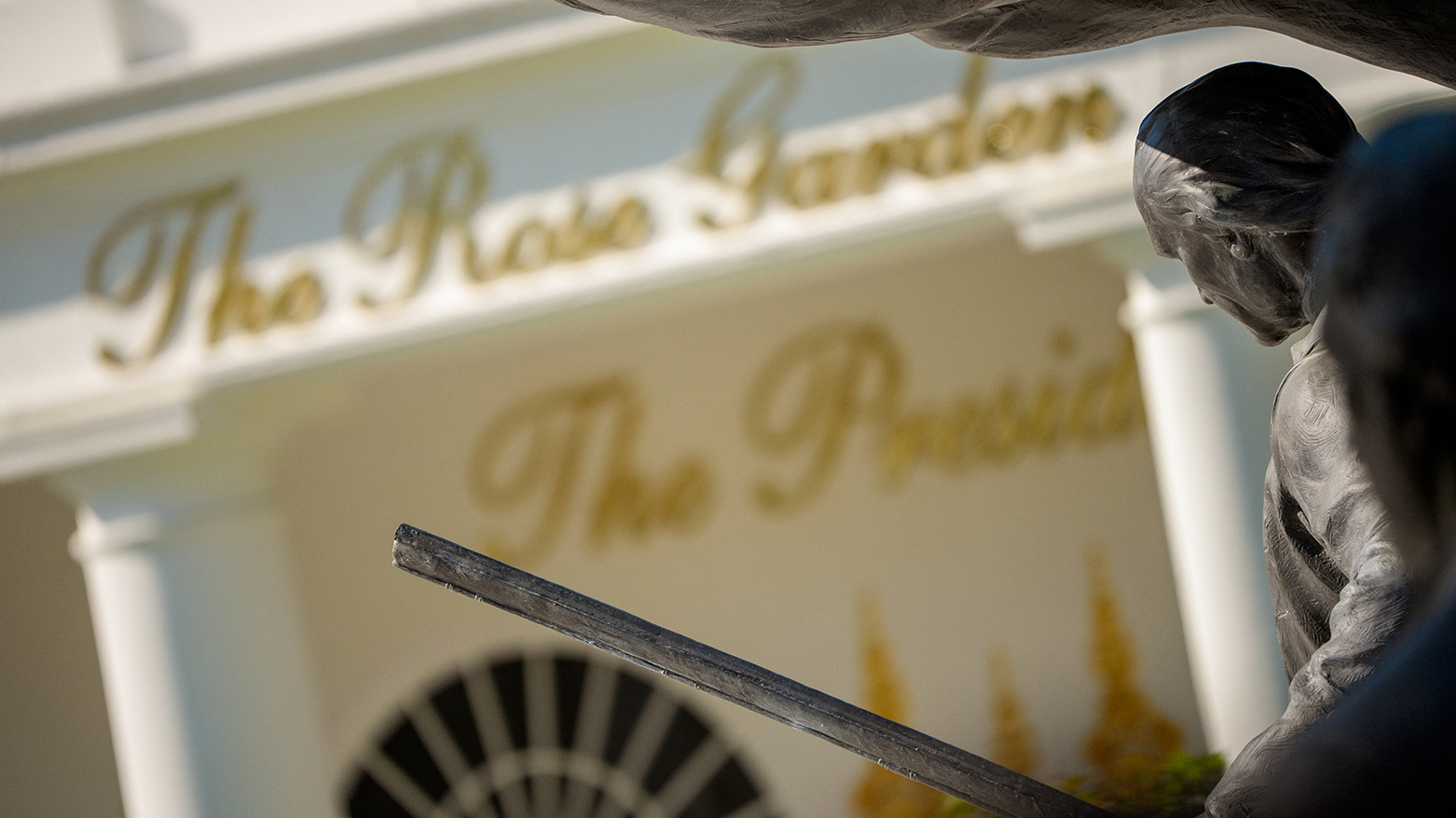
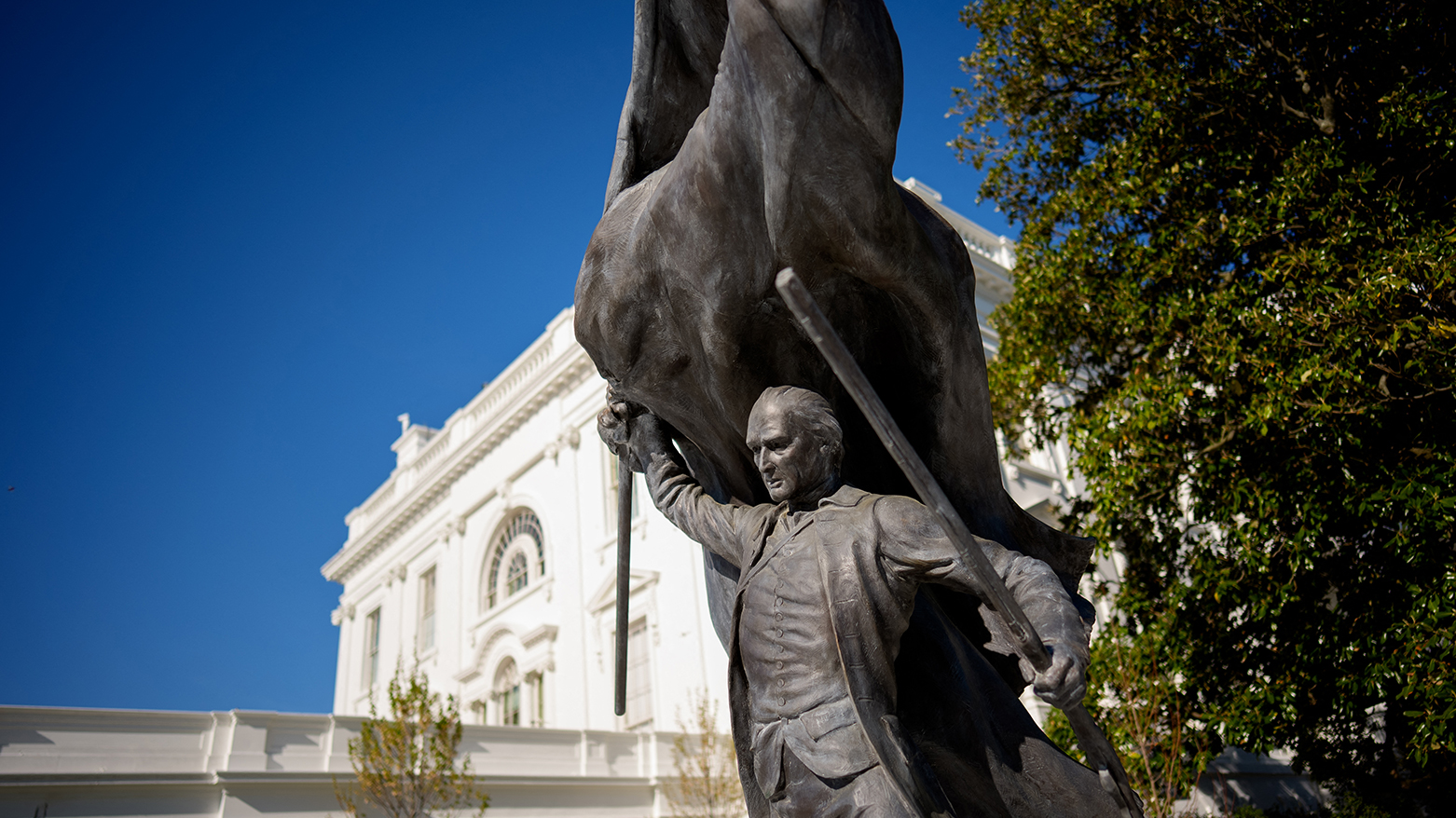
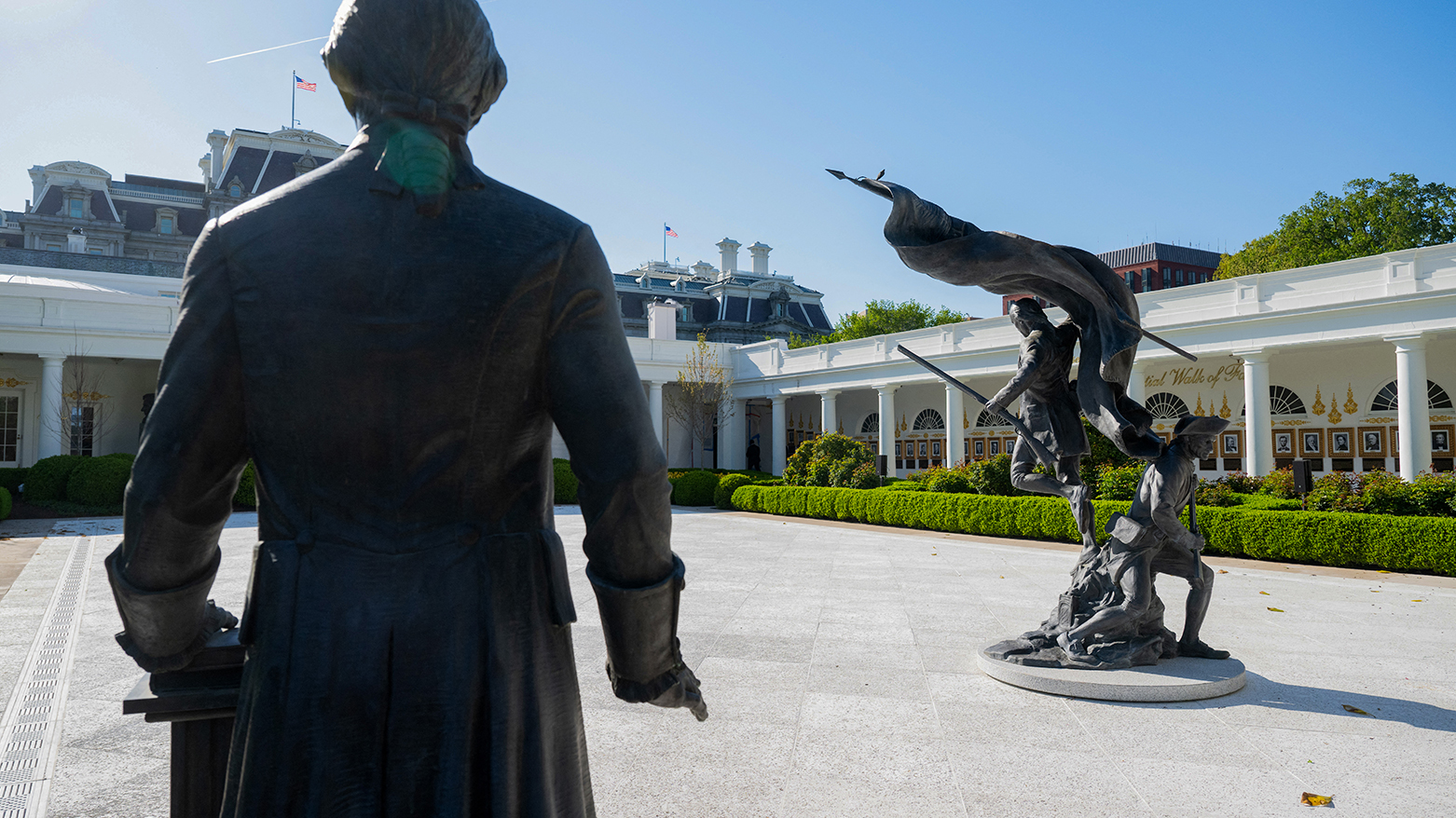
ERBIL (Kurdistan24) - On Friday, the White House moved ahead with two acts of historical staging that, taken together, point to a broader effort to recast the U.S. capital’s public spaces around the approaching 250th anniversary of American independence. A bronze sculpture titled Freedom’s Charge was visible in the Rose Garden, while the Trump administration released formal renderings of a proposed 250-foot "Triumphal Arch" across the Potomac, near Arlington National Cemetery, for review by the U.S. Commission of Fine Arts.
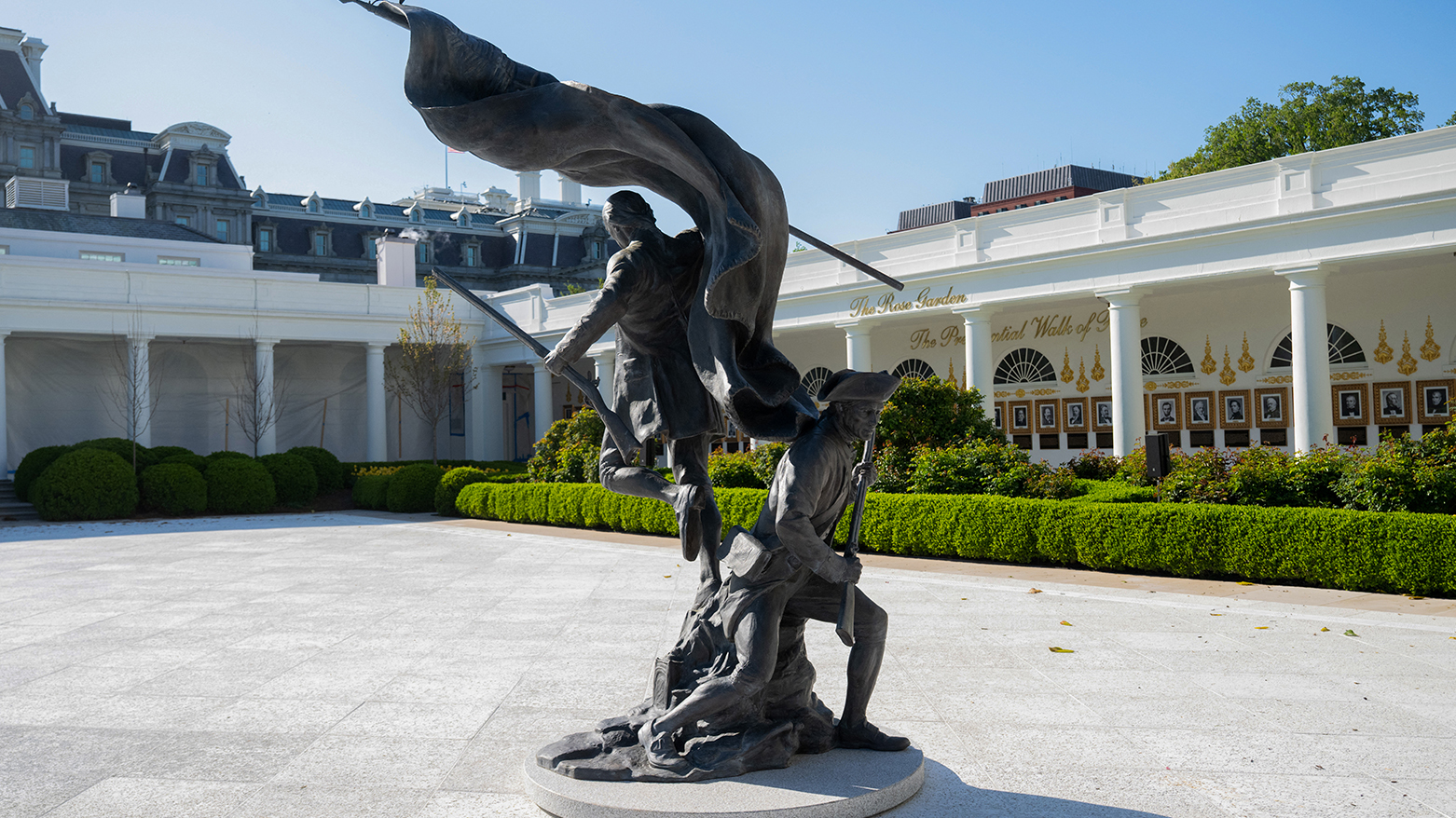
The sculpture, by Chas Fagan, is described by the artist as a Revolutionary War work centered on the responsibility of protecting freedom and the forward motion of battle in defense of that cause.
The Associated Press (AP) and Agence France-Presse photographed the bronze piece in the Rose Garden on Friday, identifying it as Freedom’s Charge and placing it within the changing landscape of the White House grounds, where the Rose Garden itself was converted into a stone-covered patio during Trump’s second term.
The White House has cast the coming year as a national commemorative moment. On its official “Freedom 250” page, it says July 4, 2026, will mark 250 years of American independence, a milestone the administration has folded into a wider branding campaign around national memory, architecture, and symbolic restoration. That framing matters because both the sculpture and the arch are being presented not as isolated aesthetic additions but as part of a deliberate semiquincentennial program.
The arch proposal is the larger and more controversial of the two.
The renderings released Friday show an ivory-colored monument topped by a Lady Liberty-like figure with wings, flanked by two eagles and guarded by four lions, with the phrases “One Nation Under God” and “Liberty and Justice for All” inscribed in gold.
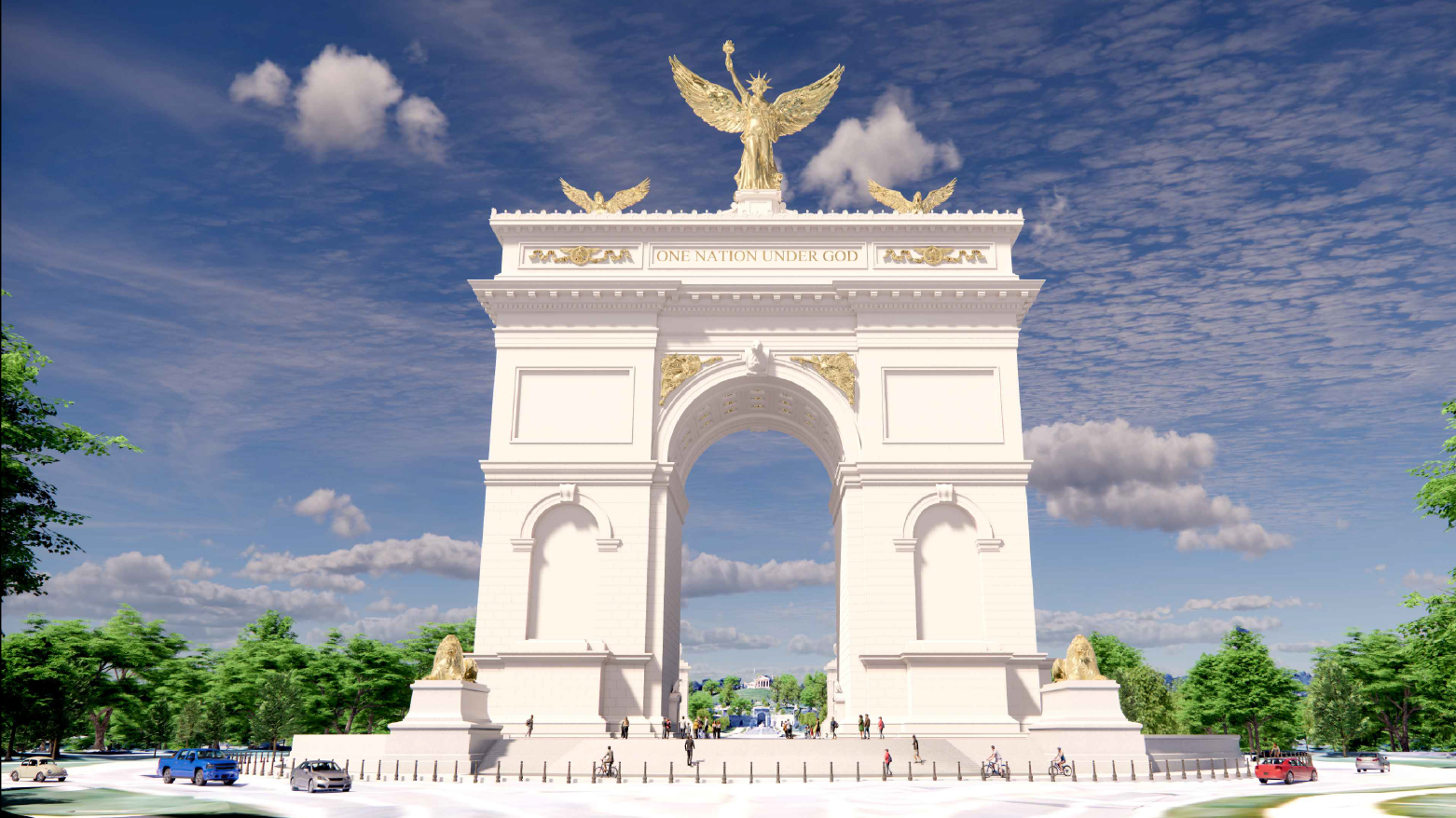
Reuters reported that the plans were formally submitted ahead of the commission’s April 16 meeting; the Washington Post said the filing was the first official submission of the project.
The proposed site, Memorial Circle, lies between the Lincoln Memorial and Arlington National Cemetery, in a corridor long understood as part of Washington’s commemorative geography.
At 250 feet, the arch would rise well above the Lincoln Memorial’s roughly 99-foot height and stand at about half the Washington Monument’s 555 feet. Reuters said the monument is intended to commemorate the 250th anniversary of the United States and would occupy an empty traffic circle linking Washington with northern Virginia.
The design is also bound up with procedure and law. Reuters reported that the project still requires approval from the federal Commission of Fine Arts, and that protected areas such as Memorial Circle would require congressional authorization for monuments built there.
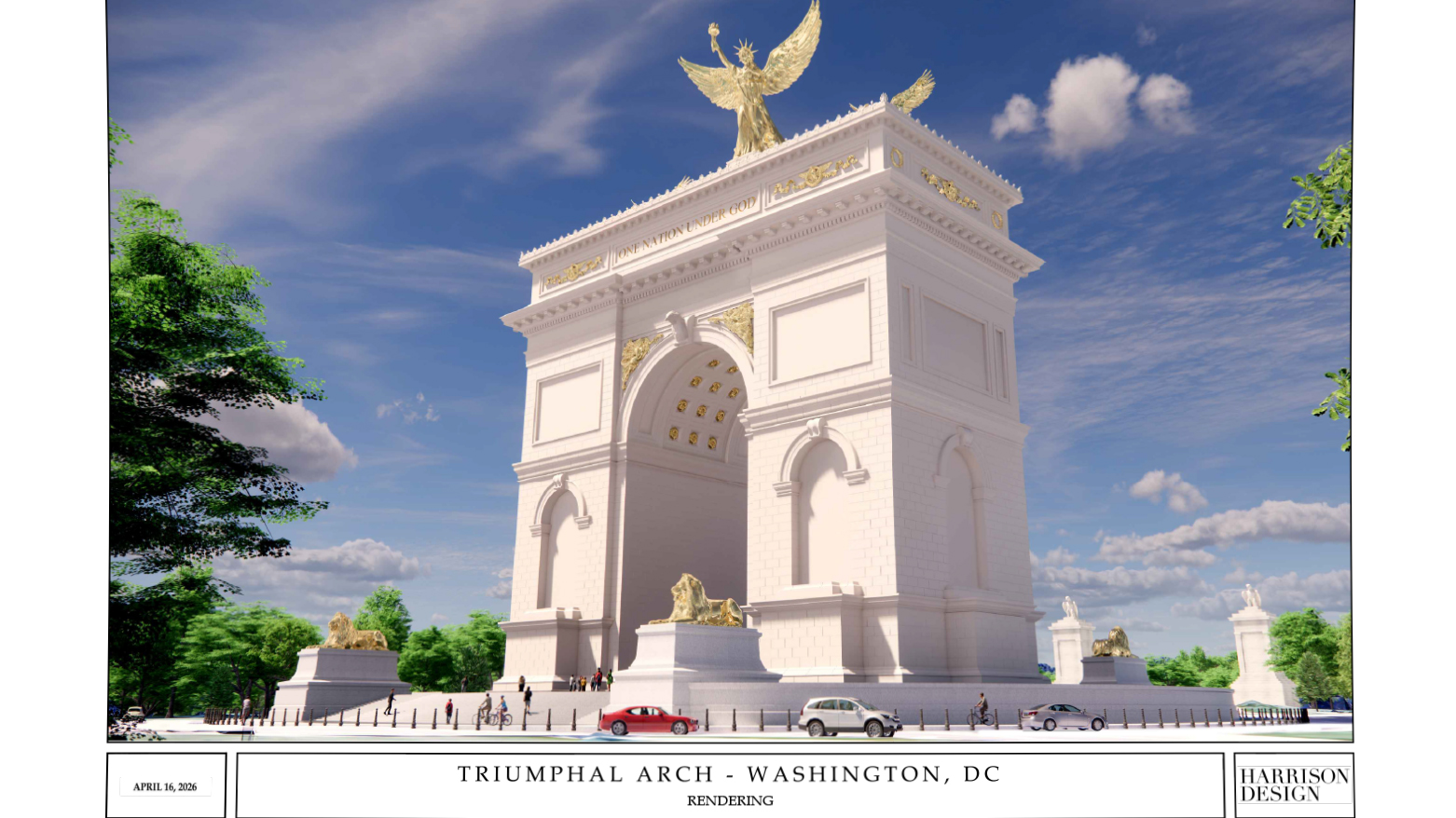
The same Reuters report said Washington-area residents have sued to block the arch. The Washington Post added that architects and preservationists warn it would alter existing sightlines and obscure the intended relationship between the Lincoln Memorial, Arlington House, and the cemetery beyond it.
The White House has defended the arch as a tribute to military sacrifice and a civic enhancement for visitors to Arlington National Cemetery. White House spokesman Davis Ingle said in a statement, as quoted by the Washington Post, that it would improve the visitor experience for veterans, families of the fallen, and other Americans, while serving as a visual reminder of sacrifice across the nation’s history.
Administration officials, meanwhile, declined to disclose the project’s cost, saying it was still being calculated; Trump has said he wants private donations to help finance it, while Reuters reported that Notus said some taxpayer funding could also be involved through the National Endowment for the Humanities.
What is taking shape, then, is not simply a monument and a sculpture, but a presidential attempt to organize the visual language of the capital around a particular reading of the republic’s origins. The Rose Garden piece invokes the Revolutionary War in compact form.
The arch reaches far beyond the White House grounds, aiming to inscribe the semiquincentennial into the skyline itself. Whether the proposal advances will depend on further review, legal clearance, and the limits that federal land-use rules still impose on political ambition.
Competing Interpretations of the Monument
The installation of Freedom’s Charge on the White House grounds, alongside the administration’s broader push to develop large-scale commemorative architecture for America’s 250th anniversary, has generated divergent readings that extend beyond questions of design into competing interpretations of historical memory itself.
One strand of commentary, exemplified in conservative-leaning publications such as The Spectator, frames the placement of Revolutionary-era imagery at the White House as part of a broader cultural and political restoration.
In this view, the installation of statues and historical figures on federal grounds is interpreted as a corrective to earlier periods in which public monuments were removed or contested amid debates over historical injustice and representation.
The White House, under this interpretation, becomes an active site of reaffirmation, using physical sculpture to reassert continuity with founding narratives and national symbols.
A different analytical tradition, more common in academic and literary journalism exemplified by The New Yorker, tends to situate such acts within a broader institutional and cultural tension over the management of public memory.
Rather than treating monument placement as restoration, this perspective emphasizes the role of political and administrative elites in mediating historical interpretation—often unevenly, and sometimes without stable consensus on what aspects of history are being elevated or revised.
In this frame, public symbols are less fixed declarations than unstable outcomes of negotiation between political authority, public sentiment, and institutional constraint.
Applied to the current moment, these interpretive frameworks diverge on a central question: whether monuments such as Freedom’s Charge, and the proposed triumphal arch near Arlington National Cemetery, represent a consolidation of national narrative or a renewed contest over it.
Where one view emphasizes restoration and coherence in public symbolism, the other highlights the inherent fragility of that symbolism and the administrative processes through which it is produced, contested, or redefined.
Both readings, however, converge on a shared observation: that physical monuments in Washington are not neutral architectural additions, but instruments through which competing accounts of national history are made visible in public space.