US and Iran Hold Landmark Direct Peace Talks in Pakistan Amid Fragile Ceasefire
High-level Islamabad negotiations mark rare face-to-face contact as disputes over sanctions, Gaza, and Hormuz persist
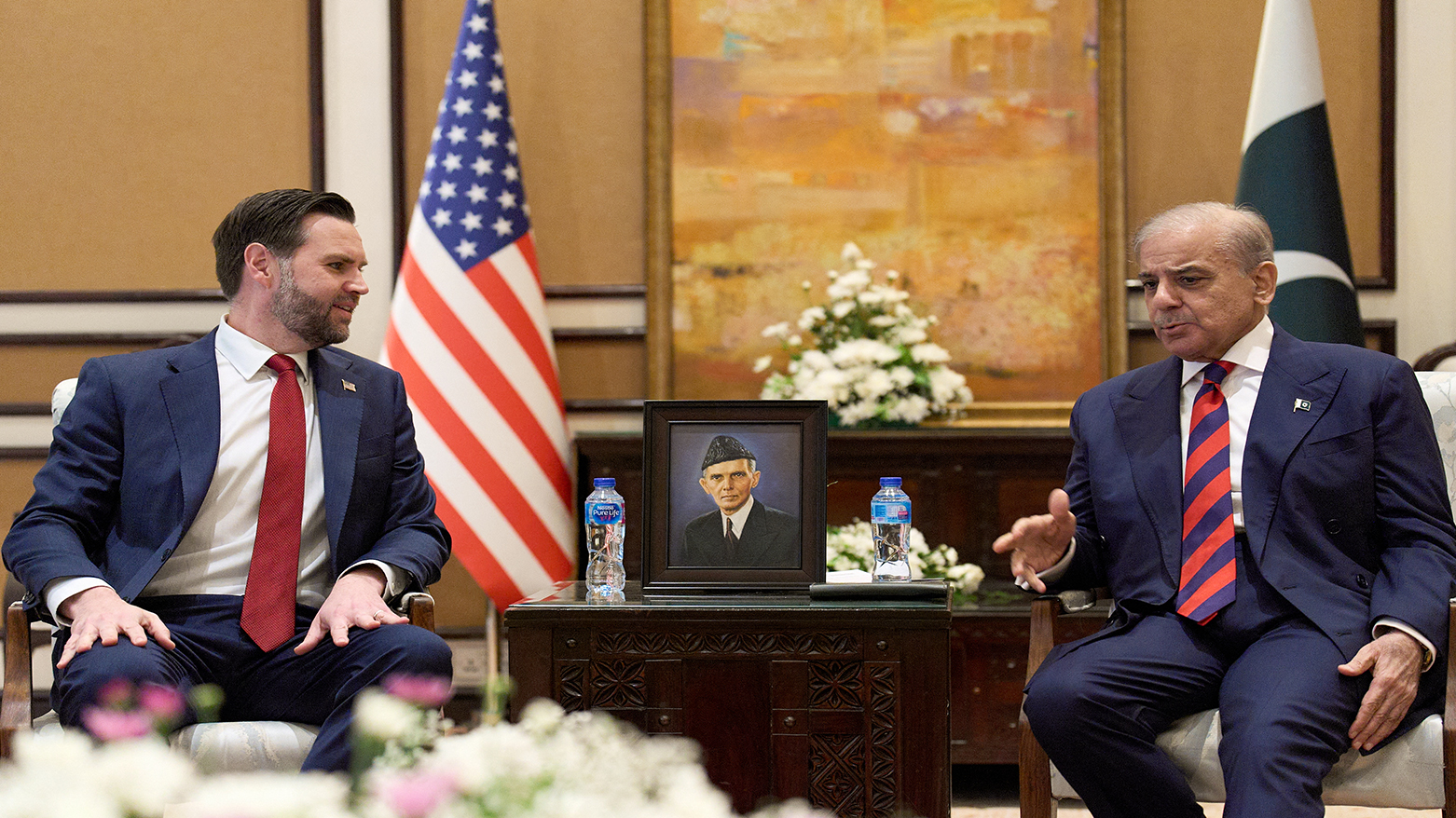
ERBIL (Kurdistan24) — Senior United States and Iranian officials held direct face-to-face peace talks in Islamabad on Saturday, in what marks the most significant diplomatic engagement between the two rivals since the 1979 Islamic Revolution, as efforts intensify to end a war that has destabilized the Middle East and rattled global markets.
The trilateral negotiations, hosted by Pakistan, brought together delegations from Washington and Tehran in the same room for the first time in years, departing from previous rounds of indirect talks where both sides were separated by mediators.
A senior White House official confirmed the unprecedented format, describing it as a major procedural shift in the diplomatic track.
The US delegation is being led by Vice President JD Vance, special envoy Steve Witkoff, and President Donald Trump’s son-in-law Jared Kushner, making it one of the highest-level American engagements with Iran since the establishment of the Islamic Republic.
The Iranian delegation, comprising more than 70 officials, is led by parliamentary speaker Mohammad Bagher Ghalibaf and Foreign Minister Abbas Araghchi.
According to Iranian media, the decision to proceed with talks followed a meeting between both delegations and Pakistani Prime Minister Shehbaz Sharif, who welcomed the negotiations and expressed hope that they would serve as a “stepping stone toward durable peace in the region.”
The talks are taking place against the backdrop of heightened regional tensions, including disputes over the Strait of Hormuz, a critical global energy chokepoint through which roughly one-fifth of the world’s crude oil passes.
US President Donald Trump said Washington had begun “clearing out” the strategic waterway, while US media reported naval movements through the strait. Iranian officials denied any unauthorized passage of US vessels.
Trump has framed the maritime operation as a “favor” to global economies, including China, Japan, and France, while also warning that Iran’s remaining naval mines still pose a risk to shipping lanes.
Tehran, however, continues to maintain that any final agreement must address broader regional issues, including sanctions relief and Israel’s military campaign in Lebanon—conditions Washington has signaled are not up for negotiation.
Despite the high-level engagement, mistrust remains deeply entrenched. “Our experience in negotiating with the Americans has always been met with failure and broken promises,” Ghalibaf said upon arrival in Pakistan, underscoring Tehran’s skepticism.
However, US officials struck a more cautiously optimistic tone. Vice President Vance said Washington was prepared to negotiate “in good faith,” but warned that any attempt to “play us” would derail progress.
Experts noted that the size and seniority of the Iranian delegation suggested Tehran’s serious intent to reach an agreement, with analysts describing the talks as potentially “make or break.”
Iranian state media reported cautious progress on key issues, while a US official denied claims that Washington had agreed to unfreeze Iranian assets held in Qatar.
Meanwhile, the ceasefire remains fragile, particularly amid continued Israeli military strikes in Lebanon. The Israeli army said it had targeted more than 200 Hezbollah positions in the past 24 hours, including rocket launch sites.
Lebanon’s presidency confirmed preparations for additional diplomatic meetings with Israel in Washington in the coming week.
In Islamabad, Prime Minister Sharif acknowledged the difficulty of the process, warning that “an even more difficult stage lies ahead,” as negotiators attempt to move from a temporary ceasefire toward a lasting settlement of a conflict that began with US-Israeli strikes on Iran in late February.
Trump reiterated that preventing Iran from acquiring a nuclear weapon remains Washington’s top priority, saying it accounts for “99 percent” of the negotiations. He also insisted that the Strait of Hormuz must be reopened, warning it would be done “with or without” Iranian cooperation.
Security in Islamabad was significantly tightened during the talks, with heavy police and paramilitary deployments across the capital’s fortified diplomatic zone.
Pakistan has assembled a team of experts to assist the negotiations on maritime navigation, nuclear issues, and broader security arrangements, according to diplomatic sources.
Regional stakeholders, including Egypt, Turkey, and China, are also closely monitoring the talks, as Islamabad coordinates broader diplomatic engagement with multiple actors involved in mediation efforts.
Despite the unprecedented nature of the meeting, public skepticism persists in Iran. A 30-year-old Tehran resident told AFP he doubted the negotiations would succeed, dismissing Trump’s statements as “pure noise and nonsense.”