Netanyahu Claims Success Against Iran, Vows Continued Fight Against Tehran and Its Proxies
Israeli premier says nuclear and missile programs “crushed” as negotiations with Lebanon hinge on Hezbollah disarmament
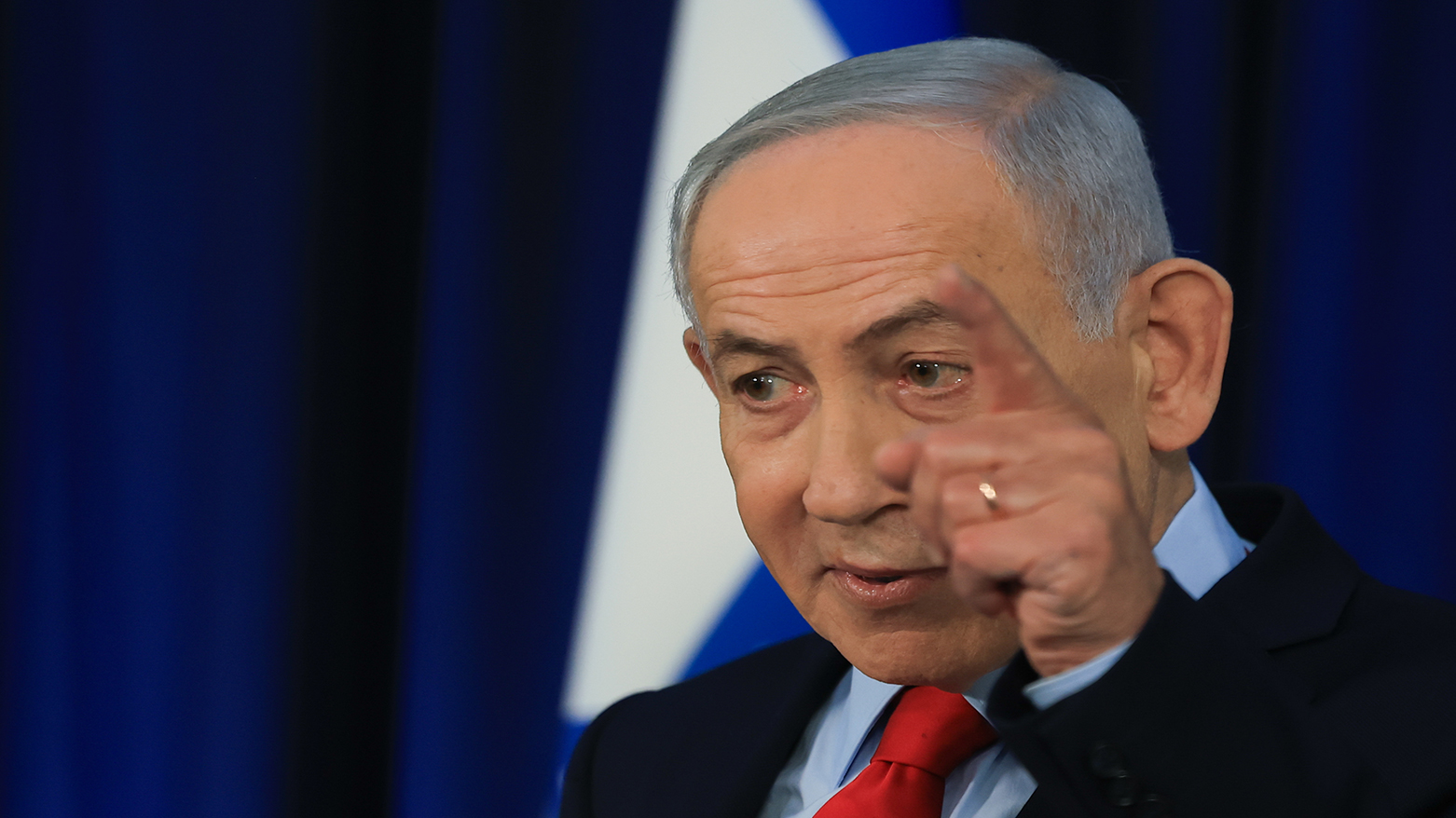
ERBIL (Kurdistan24) — Israeli Prime Minister Benjamin Netanyahu declared on Saturday that Israel would continue its campaign against Iran and its regional allies, while also outlining strict conditions for potential peace talks with Lebanon.
“Under my leadership, Israel will continue to fight against Iran's terrorist regime and its proxies,” Netanyahu wrote on his official account on X.
Israel under my leadership will continue to fight Iran’s terror regime and its proxies, unlike Erdogan who accommodates them and massacred his own Kurdish citizens.
— Benjamin Netanyahu - בנימין נתניהו (@netanyahu) April 11, 2026
Separately, in a televised statement, Netanyahu asserted that the joint U.S.-Israeli military campaign against Iran had achieved significant strategic objectives, claiming it had effectively dismantled key elements of Tehran’s military capabilities.
“We have succeeded in crushing the nuclear program, and crushing the missile program,” he said, adding that the conflict had also weakened Iran’s leadership and its network of regional allies.
Escalating his rhetoric, Netanyahu framed the confrontation as existential, stating: “They wanted to strangle us, and now we are strangling them. They threatened us with annihilation, and now they are fighting for survival.”
Alongside his remarks on Iran, Netanyahu revealed that Lebanon had recently initiated contact with Israel to explore the possibility of formal peace negotiations.
“Lebanon has approached us. In the past month, it has reached out several times to begin direct peace talks,” he said.
However, Netanyahu emphasized that any agreement would be contingent on two core demands: the dismantling of weapons held by Hezbollah and the establishment of a long-term, binding peace arrangement.
“I have given my approval, but on two conditions: we want the dismantling of Hezbollah's weapons, and we want a real peace agreement that will last for generations,” he stated.
Diplomatic efforts appear to be gaining traction in Washington, where Israel’s ambassador to the United States, Yechiel Leiter, reportedly rejected any ceasefire discussions involving Hezbollah directly, reiterating Israel’s position that negotiations must be conducted with the Lebanese government rather than the armed group.
According to Israeli officials, Israel has agreed to begin formal peace negotiations with Lebanon, despite the absence of official diplomatic relations between the two countries.
Meanwhile, Lebanon’s presidency confirmed that a meeting is scheduled to take place at the United States Department of State on Tuesday to discuss the declaration of a ceasefire and establish a timeline for negotiations between the two sides under U.S. mediation.
In central Beirut, hundreds of demonstrators gathered on Saturday outside the Lebanese government headquarters in a show of support for Hezbollah, while voicing strong opposition to planned talks between Lebanese and Israeli officials in Washington next week.
📹: Hundreds of people gathered on Saturday outside the Lebanese government headquarters in central Beirut in support of Hezbollah and to protest planned talks between Lebanese and Israeli officials in Washington next week
— Kurdistan 24 English (@K24English) April 11, 2026
Read More: https://t.co/KRaq4pQLuS pic.twitter.com/Nnp1b4KLuK
The protest underscored deep domestic divisions over the prospect of negotiations with Israel, with participants framing the discussions as a contentious step that could reshape Lebanon’s political and security landscape amid ongoing regional tensions.
The developments signal a potentially significant shift in regional dynamics, as military escalation with Iran intersects with renewed diplomatic efforts on Israel’s northern front.
This article was updated by Kurdistan24 on April 11, 2026, at 11:26 pm.