Iran Said No to Everything: The Full List of US Demands That Broke the Islamabad Talks
A senior US official revealed on April 12 that Iran rejected Washington's demands to end uranium enrichment, dismantle nuclear sites, cut proxy funding, and fully reopen the Strait of Hormuz, causing the Islamabad talks to collapse and prompting Trump to order a naval blockade.
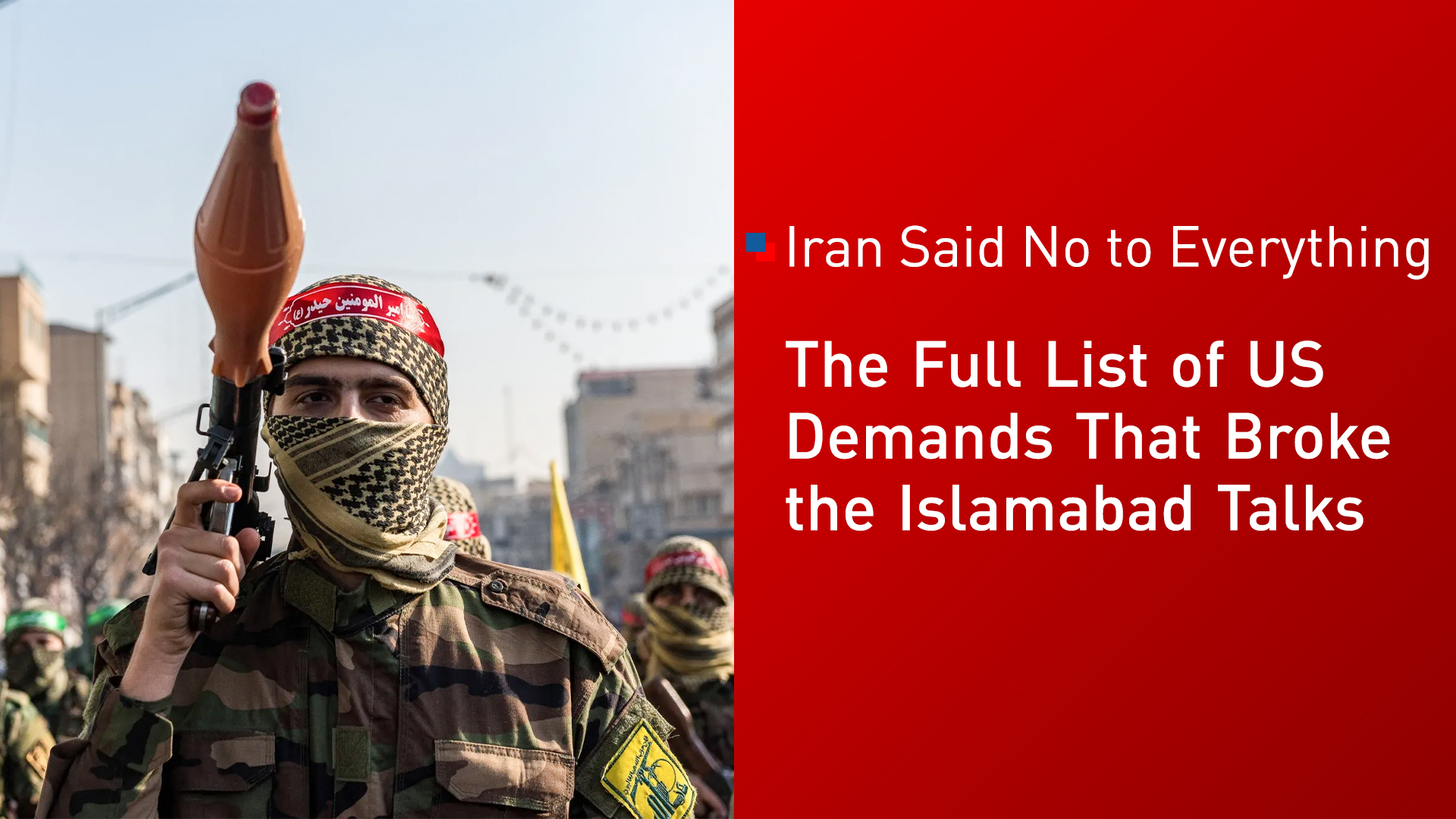
ERBIL (Kurdistan24) - The breakdown of the Islamabad talks was not a matter of procedural friction or diplomatic misunderstanding — it was a head-on collision between two irreconcilable positions across virtually every major issue on the table. A senior US official revealed to Reuters on Sunday, the full scope of what Washington had demanded, and what Tehran had flatly refused.
Iran rejects proxy funding cuts
Among the sharpest points of contention was Washington's demand that Tehran permanently sever all financial support to armed groups — specifically Hamas, Hezbollah, and Yemen's Houthi movement. According to the senior official, Iran rejected this demand outright and with force, refusing to accept it as a condition for any agreement.
Nuclear enrichment and site dismantlement
On the nuclear file, Washington's position was unambiguous. Axios, citing a separate informed source, reported that the US demanded a permanent and complete end to uranium enrichment, as well as the full dismantlement of Iran's key enrichment facilities — many of which had already sustained damage during the conflict — in addition to the surrender of Iran's existing stockpile of enriched uranium.
Tehran refused to halt enrichment or agree to dismantle its nuclear infrastructure, insisting on its right to continue the program.
The Strait of Hormuz
Maritime security proved equally intractable. Washington demanded the full and unconditional reopening of the Strait of Hormuz to international shipping, with no tolls or transit fees imposed on vessels passing through. Iran was unwilling to commit to fully reopening the waterway — one of the world's most critical energy transit corridors — and the dispute over control of the strait remained unresolved at the close of talks.
Frozen assets added to the impasse
Informed sources also pointed to a financial dispute as a key factor in the collapse: disagreement over the amount of Iran's frozen assets that Washington was prepared to release. This financial deadlock, compounded by Tehran's rejection of the security conditions, ensured the talks ended without any outcome.
Iran's Foreign Ministry spokesperson Ismail Baghaei confirmed that the two sides had differed on two significant issues and reached no agreement, without specifying further detail publicly.
Trump responds with a blockade
Washington's response to the breakdown was immediate and military in nature. Trump announced Sunday that US naval forces would begin imposing a full blockade on the Strait of Hormuz, taking control of all movement in and out of the waterway — a move that analysts warn significantly raises the risk of further escalation across the region.