Shiite Marja’iyya and ‘External Veto’ Reportedly Block Sudani’s Second Term
Coordination Framework weighs alternatives as Maliki’s prospects fade in Iraq’s PM race
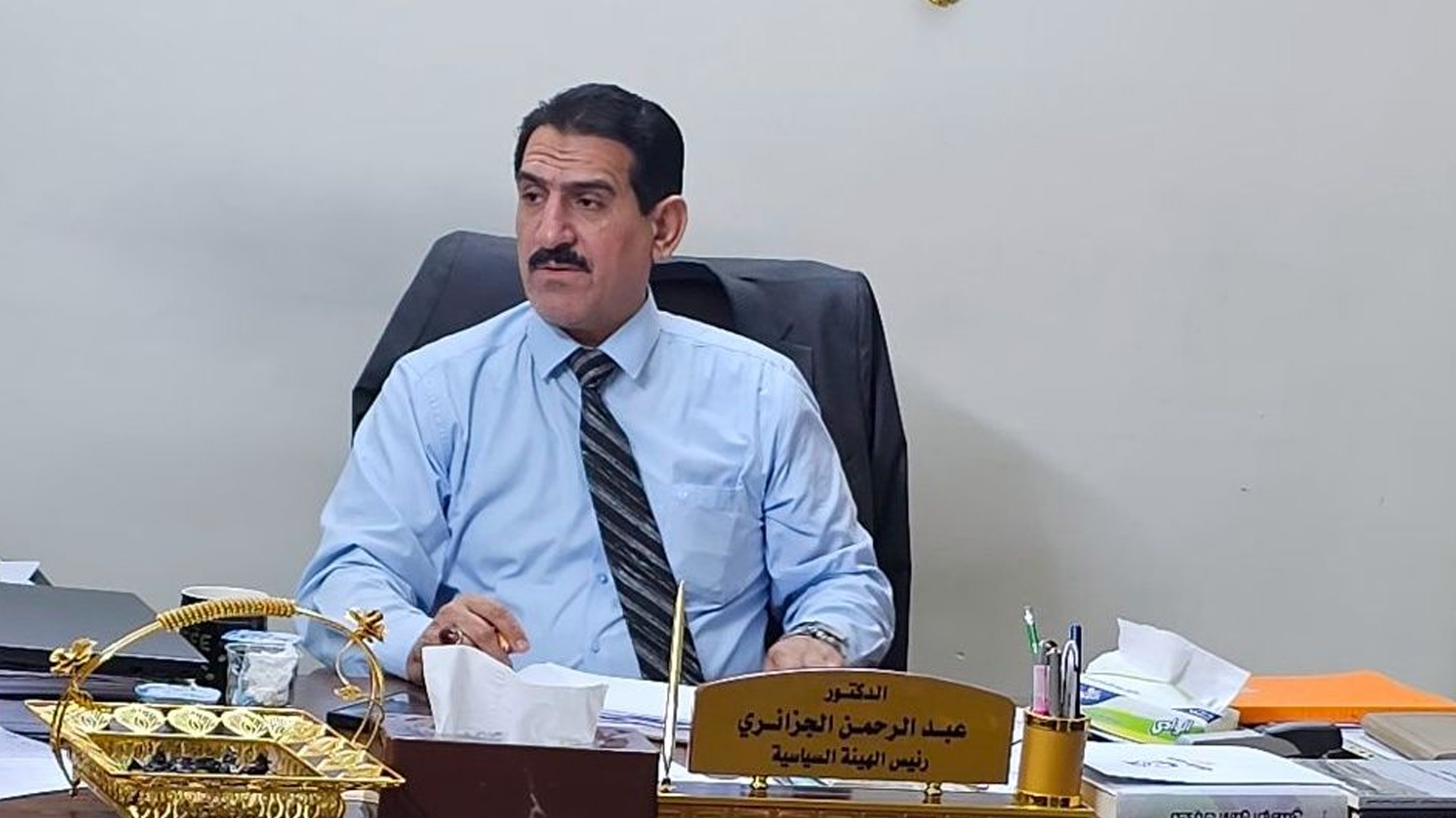
ERBIL (Kurdistan24) — Iraq’s powerful Shiite religious authority, the Marja’iyya, has placed a veto on granting a second term to outgoing Prime Minister Mohammed Shia' al-Sudani, a senior figure within the Coordination Framework said Monday, signaling a major shift in the country’s leadership race.
In an exclusive statement to Kurdistan24, Coordination Framework leading member Abdulrahman al-Jazairi said Sudani’s chances of remaining in office are now “very low,” citing both internal religious opposition and broader political constraints.
“The Marja’iyya has a veto against re-nominating Sudani,” al-Jazairi said, adding that an “external veto” also exists, further complicating any attempt to secure him a second term.
“Even though Sudani’s Construction and Development list is campaigning for a second term, this will not happen,” he added.
Al-Jazairi identified three main candidates currently under consideration within the Shiite alliance: former prime minister Haider al-Abadi, as well as Bassem al-Badri and Hamid al-Shatri, indicating a narrowing field as negotiations intensify.
He also revealed that Nouri al-Maliki, head of the State of Law Coalition, is expected to finalize his position within the next two days and could potentially propose an independent candidate as an alternative.
Maliki’s own prospects of returning to power, however, appear to be fading. Political sources say Iraqi leaders are increasingly distancing themselves from his candidacy as they attempt to resolve the premiership question following a recent ceasefire in the region.
A source close to Maliki acknowledged the difficulty, saying, “I think it is difficult” for him to become Iraq’s next prime minister, a view echoed by other political insiders.
Maliki had initially been nominated by the Coordination Framework, but his bid has faced mounting external pressure—particularly after US President Donald Trump warned that Washington could withdraw support for Iraq if he returned to office.
The ultimatum has left Iraqi leaders navigating a complex political landscape, balancing internal factional dynamics with external geopolitical considerations.
The urgency of selecting a new prime minister increased after parliament elected Iraq’s new president on Saturday, triggering a constitutional process requiring the nomination of a premier within two weeks.
With Iraq under a caretaker government for months—including during the recent Middle East war that also affected the country—pressure has grown to finalize a new administration.
Within this context, al-Jazairi also addressed tensions between Baghdad and the Kurdistan Region, stressing that the next prime minister must resolve longstanding disputes.
“The next prime minister must resolve all pending issues,” he said, noting that the Kurdistan Democratic Party has already withdrawn its representatives from Baghdad, underscoring the depth of the current political impasse.
Meanwhile, Humam Hamoudi, head of the Islamic Supreme Council of Iraq and a key figure within the Coordination Framework, has called for broad consensus, urging that the selection of the next prime minister be made unanimously or by an “absolute majority” to ensure stability.
Since the 2003 US-led freedom operation that toppled the dictator Saddam Hussein, Iraq’s political system has operated under a delicate power-sharing arrangement shaped by both domestic divisions and external influence, particularly from Iran and the United States.
By convention, the prime minister is Shiite, the parliament speaker Sunni, and the presidency held by a Kurd—an arrangement intended to balance Iraq’s diverse political and sectarian landscape.
As negotiations continue, the combination of internal vetoes, external pressures, and unresolved disputes suggests that forming Iraq’s next government will remain a complex and contentious process.