Lebanese Health Ministry Reports Six Hospitals Closed Amid Sustained Israeli Bombardment
In a statement to Kurdistan24 on Tuesday, Redha al-Mousawi, head of the Lebanese Ministry of Health’s office, provided detailed casualty and operational assessments stemming from the ongoing Israeli bombardment. The death toll in Lebanon has reached 2,000+, while injuries have surpassed 6,700.
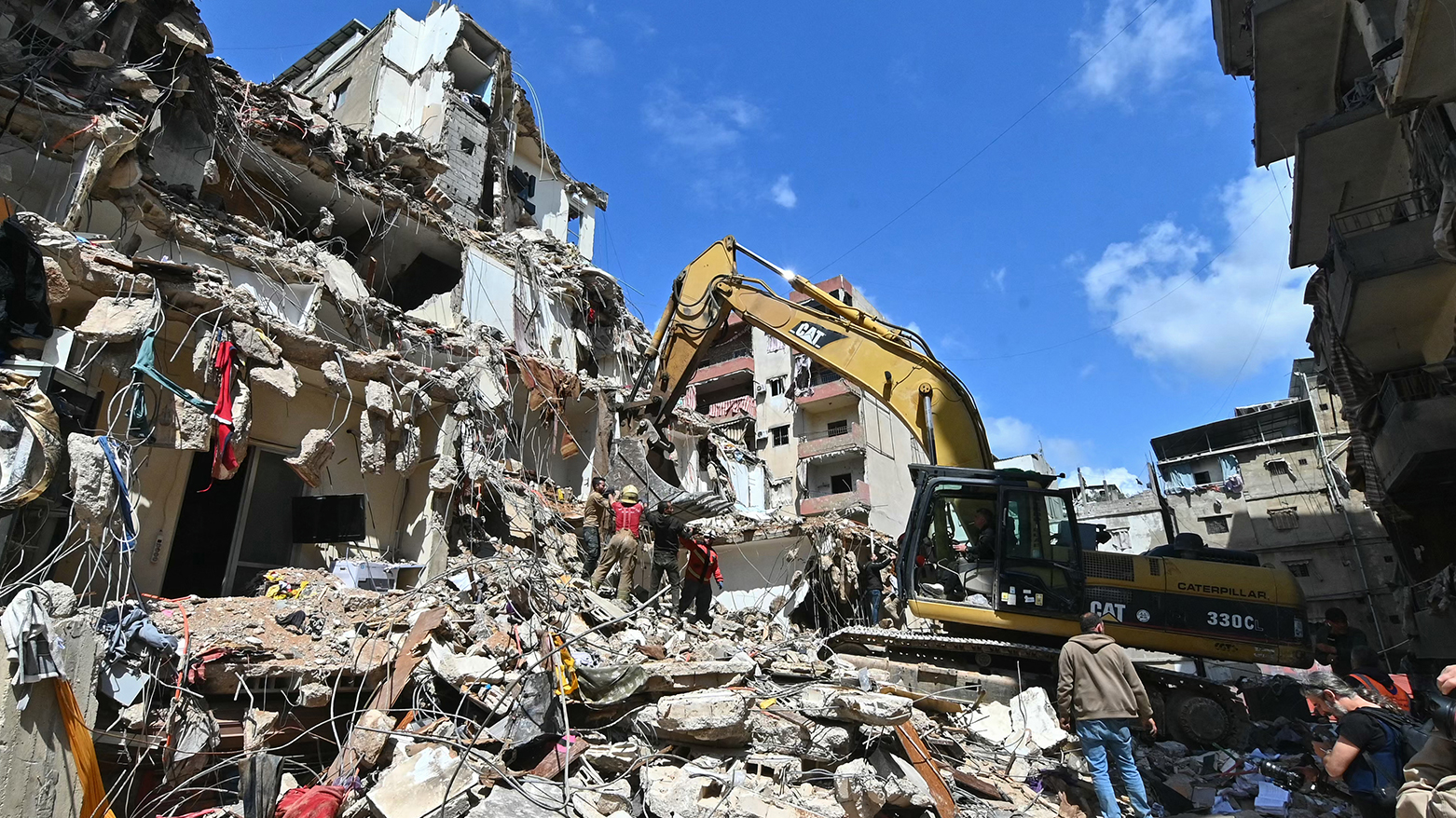
ERBIL (Kurdistan24) - The Lebanese Ministry of Health confirmed on Tuesday that six hospitals across Lebanon have been completely closed due to systemic damage from ongoing Israeli military strikes, which officials say have intentionally targeted civilian infrastructure and emergency medical teams despite the implementation of a regional ceasefire between the United States and Iran.
In a statement to Kurdistan24 on Tuesday, Dr. Redha al-Mousawi, head of the Lebanese Minister of Health's office, provided detailed casualty and operational assessments stemming from the continuous Israeli bombardment.
According to the ministry's data, the sustained military operations have resulted in the deaths of 2,089 people in Lebanon, with an additional 6,762 individuals sustaining injuries since the outbreak of the broader regional conflict on August 28 of the preceding year.
The Lebanese health official provided a demographic breakdown of the casualty figures recorded by the ministry. The statistics indicate that 1,671 men have been killed and 4,982 injured; 252 women have been killed and 1,132 injured; and 166 children have been killed, with a further 648 injured during the ongoing military campaign.
Beyond civilian casualties, Dr. Mousawi detailed the severe operational degradation of the country's healthcare system, explicitly stating that Israeli forces are intentionally targeting medical and emergency rescue teams.
According to the ministry's records, the attacks have resulted in the deaths of 88 health workers, while 195 others have been injured in the line of duty.
The institutional damage extends across the broader emergency response network. Mousawi reported that 116 separate attacks have been carried out against various rescue associations operating within Lebanon.
Furthermore, 25 specific medical and rescue centers have been targeted by military strikes, and 101 rescue and health vehicles have been hit or destroyed. The cumulative impact of these systemic strikes has forced the complete closure of six hospitals, severely constricting the state's capacity to provide emergency medical care to the growing number of casualties.
The destruction of medical infrastructure coincides with a broader intensification of the military campaign.
According to Mousawi, the announcement of a 14-day bilateral ceasefire between the United States and Iran did not result in a cessation of Israeli military operations within Lebanese territory; rather, the geographic and operational scope of the attacks expanded.
The health ministry official highlighted that on Wednesday alone, Israeli forces carried out more than 100 airstrikes across Lebanon. Those operations resulted in the deaths of nearly 400 people in a single day, an event previously characterized as the heaviest bombardment on Beirut since the regional war escalated.
Despite the systemic targeting of healthcare facilities, the ministry maintains its operational posture.
“Our message is that we continue to confront this aggression, and our medical teams continue their work,” Dr. Mousawi stated. He characterized the military campaign targeting the health sector as a continuation of established tactical patterns, adding, “The enemy's message is a criminal message that has been ongoing for years and is nothing new; we know Israel very well.”
The release of the comprehensive health ministry casualty data aligns with a critical juncture in regional diplomacy.
As the humanitarian crisis deepens, Lebanese and Israeli representatives were scheduled to convene in Washington, D.C., on Tuesday for their first direct diplomatic negotiations since 1993. The bilateral meetings, mediated by U.S. Secretary of State Marco Rubio, are set to include the respective Israeli and Lebanese ambassadors to the United States.
The diplomatic framework surrounding the Washington talks remains highly contested, signaling low expectations for an immediate breakthrough. The United States is actively pressing for a halt to the localized conflict between Israel and Hezbollah, expressing concern that the continued hostilities in the Levant could destabilize the fragile two-week ceasefire established between Washington and Tehran.
Lebanese President Joseph Aoun has publicly stated his hope that a localized truce agreement can be achieved, which would serve as a foundation for launching comprehensive negotiations between the two nations, which have remained technically in a state of war for decades.
However, Hezbollah's leadership has explicitly opposed the U.S.-mediated negotiations. Naim Qassem, the group's leader, called for the diplomatic talks to be scrapped before they commenced, describing the diplomatic initiative as "futile."
Conversely, the Israeli government has preemptively ruled out discussing any immediate ceasefire parameters with Hezbollah during the Washington summit. Israeli officials maintain that the primary focus of any diplomatic engagement must be the disarmament of the militant group, which Jerusalem accuses of sustaining persistent rocket fire against civilian populations in northern Israel.
The localized diplomatic efforts regarding Lebanon are occurring against the backdrop of significant geopolitical escalation in the broader Middle East.
Following the failure of the U.S. and Iranian delegations to achieve a diplomatic breakthrough during negotiations in Islamabad, Pakistan, Washington initiated a comprehensive naval blockade on Iranian ports.
The U.S. Central Command stated that the blockade applies to vessels of all nations attempting to enter or depart Iranian coastal areas, including all ports situated on the Arabian Gulf and the Gulf of Oman.
The naval blockade represents a strategic expansion of the conflict into global maritime trade corridors, specifically targeting the Strait of Hormuz, which Tehran had previously subjected to an effective closure.
The U.S. strategy aims to sever Iranian financial revenues while simultaneously applying secondary diplomatic pressure on Beijing, the primary consumer of Iranian petroleum exports, to compel Tehran to reopen the critical maritime chokepoint. In response to the American naval deployment, China characterized the blockade as "dangerous and irresponsible."
The Iranian military command responded to the maritime restrictions by categorizing the U.S. blockade as an act of piracy. Tehran issued a formal warning stating that if the security of its sovereign harbors is threatened, no port in the Persian Gulf or the Arabian Sea will remain safe.
Despite the escalating maritime standoff, the foundational two-week truce between the United States and Iran remains technically in place, and Pakistani diplomatic sources confirmed that Islamabad is actively working to coordinate a second round of bilateral negotiations between Washington and Tehran.
Metin Kerim Khan, a Kurdistan24 News Writer, contributed to this report.