Iraqi Resistance Front Rejects Disarmament Following Sadr Integration Move
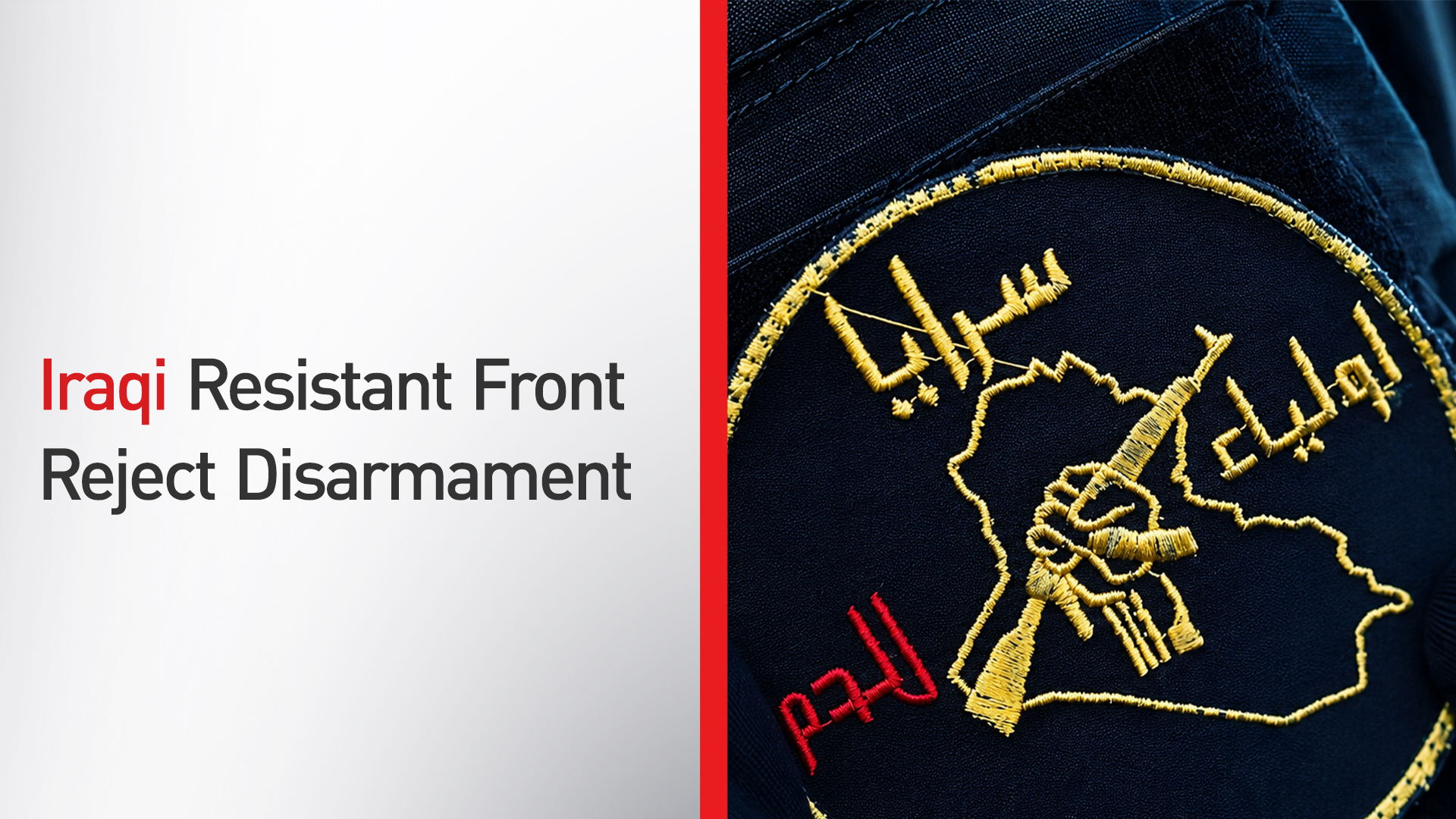
"There will be no talk of laying down or surrendering weapons until the oppression and occupation of Iraq have ended," Abu Mahdi al-Jaafari, spokesperson for the "Saraya Awliya al-Dam" group, asserted, referring to the continued presence of "foreign forces" in Iraq.
ERBIL (Kurdistan24) - The Islamic Resistance in Iraq has officially declared that it will not surrender its weapons to the state, openly defying a growing government-backed push to consolidate all armed factions under centralized national authority.
The defiant stance comes in direct response to influential Shiite cleric Muqtada al-Sadr's recent decision to dissolve his own armed wing, Saraya al-Salam, and integrate it into official state military structures.
Abu Mahdi al-Jaafari, spokesperson for the "Saraya Awliya al-Dam" group, acting as a representative voice for the broader Islamic Resistance in Iraq, issued a statement emphasizing that disarmament remains fundamentally off the table.
"There will be no talk of laying down or surrendering weapons until the oppression and occupation of Iraq have ended," al-Jaafari asserted, referring to the continued presence of foreign forces in the country.
The resistance spokesperson leveled sharp criticism against those demanding that factions disarm, arguing that militia forces are only valued during times of existential crisis.
"During times of war, the Resistance Front is hailed as heroic, yet in times of peace, the very people who protected Iraq from existential threats are forgotten," al-Jaafari noted.
Fragmented Paths for Armed Groups
The hardline position adopted by factions such as Saraya Awliya al-Dam, Al-Nujaba, and Kata'ib Sayyid al-Shuhada highlights a widening schism within Iraq's security landscape.
While some armed groups are resisting state control, others are moving toward formal integration, creating a complex and potentially volatile political environment in Baghdad.
The debate over disarmament intensified earlier this week when Muqtada al-Sadr announced the complete separation of his armed wing, Saraya al-Salam, from the National Shiite Movement.
Al-Sadr ordered the group's full integration into Iraq's state military framework and directed affiliated civilian entities to transform into a non-military structure known as "Al-Bunyan al-Marsous" (The Solid Edifice), operating without headquarters, uniforms, or weapons.
In his announcement, al-Sadr appealed for all factions within the Popular Mobilization Forces (PMF) to detach from political and sectarian influence and hand over their arsenals to the state.
The cleric framed the decision as necessary for the "public interest" to avoid looming dangers threatening the country.
Baghdad Pushes for State Monopoly on Arms
Al-Sadr's initiative provided significant political momentum for the federal government's long-standing effort to assert exclusive control over armed forces.
Prime Minister Ali Faleh al-Zaidi swiftly welcomed the cleric's announcement, praising it as a "responsible national stance."
According to a statement issued by the Prime Minister's Office, Baghdad called on all armed factions across the country to follow the same path by operating solely under the umbrella of official state institutions.
"The state must remain the sole entity authorized to have a monopoly on weapons and the enforcement of the law," the statement read, emphasizing that unified national efforts are required to preserve sovereignty and public confidence.
Iraqi Parliament Speaker Haibat al-Halbousi echoed this sentiment, describing the integration of Saraya al-Salam as a "fundamental step" toward reinforcing security.
Al-Halbousi noted that while Iraq has endured years of exceptional circumstances and security threats, the country is now entering a phase focused on reconstruction and development, which requires empowered and centralized state institutions.
Regional Pressure and Security Concerns
The Iraqi government's push for disarmament is not merely a domestic political issue; it is increasingly driven by regional security concerns and international pressure.
The refusal of Iran-backed resistance factions to disarm complicates Baghdad's efforts to present Iraq as a stabilizing force in the Middle East.
Sabah al-Numan, spokesperson for the Commander-in-Chief of the Iraqi Armed Forces, recently emphasized that controlling weapons outside state authority is a national security strategy that "must be implemented." He rejected the notion that disarmament is merely a political slogan.
Al-Numan's remarks followed reports of drone attacks allegedly launched from Iraqi territory against Saudi Arabia and the United Arab Emirates.
The Iraqi government has launched a joint investigation with Riyadh and Abu Dhabi into these incidents.
Al-Numan warned that if the involvement of any Iraqi party or individual is proven, the armed forces will treat them as a threat to Iraq's national security and a violation of its sovereignty.
The United States has also maintained continuous pressure on Baghdad to curb the influence of Iran-backed armed factions.
Washington has repeatedly urged the Iraqi government to dismantle militia structures accused of targeting American interests and undermining state sovereignty.
As Baghdad intensifies its efforts to centralize military power, the defiant posture of the Islamic Resistance sets the stage for continued political friction.
With al-Sadr's faction moving toward state integration and resistance groups hardening their refusal to disarm, the Iraqi government faces the profound challenge of enforcing a state monopoly on violence without triggering internal conflict.