Lebanon And Israel Launch First Direct Talks In 43 Years In Washington
Lebanon and Israel held their first direct talks in 43 years in Washington on April 14, 2026, under US supervision, aiming to reach a ceasefire amid escalating conflict.
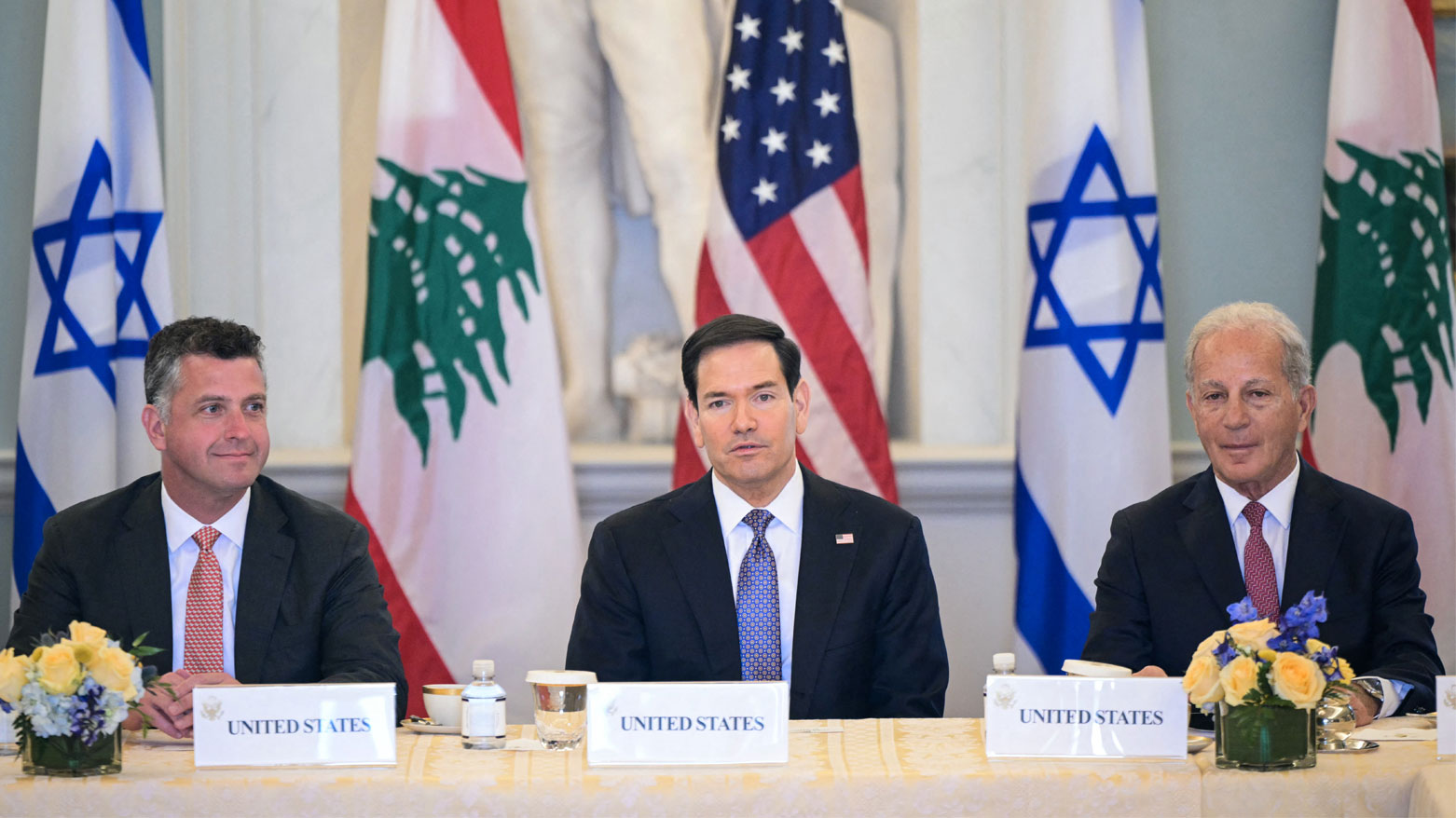
ERBIL (Kurdistan24) - After more than four decades of silence, Lebanon and Israel sat across the same table once again on Tuesday, as direct negotiations officially began in Washington in what is being described as a historic diplomatic moment amid an ongoing and intensifying conflict.
Diplomatic delegations from Lebanon and Israel convened in the US capital for the first direct talks since 1983, marking a significant shift in a relationship defined by prolonged hostility.
The meeting was held at the US State Department under the direct supervision of US Secretary of State Marco Rubio. It brought together Israel’s ambassador to the United States, Yehiel Leiter, and Lebanon’s ambassador in Washington, Nada Hamadeh Maawaz, alongside US Ambassador to Lebanon Michelle Issa.
This round of talks follows the May 17, 1983 agreement—the last time both sides engaged directly—and aims to explore a pathway to ending the armed confrontation that erupted in March.
Marco Rubio described the moment as a rare opportunity: “We are facing a historic chance. Despite working within a deeply complex history, our goal is to set a final boundary to 20 to 30 years of Hezbollah’s dominance in Lebanon.”
Lebanon’s position: army as the sole authority
Shortly before the talks began, Lebanese President Joseph Aoun expressed hope that the negotiations would bring an end to the suffering of the Lebanese people, particularly those living in the south.
He stressed that stability would not be restored unless Israel withdraws from occupied territories and the Lebanese army becomes the sole responsible force deployed along internationally recognized borders.
According to official sources, the Lebanese delegation has been granted authority strictly limited to discussions on a ceasefire. Meanwhile, the United States is working to secure guarantees that Israel will accept ceasefire conditions before moving into broader and more detailed negotiations.
War backdrop and field tensions
The diplomatic effort unfolds against the backdrop of escalating battlefield dynamics. The Israeli military anticipates that Hezbollah may intensify missile attacks toward northern Israel in response to mounting pressure from Washington.
The current conflict between Hezbollah and Israel began on March 2, 2026, after Hezbollah launched missile strikes on Israel following the killing of Iran’s Supreme Leader Ali Khamenei in a US-Israeli airstrike on February 28.
Israel responded with extensive aerial bombardments and the launch of ground operations in southern Lebanon, significantly raising the stakes across the region.
A fragile opening to a new phase
Observers believe that while the crisis will not be resolved in a matter of hours, the Washington meeting represents a foundational step toward a new phase in the region.
Even as uncertainty looms over the outcome, the mere act of direct engagement after 43 years signals a shift that could redefine the trajectory of the conflict.
As negotiations begin under the shadow of war, the Washington talks stand as both a test of political will and a fragile opening toward what could become a new chapter in one of the region’s most entrenched conflicts.