KRG Slams Baghdad Wheat Quota as “Unjust,” Says Kurdistan Farmers Treated Unequally
Kurdistan farmers face potential losses as Iraq caps intake at 292,000 tons
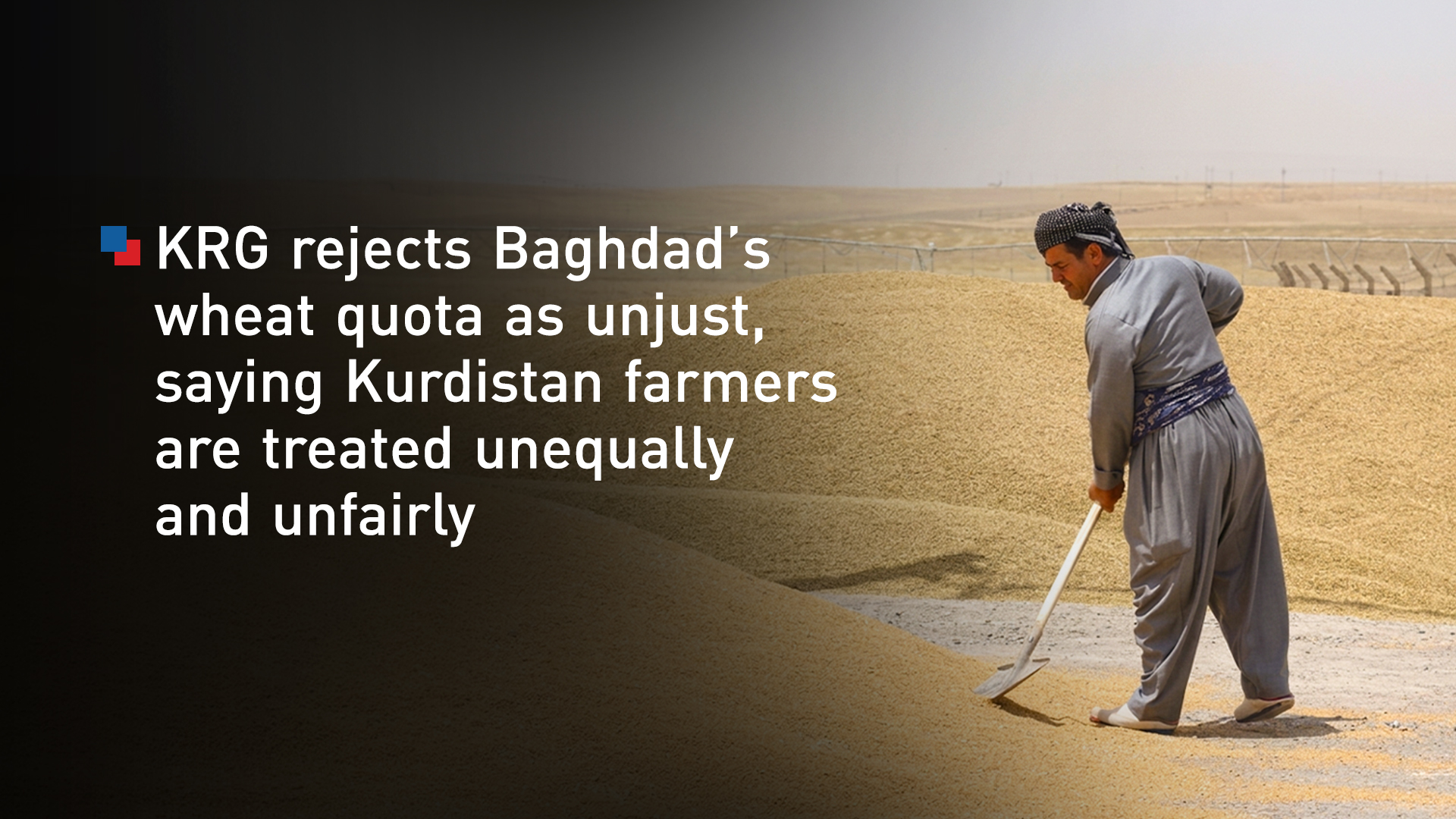
ERBIL (Kurdistan24) — The Kurdistan Regional Government’s Ministry of Agriculture announced on Wednesday that no agreement has been reached with the federal government in Iraq regarding the procurement and pricing of this year’s wheat harvest from farmers in the Kurdistan Region.
Following a meeting between technical and coordination committees from both sides, the KRG ministry said talks with Baghdad ended without a consensus.
According to the statement, the federal government has decided to purchase only 292,000 tons of wheat from Kurdistan Region farmers—a figure the KRG has rejected as insufficient.
The ministry stressed that the allocated amount “lacks fairness” and does not reflect the actual scale of agricultural production in the Kurdistan Region.
It also sharply criticized Baghdad’s approach, stating that the federal government does not treat farmers in Kurdistan on par with those in other Iraqi provinces, describing the decision as a form of “injustice” against the Region’s agricultural sector.
Despite efforts by the KRG’s technical committees to reach a financial and marketing arrangement for the wheat crop, the ministry noted that Baghdad’s insistence on maintaining the capped figure prevented any breakthrough in negotiations.
The dispute comes at a time when farmers in the Kurdistan Region have recorded significantly higher wheat yields, aided by favorable rainfall and improved weather conditions compared to previous years.
Officials say annual production in the Region typically exceeds the quota proposed by Baghdad, with farmers expecting the federal government to purchase their output under terms similar to those applied across the rest of Iraq.
However, recurring disagreements over procurement volumes and payment mechanisms have long strained relations between Erbil and Baghdad, particularly in the agricultural sector.
Farmers in the Kurdistan Region frequently complain of unequal treatment, arguing that federal policies disadvantage them in both the collection and marketing of their crops.
With no agreement in place, officials warn that many farmers could face financial losses this season, as surplus wheat may be forced onto informal or “black market” channels at significantly reduced prices—undermining livelihoods and adding further pressure to the Region’s rural economy.