Kurdistan Region Reduces 690,000 Tons of Toxic Gases Annually
Kurdistan’s “Runaki” project cuts 690,000 tons of emissions annually, as the government expands clean energy, reforestation, water security, and recycling initiatives to improve environmental sustainability.
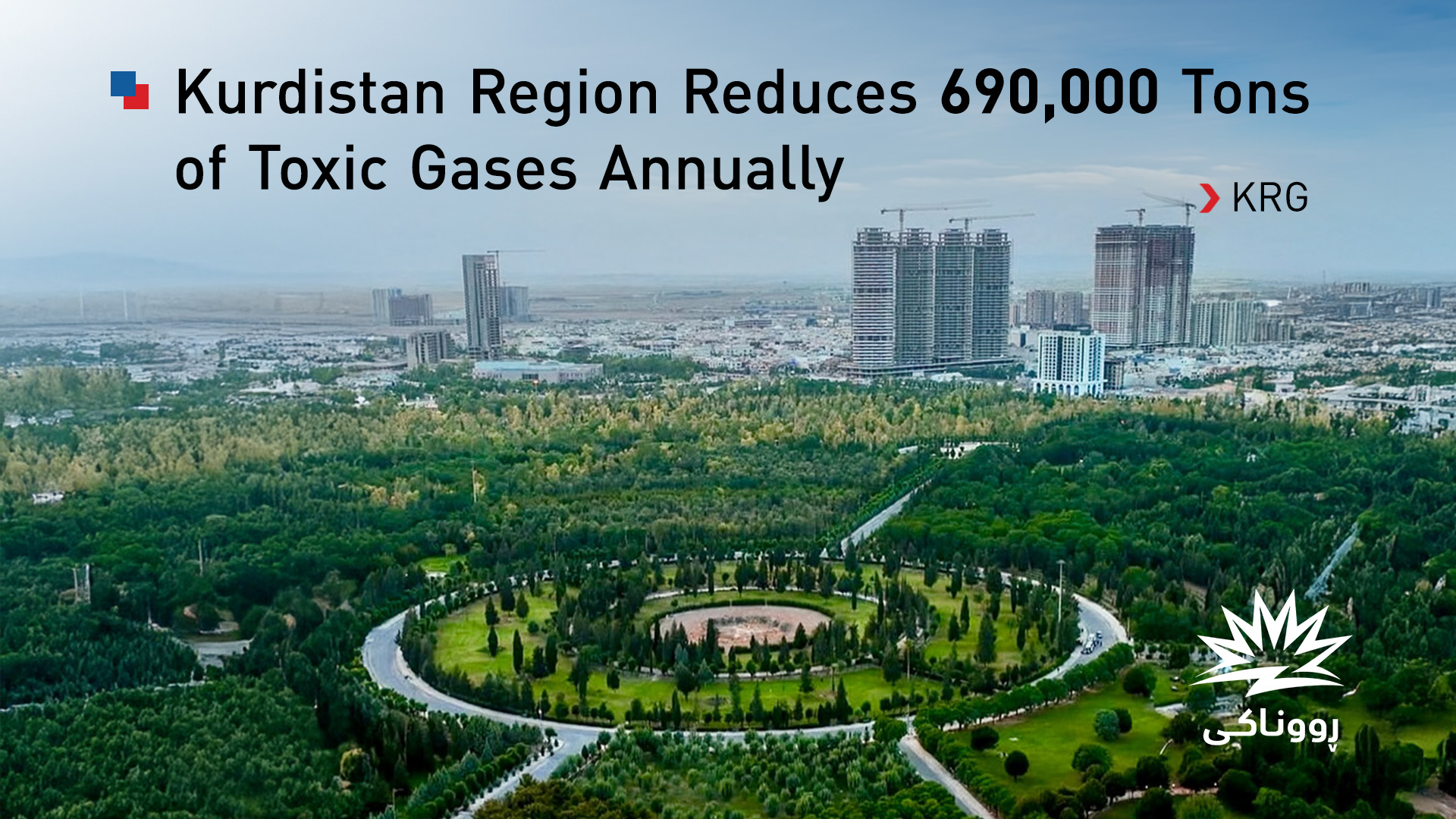
ERBIL (Kurdistan24) - A sweeping environmental transformation is underway in the Kurdistan Region, where a newly released government report reveals that the “Runaki” project alone has reduced 690,000 tons of toxic gases annually, marking a significant shift toward clean energy and long-term sustainability.
On Wednesday, the Kurdistan Regional Government’s Media and Information Office published a detailed report titled “Government Projects and Decisions to Protect the Environment.” The report outlines a broad strategy aimed at reducing pollution, protecting natural resources, and improving public health.
It emphasizes that the Kurdistan Region has taken major steps toward clean energy, positioning environmental protection as a cornerstone of economic development and the well-being of future generations.
The ninth cabinet has implemented a series of major initiatives targeting air pollution reduction, water security, landmine clearance, and waste management, while also encouraging public participation in environmental preservation.
The ‘Runaki’ project: ending pollution from generators
At the center of the report is the “Runaki” project, described as a strategic initiative designed to tackle climate and environmental challenges within the electricity sector.
The project aims to provide continuous 24-hour national electricity while eliminating reliance on nearly 7,000 private diesel generators, identified as a primary source of air pollution and noise.
According to the report, nearly 75% of the Kurdistan Region now has access to uninterrupted electricity. A total of 3,689 generators have been shut down, contributing to a reduction of 690,000 tons of carbon dioxide emissions.
By the end of the year, the government expects full nationwide 24-hour electricity coverage, accompanied by the complete shutdown of all private generators.
Environmental studies cited in the report indicate that once fully implemented, the project could reduce more than 3.7 million tons of carbon dioxide annually, along with 12.7 million tons of nitrogen dioxide, 6.7 million tons of sulfur dioxide, and 984,000 tons of fine particulate matter (PM).
These reductions are expected to improve air quality, lower noise pollution levels from 70 to 55 units, and contribute to better public health outcomes, including reduced rates of respiratory and cardiovascular diseases.
Clean energy production expands
The report notes that 84% of the Kurdistan Region’s electricity is now generated from environmentally friendly sources, including natural gas and hydropower.
Power plants have also been established to utilize flared gas from oil fields, converting harmful emissions into usable energy. In addition, three solar power stations have been installed in Erbil, Sulaimani, and Duhok.
Hydropower production continues at the Dukan and Darbandikhan dams, while a new hydropower station has been built in Deralok.
Monitoring air quality and early warning systems
Four new air quality monitoring stations are being installed in Erbil as part of an early warning system designed to detect harmful emissions and pollutants.
These systems will provide advance alerts in cases of air contamination, enhancing environmental oversight and public safety.
Reforestation and land protection efforts
The government has also expanded efforts to increase green coverage and protect natural landscapes. During the ninth cabinet, green space in the Kurdistan Region increased from 15% to nearly 20%.
Projects are now required to allocate 25% of their land to green areas, with non-compliant projects denied permits. A total of 17,453 projects have received environmental approvals under these conditions.
For older projects lacking green space, alternative legal measures have been implemented, resulting in the greening of 1,218 dunams, equivalent to more than 3 million square meters.
‘Green Belt’ project transforms Erbil
One of the most ambitious initiatives highlighted in the report is the “Green Belt” project around Erbil.
The project will span a two-kilometer-wide area surrounding the city and include the planting of nearly 7 million olive and pistachio trees, along with 10 water ponds.
It is expected to reduce carbon dioxide emissions by between 140,000 and 210,000 tons, lower temperatures in Erbil by two degrees, and cut dust levels by 30–40%.
The project is also projected to create 2,000 job opportunities while significantly improving the city’s landscape and quality of life.
Water security and infrastructure development
Water management remains a key focus, with nine dams constructed to store more than 252.8 million cubic meters of water. Plans are underway to build 18 additional dams.
A total of 23 ponds have been completed, with 58 more currently under development.
To protect groundwater resources, nearly 1,100 wells in Erbil have been closed, helping prevent drought and preserve water reserves.
Landmine clearance and environmental safety
Efforts to clear landmines and remnants of war continue across the region. So far, approximately 150,000 mines and explosive remnants have been removed and neutralized.
More than 13 million square meters of land have been cleared, contributing to safer environments and enabling further development.
Recycling and sustainable industry
The report also highlights the establishment of multiple recycling facilities.
An asphalt recycling plant processes up to 2,000 tons of old road material daily, reducing environmental impact and production costs.
Plastic recycling facilities in Erbil collect and repurpose waste materials, preventing harmful burning and pollution while generating economic value.
Additional factories focus on recycling paper and cardboard, while a wastewater treatment project in Erbil is underway to reuse treated water for irrigation.
Through a combination of clean energy, environmental regulation, and large-scale infrastructure projects, the Kurdistan Regional Government is advancing a long-term strategy to reduce emissions and safeguard natural resources, aiming to secure a cleaner and more sustainable future for the region.