KDP Reiterates Rejection of “Rashid Hotel” Deal on Kirkuk Administration
Party official calls for governance based on election results and local will
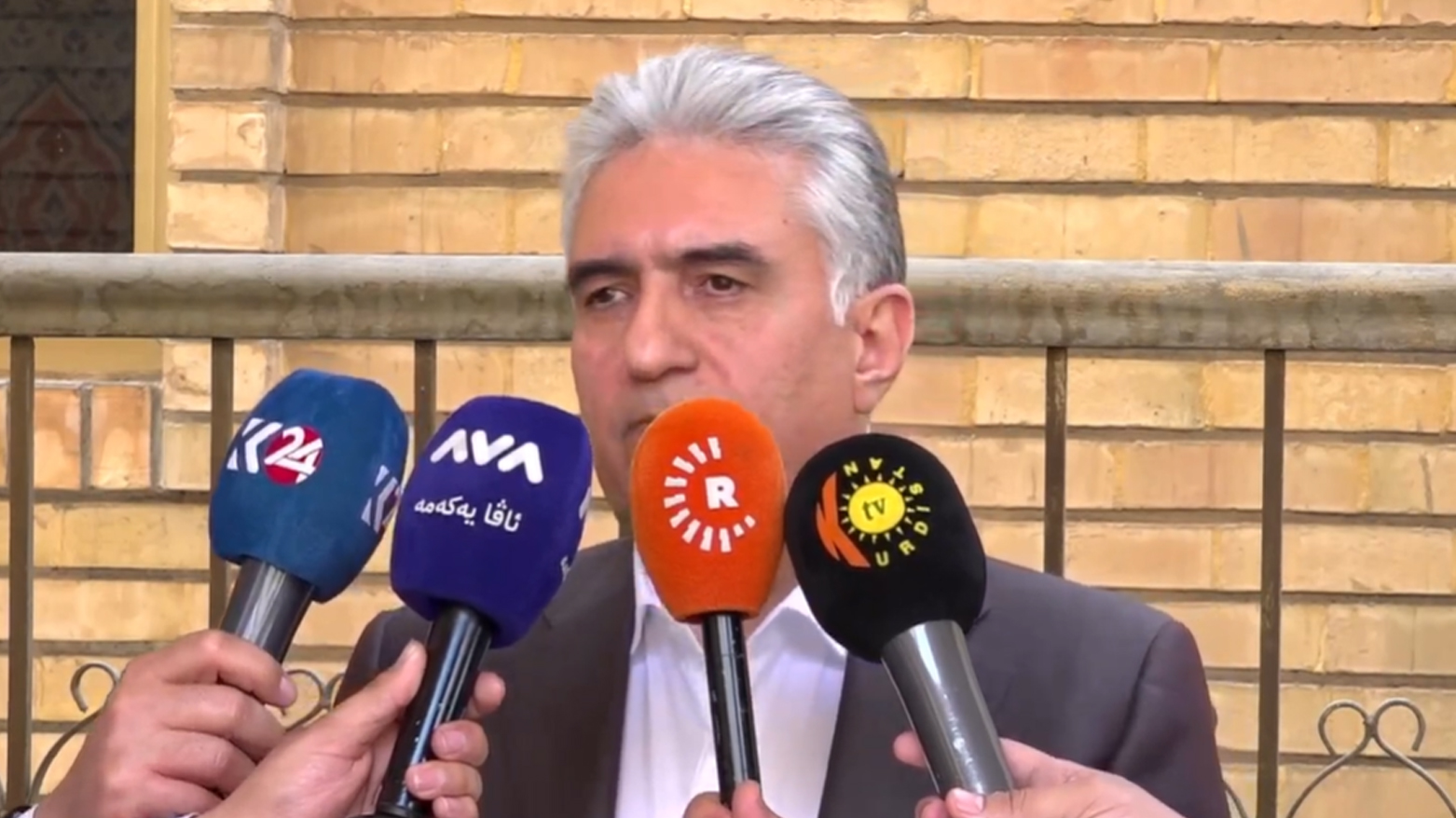
ERBIL (Kurdistan24) — Reber Ahmed, a senior Kurdistan Democratic Party (KDP) official and member of its Central Committee, on Thursday outlined the KDP's latest position on the formation of Kirkuk’s provincial administration, stressing the need for a lawful government that reflects the will of voters.
Speaking at a press conference, Ahmed said all political parties must return to the results of the elections and respect the mandate of those recognized as winners.
“As the Kurdistan Democratic Party, and as a key stakeholder in the administration of Kirkuk, we have always hoped for the formation of a legitimate administration in line with the will and aspirations of the people of Kirkuk,” he said.
Ahmed highlighted previous KDP efforts to reach a comprehensive political agreement among the province’s diverse components, including Kurds, Turkmen, Arabs, and Christians.
He noted that the party had formed a negotiation committee and held several meetings with local stakeholders, some attended by the Iraqi prime minister, Mohammed Shia al-Sudani, aiming to establish a broad-based consensus.
However, he sharply criticized a separate agreement reached by rival groups in Baghdad’s Rashid Hotel—widely referred to as the “Rashid Hotel deal”—rejecting it as illegitimate.
“The agreement reached by several groups at the Rashid Hotel is rejected by us in every way,” Ahmed said. “Any agreement that falls outside legality and the will of Kirkuk’s voters is unacceptable to the KDP.”
He reaffirmed the party’s firm stance, warning that any political arrangements based on that deal would not be recognized by the KDP.
“Anything built based on the Rashid Hotel agreement—we will reject its outcomes, and we will not participate in any meetings organized on that basis,” he added.
Ahmed concluded by emphasizing that Kirkuk’s governance must be determined by its residents, insisting that any future administration should reflect the legitimate representation of the province’s electorate.
The statement comes amid ongoing political deadlock in Kirkuk following recent provincial elections, with competing blocs divided over power-sharing arrangements and the appointment of key leadership positions in the disputed province.
He reiterated that longstanding disputes between Erbil and Baghdad—particularly regarding the disputed Kurdish areas outside the Kurdistan Region’s administration—can only be resolved within the framework of the Iraqi constitution and through the implementation of Article 140 of the Iraqi Constitution, stressing that the KDP will remain committed to this national and constitutional position.
A scheduled meeting of the Kirkuk Provincial Council was postponed on Thursday after failing to meet the required legal quorum, according to a Kurdistan24 correspondent in the province.
The session, initially planned earlier in the day and later rescheduled for 6:00 p.m., was delayed after the council chair and six members entered the meeting hall but were unable to secure the minimum attendance needed to proceed.
Under council rules, at least nine members must be present to meet the quorum. However, only seven members attended, prompting the council head to formally postpone the session.
Both major Kurdish factions—the Kurdistan Democratic Party (KDP) and the Patriotic Union of Kurdistan (PUK)—boycotted the meeting, hindering efforts to convene.
According to Kurdistan24, the members who attended the session included representatives from the Arab and Turkmen blocs. Among them were council chairman Mohammed Hafiz, along with Raad Saleh al-Jubouri, Zaher Assi, Ruaa al-Jubouri, Ahmed al-Hamdani, Sawsan Jadou, and Ahmed Ramzi.
The delay comes amid heightened political tensions surrounding the future of Kirkuk’s governorship, with competing factions divided over reported agreements to rotate the post among different ethnic and political groups.