Iran Threatens Renewed Hormuz Closure as U.S. Naval Blockade Strains Ceasefire Talks
Tehran has threatened to close the Strait of Hormuz unless Washington lifts its naval blockade, straining a fragile U.S.-Iran ceasefire. This standoff complicates peace talks in Pakistan, despite President Trump claiming an imminent nuclear pact that Iran firmly denies.
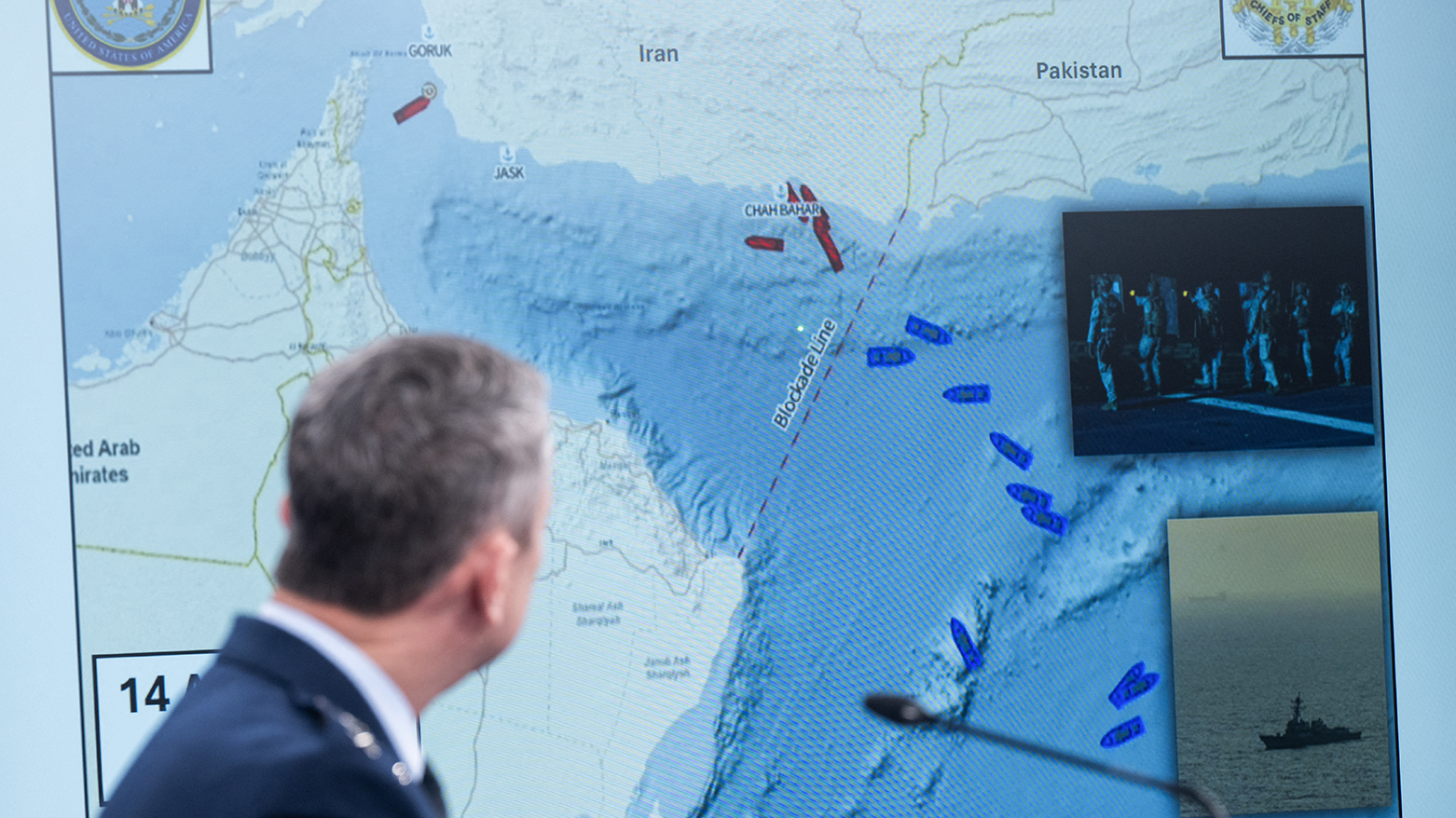
ERBIL (Kurdistan24) - Hours after reopening the Strait of Hormuz in response to a newly implemented ceasefire in Lebanon, Tehran threatened on Saturday to reseal the strategic maritime corridor if the United States does not lift its naval blockade on Iranian ports.
The ultimatum exposes a deepening structural friction between Washington’s forceful maritime campaign and parallel diplomatic efforts in Pakistan aimed at formalizing a broader U.S.-Iranian peace agreement.
The rapid sequence of maritime declarations underscores the fragility of the current regional de-escalation architecture. According to the U.S. Central Command, American naval forces have directed 21 ships to turn around since the blockade began earlier this week, an operation visibly enforced by guided-missile destroyers patrolling the Arabian Sea.
In response, Iranian officials indicated that the unchecked continuation of these maritime interceptions would fundamentally alter the status of the Strait of Hormuz, a transit point for approximately one-fifth of global crude oil and liquefied natural gas.
"With the continuation of the blockade, the Strait of Hormuz will not remain open," Iranian parliamentary speaker Mohammad Baqer Qalibaf stated on the social media platform X, adding that future passage through the waterway would require explicit authorization from Tehran.
The diplomatic standoff is currently anchored in a fortnight-long U.S.-Iranian ceasefire designed to facilitate direct negotiations.
However, Iranian Foreign Ministry spokesman Esmaeil Baqaei categorized the ongoing naval blockade as a direct violation of that localized truce. "What they call a naval blockade will definitely be met with an appropriate response from Iran," Baqaei said.
Despite the escalating rhetoric from Tehran, U.S. President Donald Trump has publicly framed the bilateral negotiations as overwhelmingly successful. Speaking to AFP, Trump asserted that a comprehensive peace agreement is 'very close' and that the two nations face "no sticking points at all."
The U.S. president claimed that Tehran had already agreed to surrender its stockpile of enriched uranium—a central focus of international non-proliferation efforts.
"We’re going to get it by going in with Iran, with lots of excavators," Trump said during an event in Arizona, hailing the broader diplomatic process as 'GREAT AND BRILLIANT' in a series of social media posts praising Gulf allies and Pakistani mediators.
Iranian officials immediately pushed back on the U.S. president’s claims, stating unequivocally that the nation’s enriched uranium stockpile would not be transferred or relinquished.
The contradictory narratives complicate a high-stakes diplomatic channel currently operating through Islamabad.
Pakistani leadership successfully mediated historic face-to-face talks between U.S. and Iranian envoys last week, a process that included a 21-hour diplomatic session involving U.S. Vice President JD Vance.
While Trump indicated a willingness to travel to Pakistan to sign a final agreement, he simultaneously reiterated his commitment to the maritime embargo.
Speaking to reporters aboard Air Force One, Trump noted he was open to extending the 14-day U.S.-Iranian ceasefire beyond its scheduled expiration on Wednesday, but stressed:
"Maybe I won't extend it, but the blockade is going to remain."
The U.S.-Iran negotiations are structurally linked to the Levant, where a 10-day ceasefire in Lebanon initiated on Friday prompted Iran’s initial decision to reopen the Strait of Hormuz.
Tehran has consistently maintained that halting hostilities between Israeli forces and the Iran-backed Lebanese political and militant group Hezbollah is a prerequisite for any broader regional settlement.
The Lebanon conflict escalated significantly on March 2, when Hezbollah launched rockets into Israel following the killing of Iran’s Supreme Leader Ali Khamenei. As displaced families began returning to bomb-damaged neighborhoods in southern Beirut and across southern Lebanon this weekend, political leaders articulated sharply divergent visions for the region’s future.
Trump asserted that Washington has 'prohibited' Israel from conducting further strikes in Lebanon, adding that the U.S. would "deal with the Hezbollah situation in an appropriate manner."
Israeli Prime Minister Benjamin Netanyahu, however, publicly challenged the premise of a concluded military campaign.
"We have not yet finished the job," Netanyahu said, identifying the "dismantling of Hezbollah" as an ongoing operational objective. Hezbollah officials reciprocated the hardened stance, warning that the organization remains mobilized to respond to any Israeli military violations.
The geopolitical volatility continues to dictate global energy markets. Oil prices dropped significantly on Friday as traders anticipated a negotiated end to the conflict and a resumption of unimpeded maritime transit.
To further insulate markets from the shock of the Iranian blockade, the U.S. government issued a waiver late Friday permitting the sale of Russian oil and petroleum products already at sea, deliberately boosting global supply.
The concurrent application of a U.S. naval blockade and active peace negotiations creates a complex paradox. By maintaining maritime interdictions during a designated ceasefire, Washington is attempting to use economic strangulation to compel final concessions—specifically regarding nuclear material—without triggering an outright collapse of the Islamabad talks.
Tehran’s threat to close the Strait of Hormuz functions as an asymmetric countermeasure, signaling that it will not accept the localization of the blockade to its own ports while global shipping continues unimpeded.
As the U.S.-Iran ceasefire nears its Wednesday expiration, the divergent definitions of what constitutes a "truce violation" threaten to collapse the diplomatic structure built over the past week.
The impending expiration of the bilateral ceasefire, coupled with the contested status of Iran’s uranium stockpile, leaves the immediate trajectory of the conflict highly contingent. It remains unresolved whether Pakistani mediators can bridge the gap between Washington’s demand for nuclear disarmament and Tehran’s requirement for immediate maritime relief before the temporary truce mechanisms lapse.
Key Developments
- Maritime Threats: Iran threatens to close the Strait of Hormuz if the U.S. maintains its blockade of Iranian ports, demanding that vessels seek Iranian authorization for passage.
- Blockade Enforcement: U.S. Central Command reports directing 21 vessels to turn around since the blockade’s inception this week.
- Disputed Concessions: President Trump claims Iran has agreed to surrender its enriched uranium, an assertion Tehran has formally denied.
- Lebanon Ceasefire: A 10-day ceasefire between Israel and Hezbollah has taken effect, enabling displaced civilians to return to southern Lebanon and Beirut.
- Diplomatic Timeline: A 14-day U.S.-Iran ceasefire, designed to facilitate talks mediated by Pakistan, is scheduled to expire on Wednesday.
Actor Map & Strategic Positions
- United States: Leveraging a naval blockade and waivers on Russian oil to force Iranian nuclear concessions while managing ceasefire logistics through Islamabad.
- Iran: Conditioning the continued flow of global energy through the Strait of Hormuz on the immediate cessation of the U.S. naval blockade, while firmly rejecting uranium handover claims.
- Israel: Bound temporarily by a U.S.-mandated halt in strikes, though the prime minister maintains the ultimate objective remains the complete dismantling of Hezbollah.
- Hezbollah: Observing the 10-day Lebanon ceasefire but explicitly maintaining operational readiness to retaliate against potential Israeli violations.
- Pakistan: Serving as the primary diplomatic conduit, having successfully hosted face-to-face bilateral talks between U.S. and Iranian envoys.