Blackouts Loom for Iraq This Summer as Domestic Gas Collapses and Iranian Supply Falls Short
Iraq's power ministry warned of a looming summer crisis after domestic gas output fell below half capacity, leaving a 27,000-megawatt deficit as Iranian imports dwindle and temperatures prepare to climb.
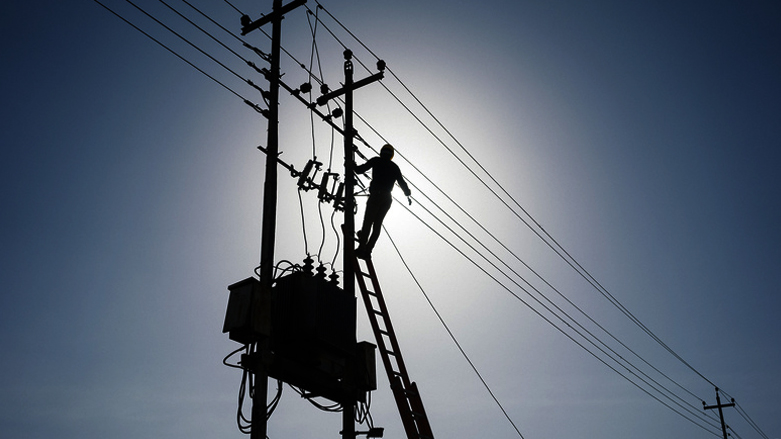
ERBIL (Kurdistan24) - Iraq's Ministry of Electricity has acknowledged that a sharp drop in domestic gas production has pushed the country's power sector to a critical threshold, forcing authorities to seek alternative fuels and accelerate contingency measures ahead of what officials fear will be a punishing summer.
Ahmed Musa, spokesperson for the Ministry of Electricity, confirmed that domestic gas production has fallen to below half of its previous levels — a direct consequence of reduced oil exports. The drop has compelled the ministry to coordinate with the Ministry of Oil to secure gasoil as an alternative fuel to keep power stations operational.
Musa said efforts are also underway to complete the gas platform at Shell's Zubair field as part of a broader push to shore up domestic supply. For now, he said, moderate weather conditions and the arrival of 21 million cubic meters of Iranian gas daily have kept the situation relatively stable — but he was candid about what lies ahead.
"As we approach peak temperatures and pressures increase, we will need to increase imported Iranian gas and raise domestic gas production in order to maintain control of the stations," he said.
The scale of the challenge is laid bare by official figures obtained by Kurdistan24. Iraq's electricity needs during the summer reach 55,000 megawatts, while the ministry is currently capable of producing no more than 28,000 megawatts — leaving a deficit of 27,000 megawatts.
That gap has been widened significantly by a collapse in Iranian gas imports, which have fallen from 55 million cubic feet per day to just 18 million cubic feet. The figures also reveal a striking paradox: while 18 trillion Iraqi dinars were allocated to the electricity sector in the 2024 budget, approximately 18 billion cubic feet of gas are wasted annually without being harnessed for energy production.
Twenty-two years of broken promises
Iraq's electricity crisis is not new. Since 2003, successive governments have repeated pledges to overhaul and improve power services — with little to show for it. The situation has deteriorated most severely in the central and southern provinces, where the absence of effective strategic planning has deepened the suffering of citizens with each passing summer.
Despite Iraq's vast oil wealth, its electricity infrastructure remains plagued by decades of neglect, rampant corruption, repeated attacks on transmission networks, and persistent difficulties in collecting billing revenues. Illegal connections have further strained a grid that already fails to meet demand year-round — a failure that deepens every summer when the heat becomes unbearable and the lights go out.