Coordinated Jihadist-Separatist Offensive Shakes Mali, Breaches Capital and Seizes Kidal
The simultaneous capture of Kidal and attacks on Bamako by Al-Qaeda-linked and Tuareg forces represent a profound failure for Mali's Russian-backed military junta, signaling severe regional instability.
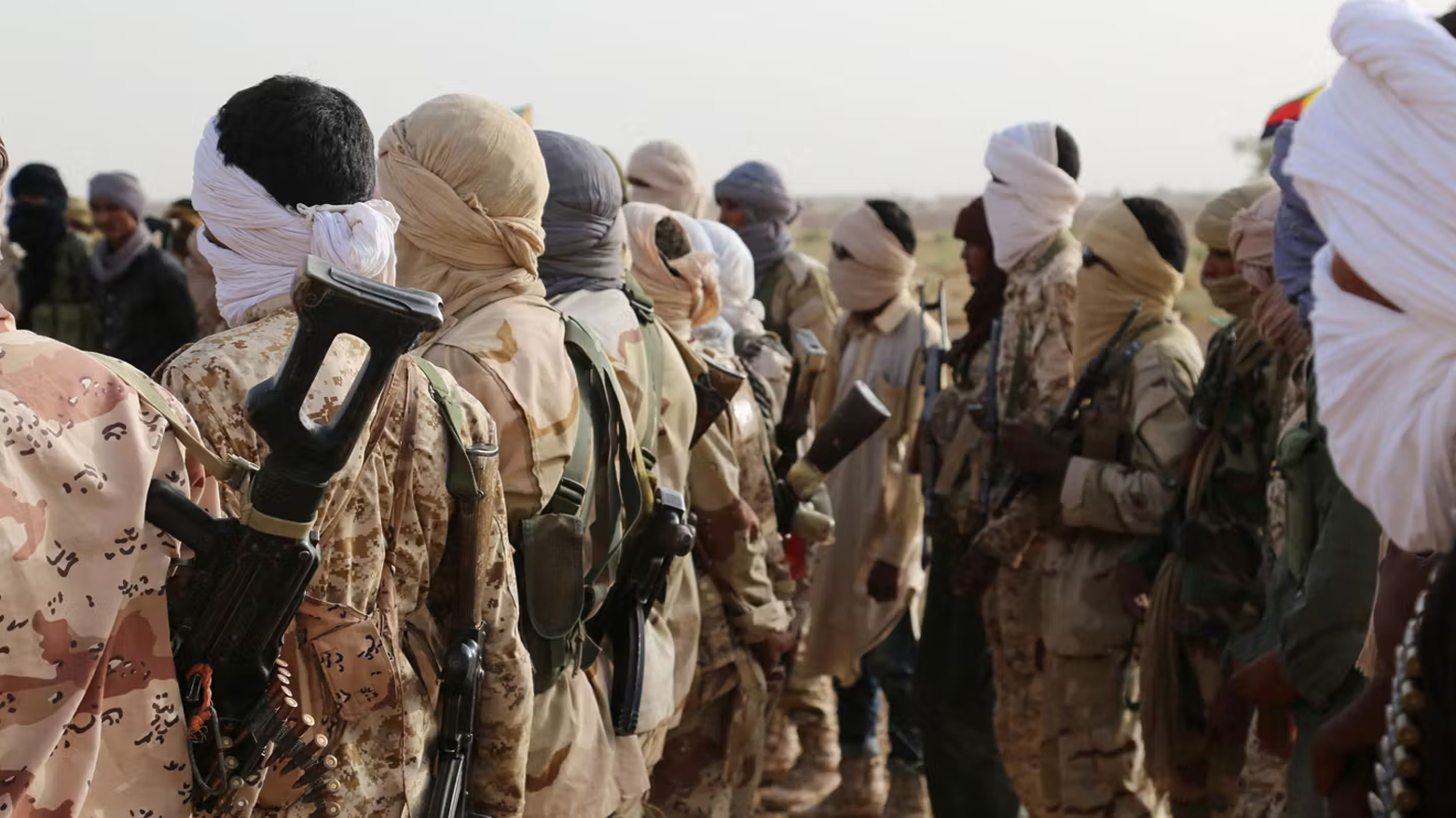
ERBIL (Kurdistan24) - Armed factions affiliated with Al-Qaeda and Tuareg separatist rebels launched a massive, coordinated offensive across Mali on Sunday, striking the heavily fortified military headquarters in Kati, attacking the capital of Bamako, and seizing control of the strategic northern city of Kidal.
The simultaneous incursions were documented in reports by Aljazeera and Sky News Arabia.
The nationwide assaults represent the most severe security breach for Mali's military junta since it assumed power, shattering the government's narrative of territorial reconquest.
By successfully penetrating the heart of the capital and capturing critical northern hubs, the Group for the Support of Islam and Muslims (JNIM) and the Azawad Liberation Front have exploited a profound security vacuum left by the 2023 withdrawal of United Nations peacekeepers.
The unprecedented operation highlights the severe limitations of Mali's reliance on Russian paramilitary forces to maintain state sovereignty.
Furthermore, the attacks demonstrate a highly effective tactical convergence between historically distinct jihadist and separatist organizations, a fluid dynamic extensively documented in the European Council on Foreign Relations (ECFR) report, "Mapping armed groups in Mali and the Sahel."
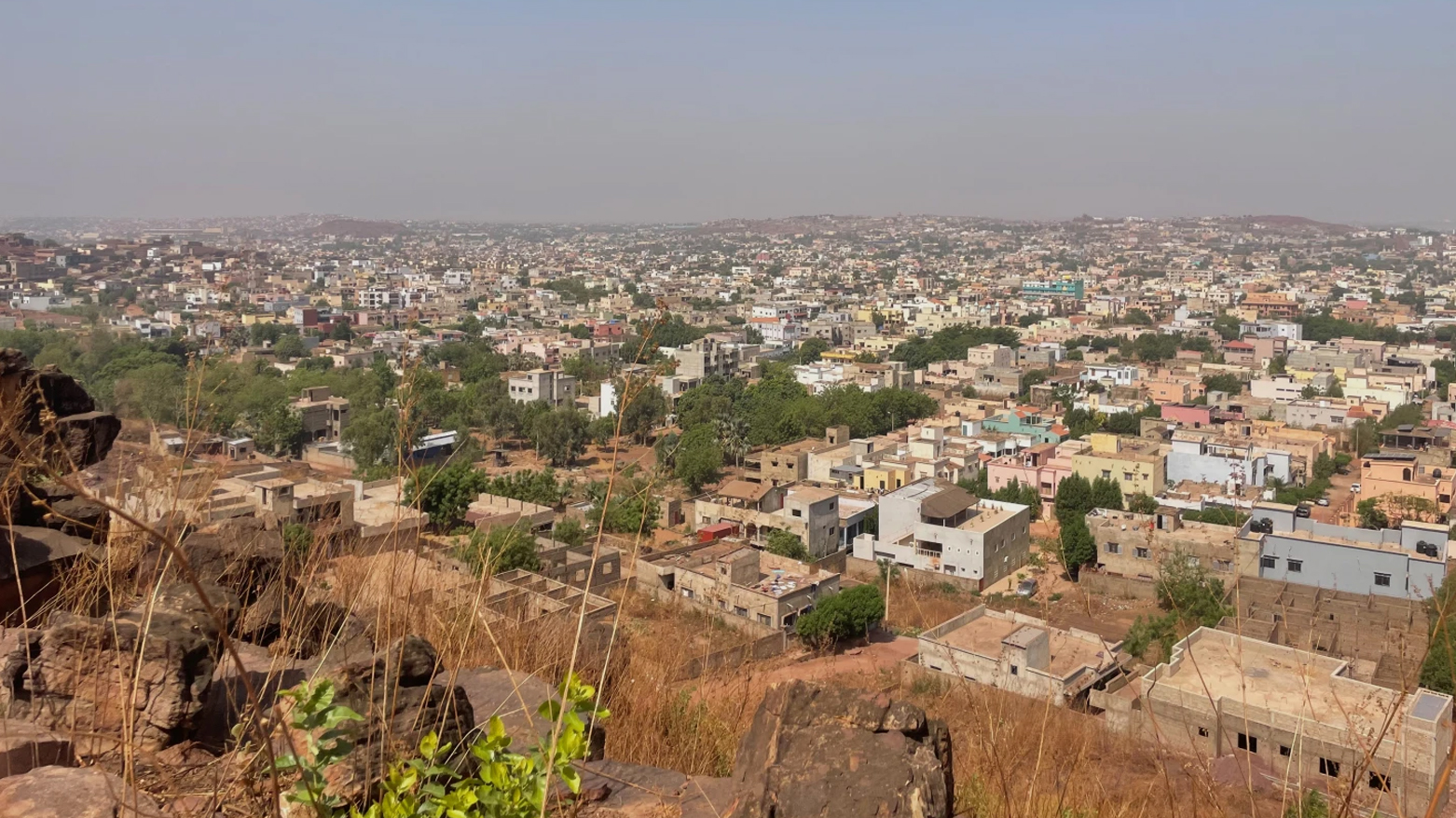
Urban Warfare Reaches the Capital
The tactical scope of Saturday's offensive extended directly into the most sensitive political and military installations in the country.
In the capital, Bamako, heavily armed attackers targeted the international airport, forcing an immediate closure of the facility and the diversion or cancellation of all commercial flights.
According to Aljazeera, witnesses attempting to reach the airport reported navigating through active combat zones characterized by heavy gunfire and military helicopter activity.
The assault simultaneously struck the adjacent garrison town of Kati, located just north of Bamako.
Kati hosts the primary military barracks and serves as the residence of the military junta leader, Assimi Goïta.
Eyewitnesses and local residents reported hearing massive explosions and continuous gunfire near the main military base to Aljazeera, which also noted that the residence of Malian Defense Minister Sadio Camara was destroyed during the incursion.
Sky News Arabia described the breach of the capital region as a "security earthquake" that presents the ruling military junta with its most dangerous test to date.
In response to the urban warfare, the Malian army issued a statement declaring that it had repelled the attacks targeting multiple sites in and near Bamako, claiming to have killed hundreds of attackers.
The military confirmed that a large-scale sweep operation was actively underway across the capital, Kati, and surrounding areas.
The intensity of the urban clashes prompted international diplomatic missions, including the United States Embassy and the British Foreign Office, to issue urgent security advisories instructing their nationals to remain indoors, Aljazeera reported.
The Northern Fronts and the Fall of Kidal
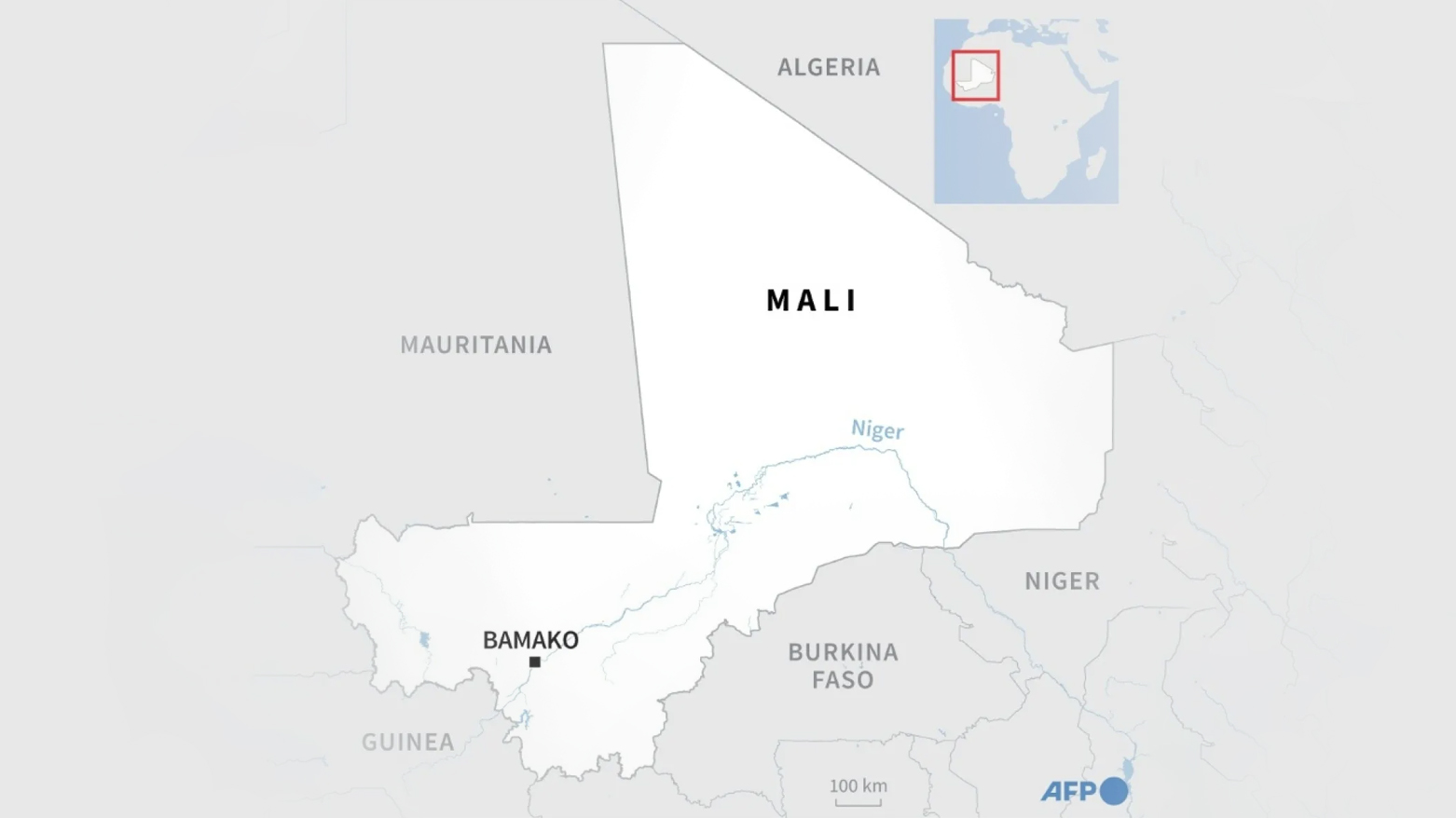
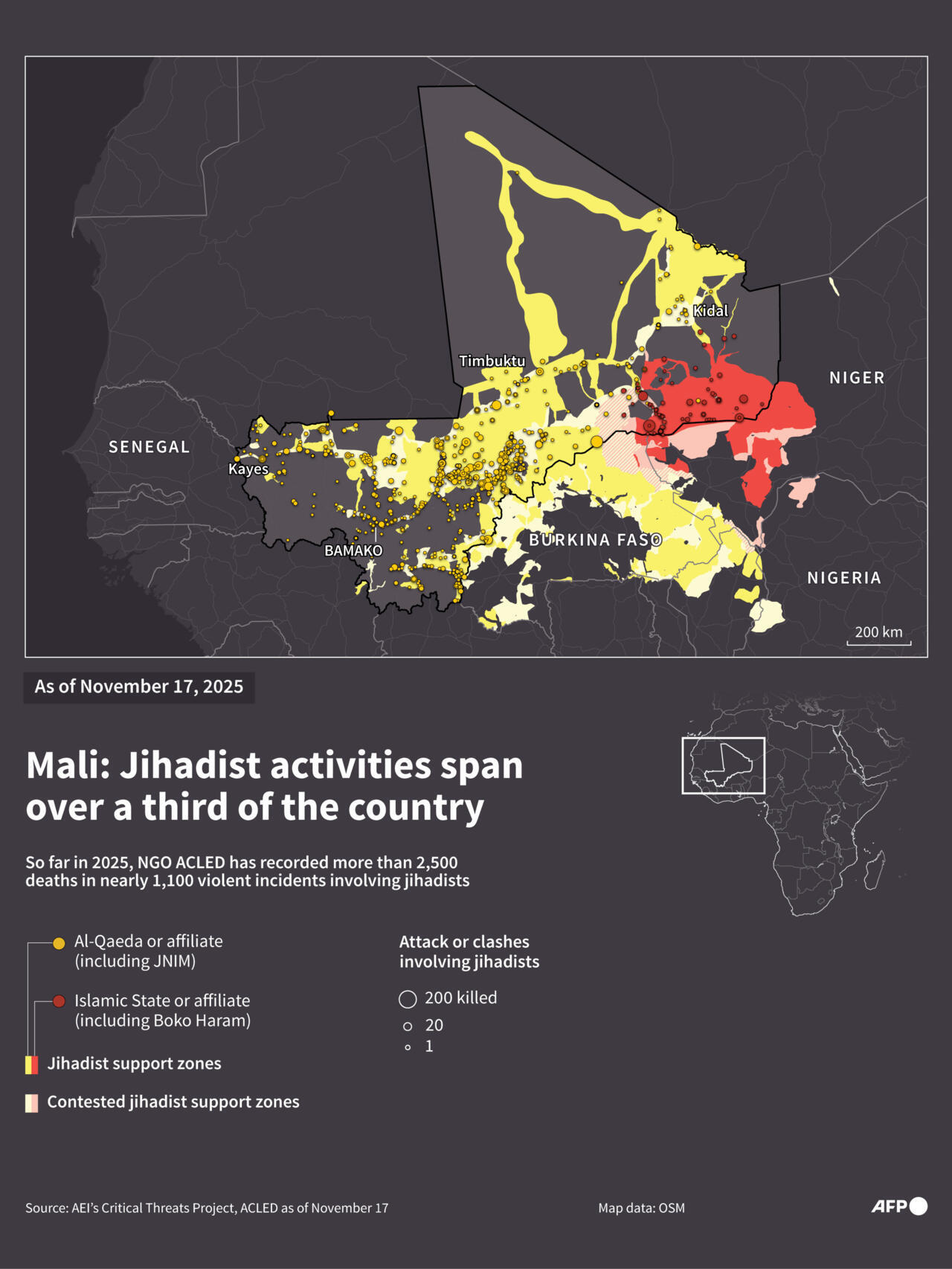
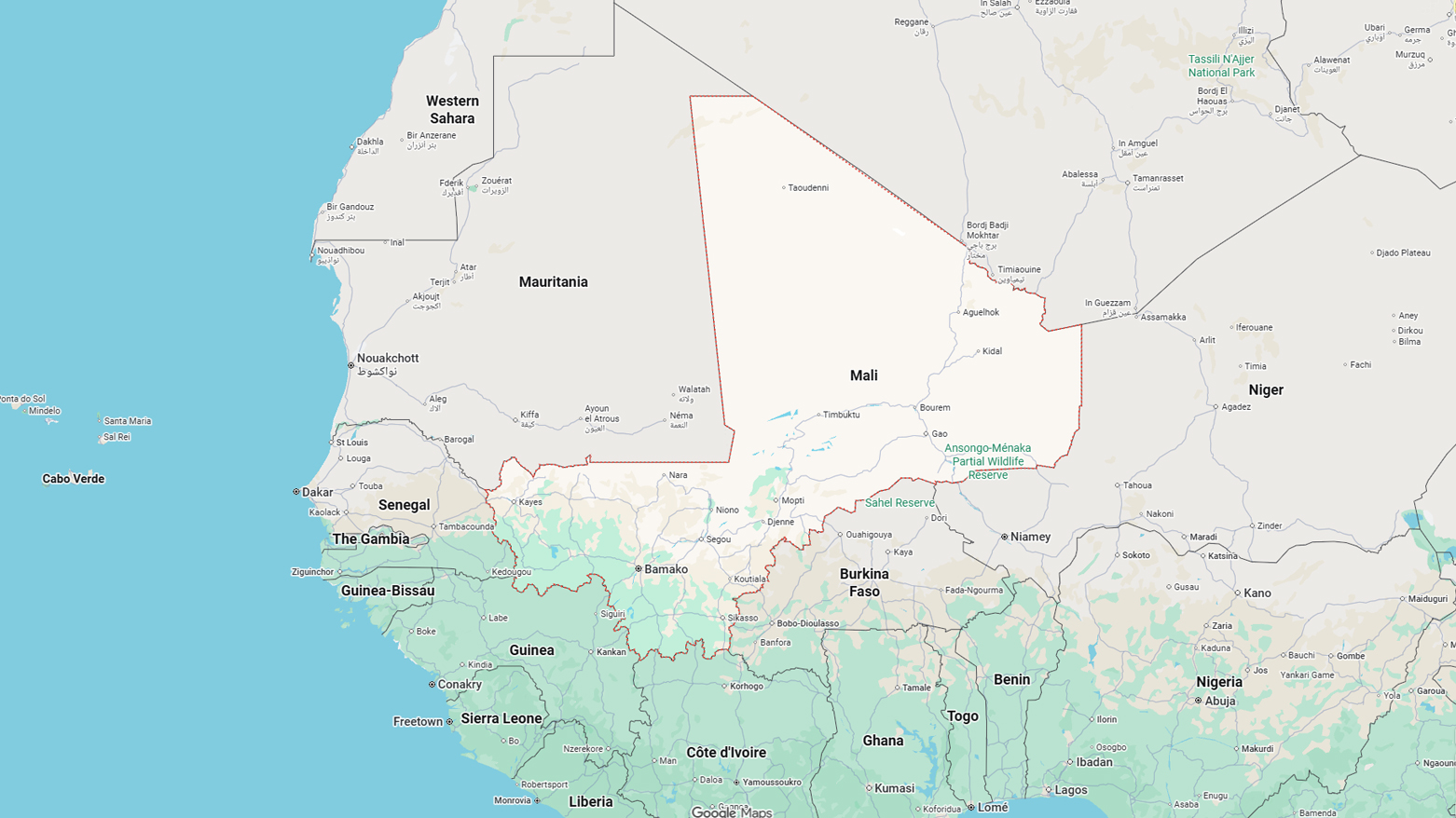
As combat raged in the capital, a massive secondary offensive swept across central and northern Mali, targeting the cities of Mopti, Sévaré, Gao, and Kidal.
The Azawad Liberation Front, a Tuareg-dominated rebel coalition, seized control of Kidal, a historic stronghold in the north.
According to statements posted on social media by the group's spokesperson, Mohamed Elmaouloud Ramadane, and cited by Aljazeera, rebel forces also took control of several military sites in the northeastern city of Gao and captured a central military camp in Kidal.
The fall of Kidal represents a devastating strategic blow to the ruling junta.
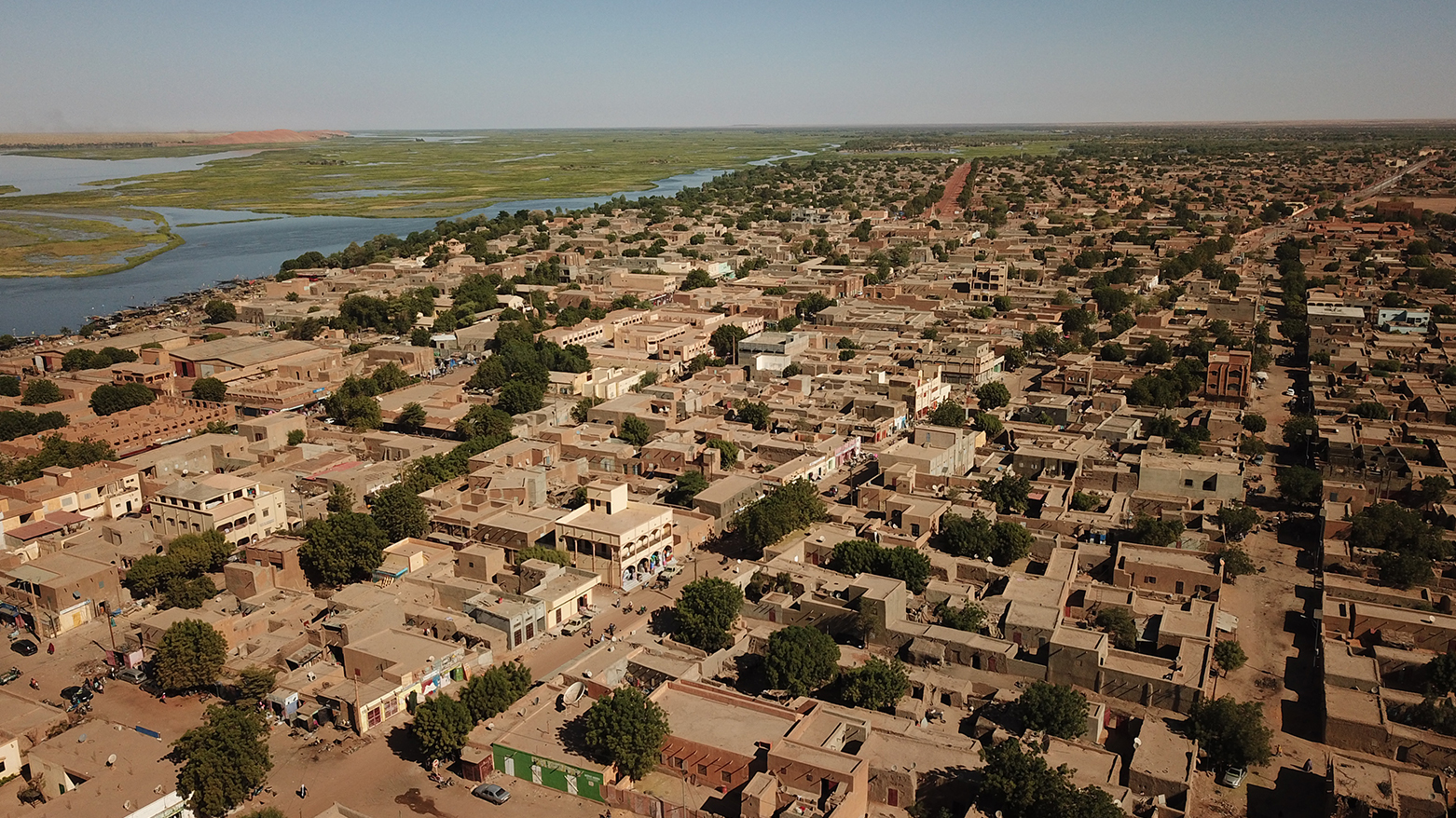
Gunfire rocked several districts of the junta-ruled west African country of Mali on April 25, 2026, including Kati, the home of military ruler General Assimi Goita, witnesses and a security source told AFP.
Fighting was also heard in Gao, the main northern city, and Sevare in the centre. Mali has been battling more than a decade of jihadist conflict and the military took power in two coups in 2020 and 2021. (AFP)
Héni Nsaibia, a senior West Africa analyst at the Armed Conflict Location & Event Data Project (ACLED), told Aljazeera that the choice of targets was striking.
While Bamako and Kati represent the heart of the regime, the recapture of Kidal by state forces in 2023 had been the cornerstone of the government's narrative regarding the restoration of territorial sovereignty.
In Gao, a major military hub, residents reported hearing powerful explosions and intense exchanges of fire between soldiers and rebels throughout the afternoon.
By Saturday evening, a cautious calm prevailed as the regional governor imposed a strict nighttime curfew, Aljazeera noted.
Hasret Kargin, a researcher on African affairs at Mentel World Research, observed in an interview with Aljazeera that army and Russian-affiliated "Africa Corps" sites remained under intense pressure across multiple cities.
Kargin assessed that the military's chances of recovering northern cities like Kidal and Gao without significant air support are "very slim."
Tactical Convergence of Divergent Forces
Following the operation, the Al-Qaeda-affiliated JNIM issued a formal statement claiming responsibility for the attacks in Kati, the Bamako airport, and the central regions of Mopti and Sévaré.
The group explicitly noted that the assault on Gao was executed in direct coordination with the Azawad Liberation Front.
Ulf Laessing, head of the Sahel program at the German Konrad Adenauer Foundation, characterized the events to Aljazeera as "the largest coordinated attack in years."
However, regional security experts caution against conflating the ideological goals of the participating factions. Daniele Ruvinetti, an Italian strategic advisor and foreign affairs senior analyst, emphasized the distinction between the groups in an interview with Sky News Arabia.
"One should avoid easily merging the Azawad Front and JNIM," Ruvinetti stated. "The Azawad Front is predominantly Tuareg and separatist, while JNIM is jihadist and linked to Al-Qaeda. The Front may converge tactically against Bamako, but their political projects are not identical."
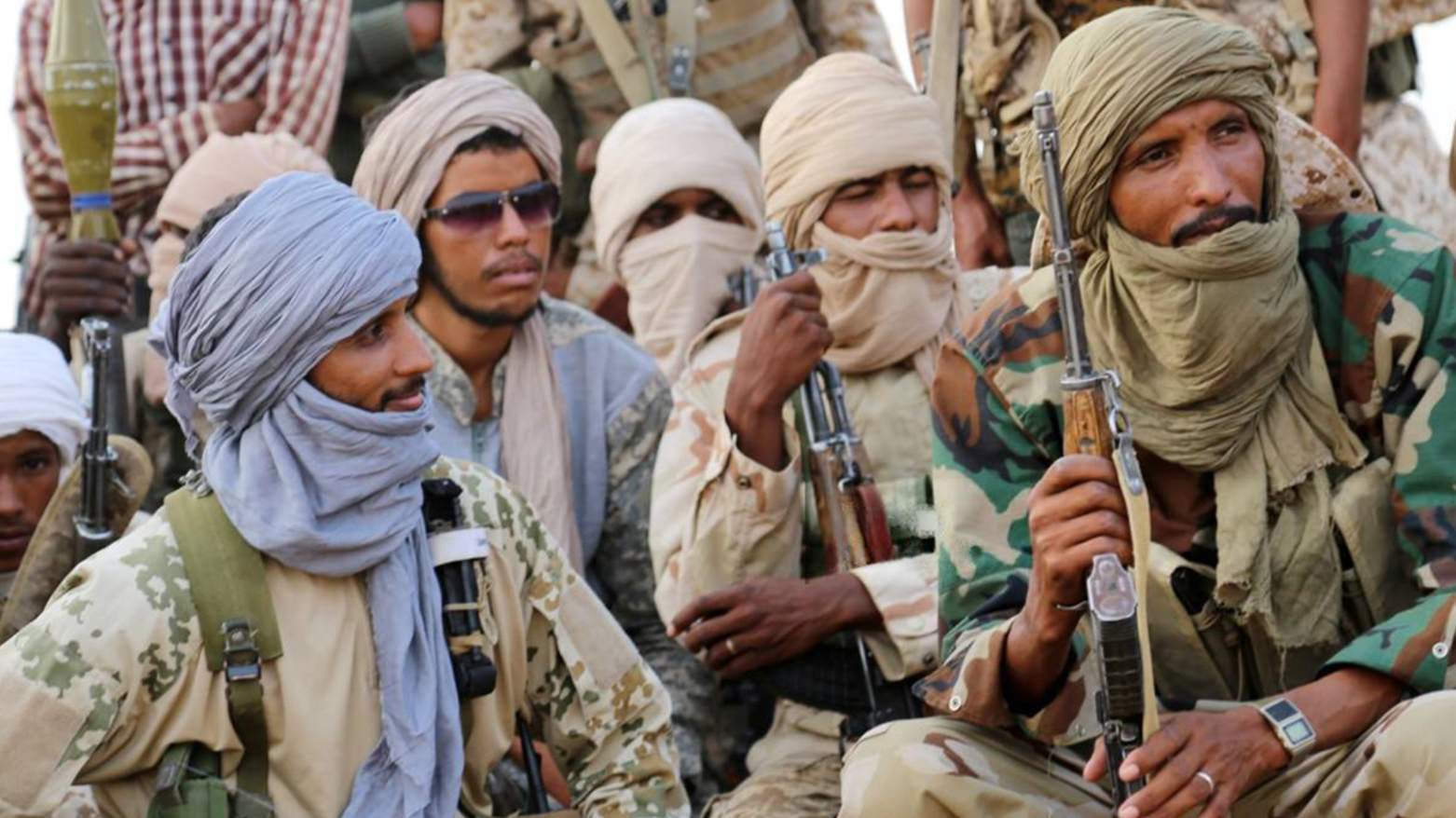
This operational convergence, while seemingly abrupt, is rooted in the structural fluidity of Sahelian armed groups.
The European Council on Foreign Relations (ECFR) mapping document explicitly notes that "the lines between 'jihadist' and 'non-jihadist' armed groups are often unclear."
The ECFR report details how fighters frequently pass back and forth between groups based on geography and local circumstances, creating an environment where tactical cooperation against a shared adversary (in this case, the Malian state and its Russian allies) is highly viable.
The Architecture of the Militant Coalitions
The geographical precision of Saturday's synchronized strikes directly reflects the historical territorial strengths of JNIM's component parts, as extensively detailed in the ECFR mapping report.
According to the ECFR, JNIM was established in March 2017 as an umbrella coalition under the leadership of Tuareg militant Iyad Ag Ghali. The alliance unified highly capable factions, including Ansar al-Din, Al-Qaeda in the Islamic Maghreb (AQIM), Al-Mourabitoun, and Katibat Macina.
The ECFR report outlines that Katibat Macina, led by Amadou Kouffa, has historically maintained a deeply entrenched operational presence in central Mali, particularly in the Mopti region.
By building outreach efforts around the local grievances of Peul populations in the Niger Delta, the group secured a conducive environment for mobilization.
This localized architecture enabled the rapid execution of Saturday's coordinated strikes in Mopti and Sévaré.
Simultaneously, the complex urban assaults on the Kati military base and Bamako airport align with the operational profile of Al-Mourabitoun.
The ECFR document highlights that Al-Mourabitoun, a key JNIM faction, "specialises in complex attacks on 'soft' targets" deep within state-controlled territory, such as the 2015 Radisson Blu hotel attack in Bamako, as well as hardened military bases.
In the north, the Azawad Liberation Front's seizure of Kidal builds upon decades of Tuareg insurgency.
The ECFR report contextualizes the Azawad movement, noting its historical roots in groups like the National Movement for the Liberation of Azawad (MNLA) and the High Council for the Unity of Azawad (HCUA).
The ECFR reveals that the HCUA operates with a strong presence in Kidal and maintains close historical and leadership ties to Ansar al-Din, the founding faction of JNIM.
This deep-seated institutional overlap, as outlined by the ECFR, provides the structural framework for the joint JNIM-Azawad operations observed in Gao on Saturday.
The Limits of the Russian Security Architecture
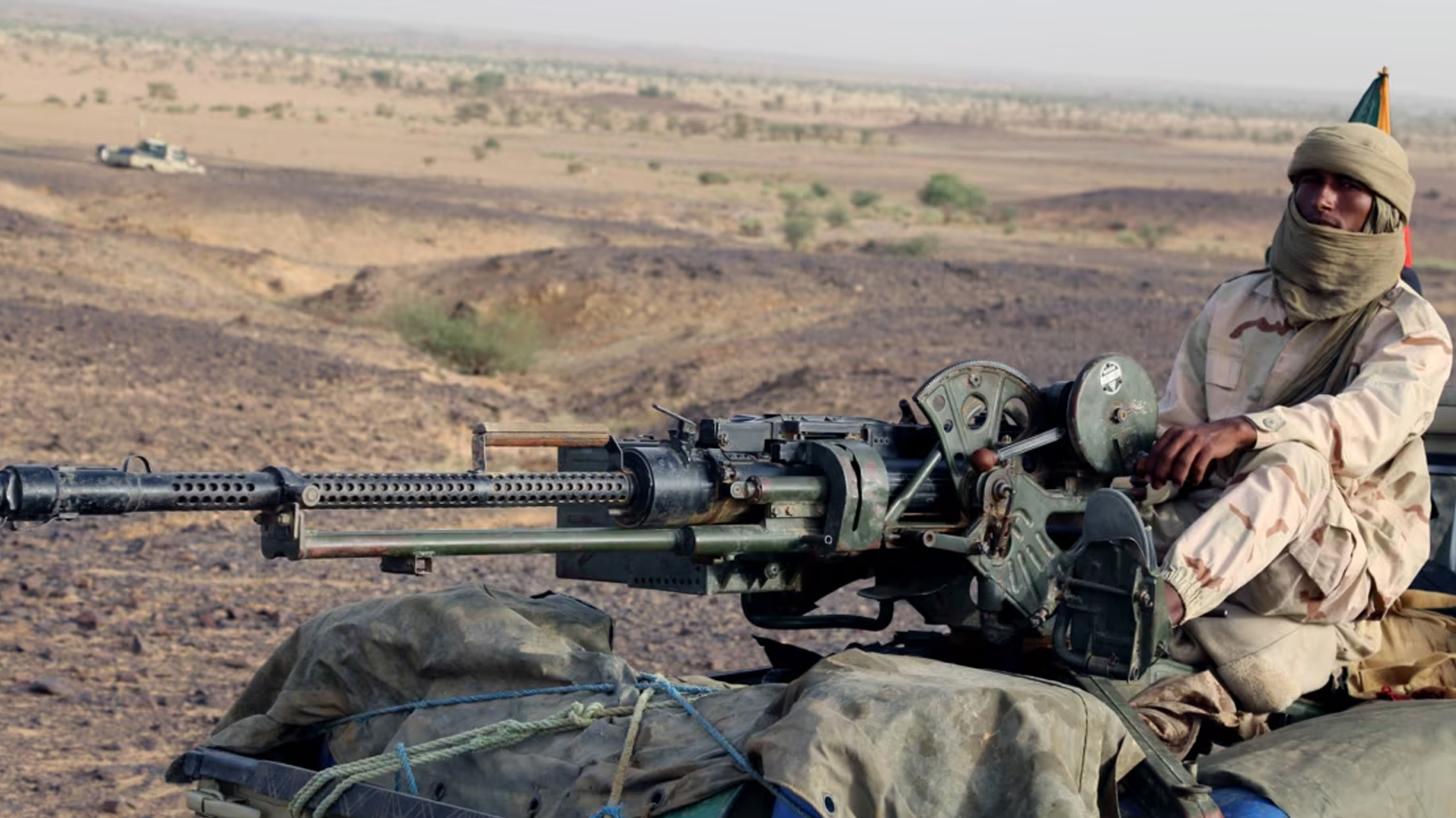
The unprecedented scale of the attacks has severely tested the viability of Mali's reliance on Russian paramilitary support.
Following back-to-back coups in 2020 and 2021, Goïta's military government systematically severed diplomatic and military ties with France and the broader West.
To fill the resulting security void, the junta contracted the Russian Wagner Group in 2021. In June 2025, the Wagner deployment was officially replaced by the "Africa Corps," operating directly under the Russian Ministry of Defense, according to Aljazeera.
Security analysts indicate that Saturday's offensive exposes severe vulnerabilities in this outsourced security model. Ruvinetti informed Sky News Arabia that Mali is currently demonstrating the absolute limits of the Russian security architecture in the Sahel.
"Moscow and its proxies provided protection for the regime, tightened security, and anti-Western rhetoric, which helped the junta survive and achieve some tactical victories, but they did not rebuild state authority," Ruvinetti stated.
He added that if the junta collapses, it would serve as a severe blow to Russia, which utilizes Mali as a primary showcase for its post-French model in Africa.
Amr El-Deeb, Director of the International Geopolitical Operations Center in Moscow, echoed these structural concerns to Sky News Arabia.
El-Deeb stated that the ability of the Azawad movement and JNIM to coordinate and penetrate strategic fortifications like the Kati base demonstrates the complete failure of recent military policies, reflecting an ambiguous future for regional stability.
Strategic Attrition and Regional Spillover
The current crisis represents the culmination of a long-term strategy of attrition orchestrated by JNIM.
Following the formal withdrawal of the UN peacekeeping mission (MINUSMA) at the end of 2023, a massive security vacuum materialized. El-Deeb noted to Sky News Arabia that while Malian and Russian forces attempted to secure strategic sites, armed actors utilized the ungoverned spaces to reorganize and launch counter-offensives.
JNIM's strategy has increasingly integrated economic warfare. Aljazeera reported that in late 2025, the Al-Qaeda affiliate declared a blockade on fuel imports, systematically attacking military-guarded fuel tankers in southern and western Mali.
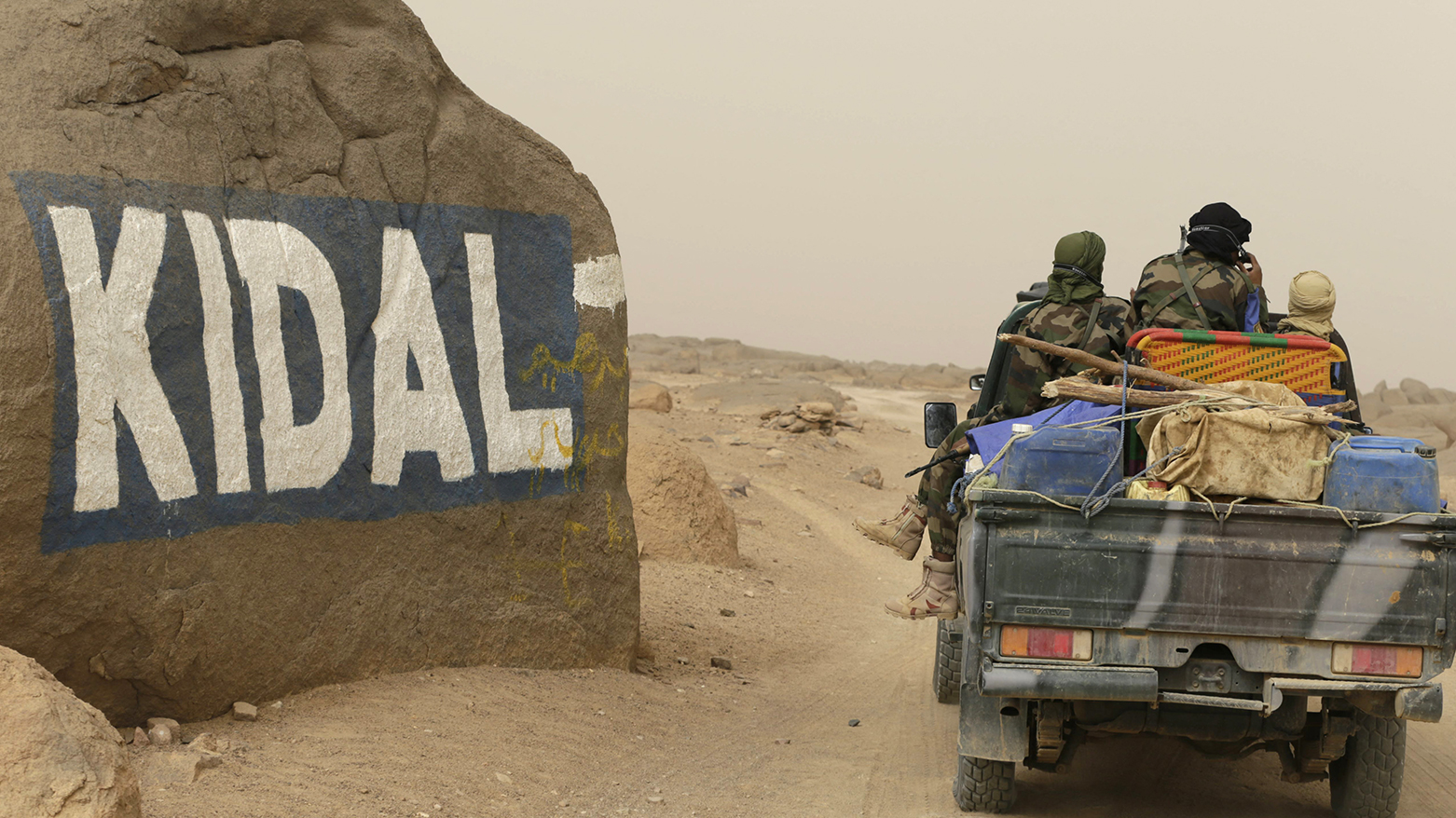
Malian Tuareg rebels said they had taken the key northern city of Kidal from the army and Russian forces in an attack on April 25, 2026.
AFP was not able to independently verify the claim, which was made as the country's ruling junta reported that the army was fighting off attacks across the country. Intense gunfire had been heard in Kidal earlier in the day.
The Azawad Liberation Front (FLA) said in a facebook message that "the city of Kidal has passed under the control of our armed forces". (AFP)
As Ruvinetti highlighted to Sky News Arabia, JNIM's strategy is now "as economic and political as it is military," seeking to isolate Bamako, disrupt supplies, exhaust the army, and demonstrate the junta's inability to govern.
Despite the deteriorating security landscape, the military junta has entrenched its political position.
Aljazeera noted that in July 2025, the administration bypassed earlier pledges to transition to civilian rule by granting Goïta a five-year, renewable presidential mandate without elections.
While the administration of U.S. President Donald Trump has recently sought to establish contact with the Sahelian military councils, and Togo has attempted regional mediation, the trajectory remains highly volatile.
El-Deeb warned Sky News Arabia that the success of JNIM-linked groups could ignite a wider wave of bloody instability, directly threatening global mineral supplies routed through the continent.
Furthermore, he cautioned that the collapse of Malian security infrastructure might propel a surge of "transnational jihad" deep into neighboring Sahelian and coastal African states, including Burkina Faso, Niger, Ghana, and Togo.