Inside Syria's First Transitional Justice Trial: What to Know
Syria opened its first transitional justice trial in Damascus on Sunday, with former security chief Atif Najib appearing in court and Bashar al-Assad facing charges in absentia
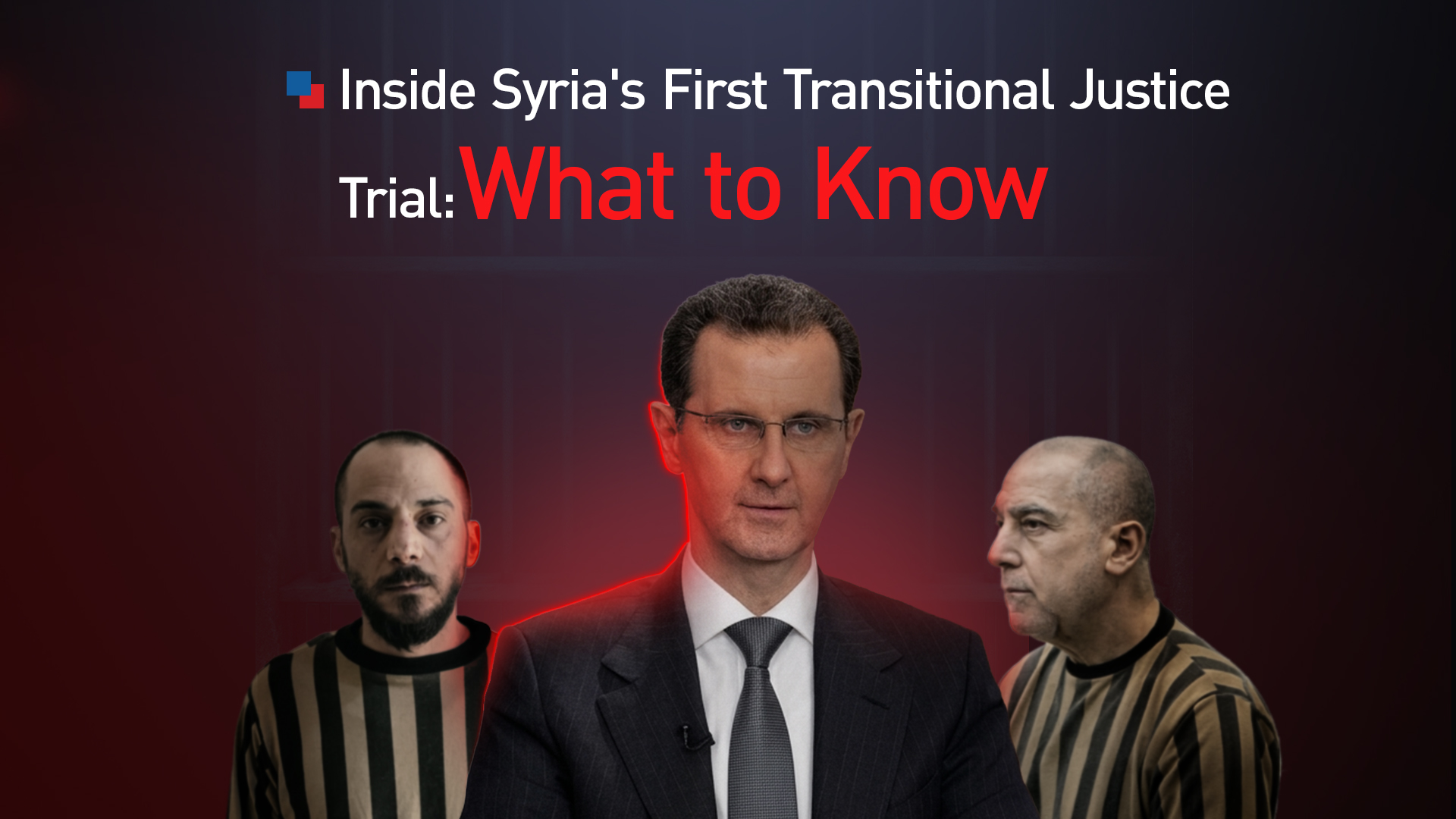
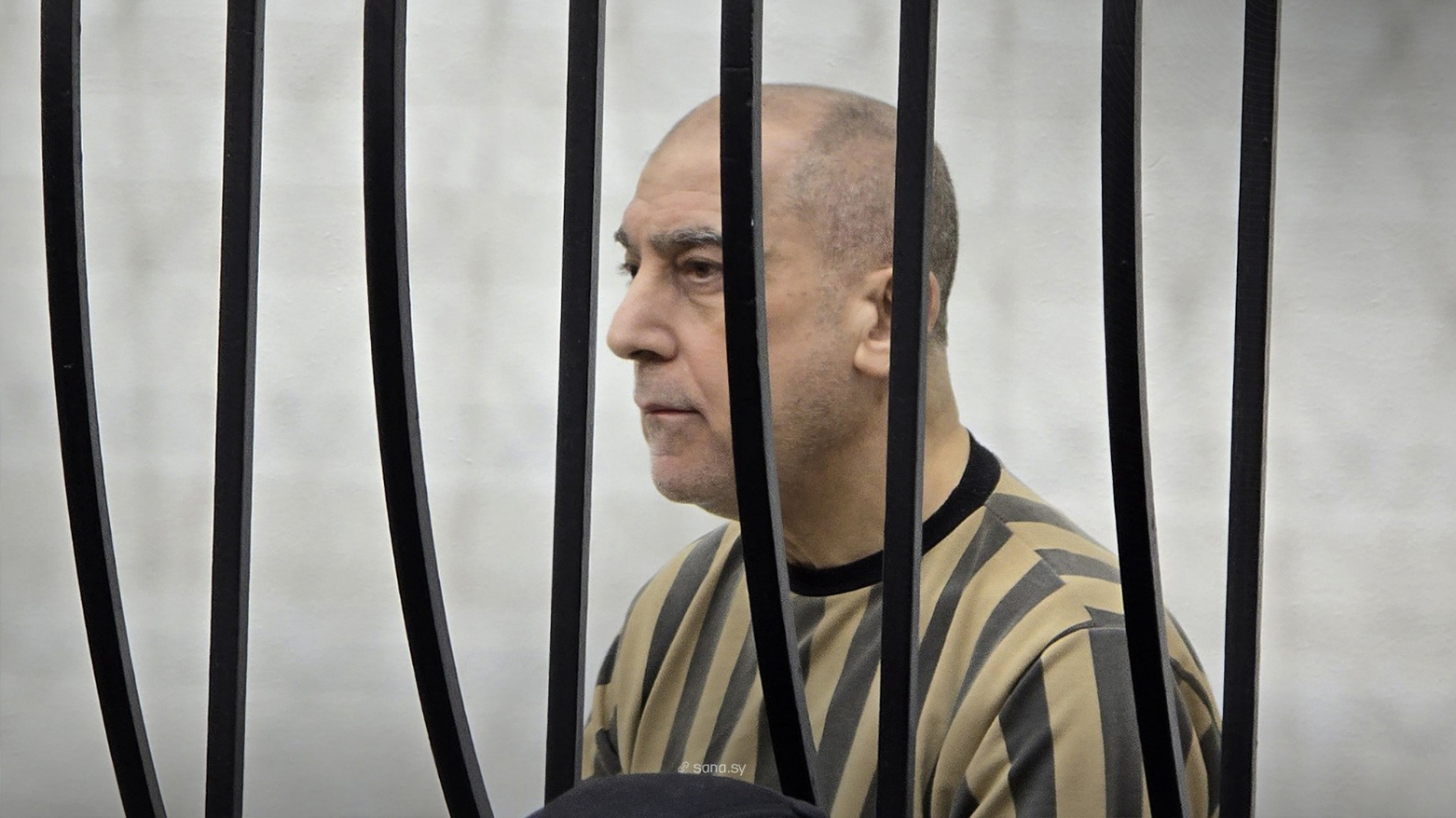
ERBIL (Kurdistan24) - The cage was small, and the man inside it was handcuffed. But the weight of what Atif Najib represented in that Damascus courtroom on Sunday was anything but ordinary.
For the first time in the history of a country shaped by half a century of authoritarian rule, Syria had put one of its own torturers on public trial — and placed the name of the man who gave the orders at the top of the indictment list.
The session was brief, procedural, and in many ways anticlimactic. Najib was not questioned. The next hearing was postponed to May. And the man whose name led the charges — former President Bashar al-Assad — sat not in a defendant's cage but somewhere in Russia, beyond the reach of the court that now presumes to judge him.
Yet for a country that spent decades disappearing its dissidents into dungeons, the sight of a former brigadier general in chains inside a courtroom was, by any measure, a beginning.
'Today we begin the first trial of transitional justice in Syria'
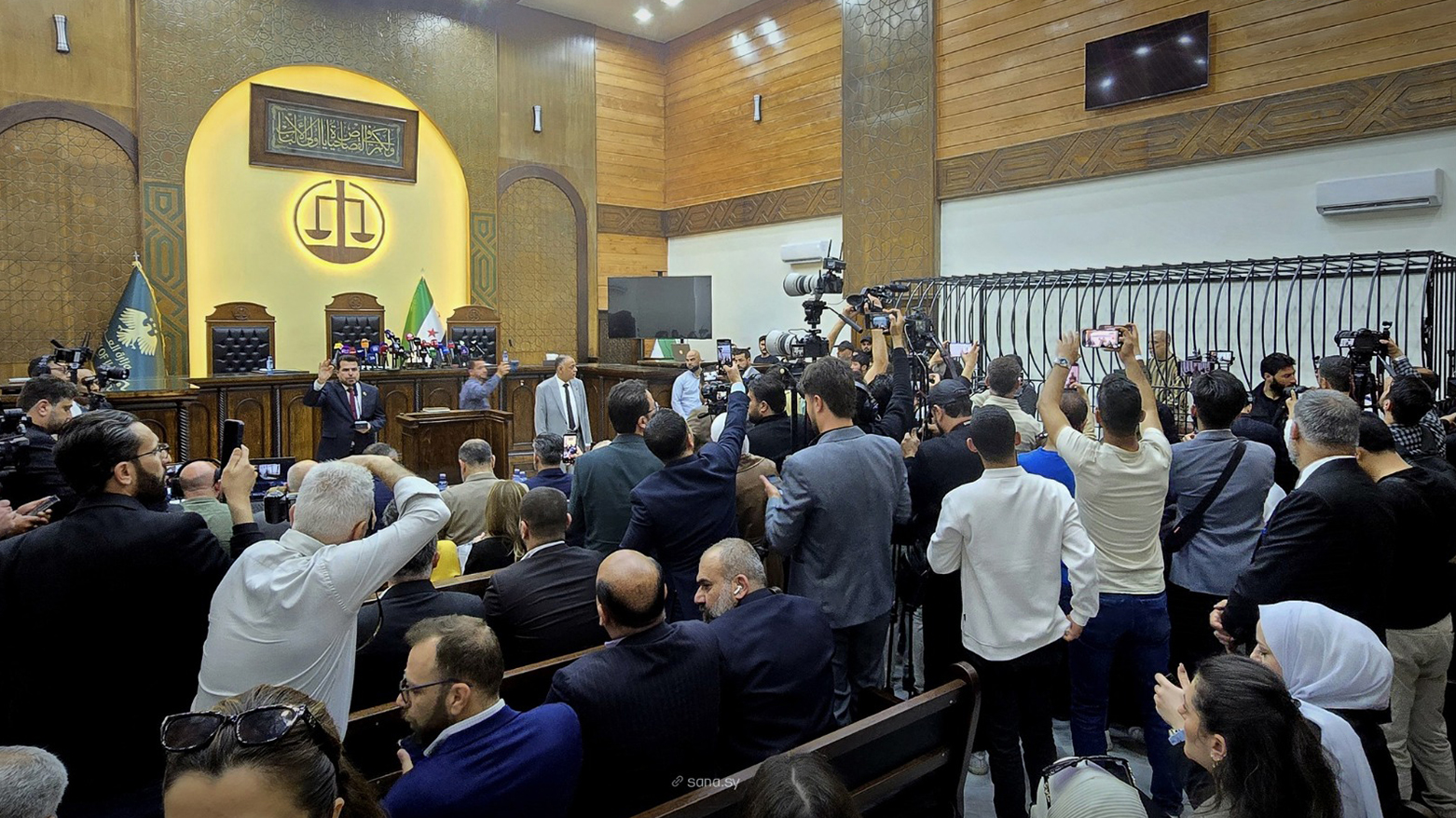
Presiding judge Fakhr al-Din Aryan opened the session with words that carried the weight of history. "Today we begin the first trial of transitional justice in Syria," he said, "which includes detained and fugitive defendants."
He then read aloud a list of former regime officials to be tried in absentia, led by Bashar al-Assad himself.
The proceedings are the first public trial within Syria's transitional justice process, launched following the collapse of the Assad government in December 2024, when opposition forces led by the Syrian Liberation Council swept into Damascus and ended five decades of family rule.
According to the National Transitional Justice Authority, the trials aim to address serious crimes and human rights violations in accordance with legal procedures, with the goal of achieving justice and strengthening the rule of law.
Justice Minister Mazhar al-Wais stated on X that the trials involving former regime figures would begin with a focus on events in Daraa — adding that these cases are "not merely judicial proceedings," but part of a broader effort to uncover the truth and preserve the memory of what was done to the Syrian people.
Judge Abdul Razzaq al-Hussein explained that a judicial team was established in Damascus following the arrest of several suspects. Initially composed of an investigative judge, a referral judge, and a public prosecutor, the team was later expanded as the scope of the cases widened.
Investigations began approximately nine months ago and cover crimes committed under Syrian law — including the Criminal Procedure Code — as well as international legal standards.
The referral judge has since issued a 60-page decision charging Najib and others with premeditated murder and torture leading to death.
The case has been referred to the Criminal Court in Damascus, where the acts have been classified as crimes against humanity under the Rome Statute.
Of all the figures who could have marked the beginning of Syria's reckoning, Atif Najib carries a particular symbolic weight.
A former brigadier general born in 1960 in Jableh, Latakia province, Najib is a cousin of Bashar al-Assad — his mother, Fatima Makhlouf, is the sister of Anisa Makhlouf, Assad's mother.
The family connection made him a trusted enforcer. His posting as head of the Political Security branch in Daraa between 2008 and 2011 made him one of the architects of the catastrophe that followed.
In March 2011, security forces under his command arrested 15 children in Daraa. Their crime, as far as the regime was concerned, was having scrawled anti-government graffiti on a wall — an act of adolescent defiance that, in any other country, would have been ignored or met with a reprimand.
Instead, the children were held for 45 days. They were beaten, subjected to electric shocks, and, according to accounts that spread across Syria and the world, had their fingernails removed.
When tribal elders and community leaders went to Najib to appeal for the children's release, he reportedly responded in a manner so humiliating that it transformed grief into fury.
The protests that followed were the first sparks of what became the Syrian uprising — a civil war that would kill more than 500,000 people, displace millions, and consume the better part of fifteen years.
Najib was placed under US sanctions on April 29, 2011, and EU sanctions on May 9 of the same year.
Following the fall of the Assad government, Syria's new administration announced his arrest on Jan. 31, 2025, in rural Latakia, where he had been living in hiding.
The charges against him now extend beyond the events of March 2011 to include illegal trade in vehicles, smuggling, and extortion of merchants.
Al-Hussein described the Daraa case — encompassing crimes attributed to Najib, Bashar al-Assad, Maher al-Assad, and other intelligence and military officials — as "highly symbolic for Syrians."
The court is expected to postpone sessions in the absence of fugitive defendants, with future hearings to include arguments leading up to a final verdict.
Two days before the trial, a confession that shook Syria
The timing of the trial was not incidental. Two days before the session opened, Syria's attention had been riveted by the arrest and public confession of a man known as Amjad Youssef — described by experts as a figure whose capture helped accelerate the launch of the transitional justice proceedings.
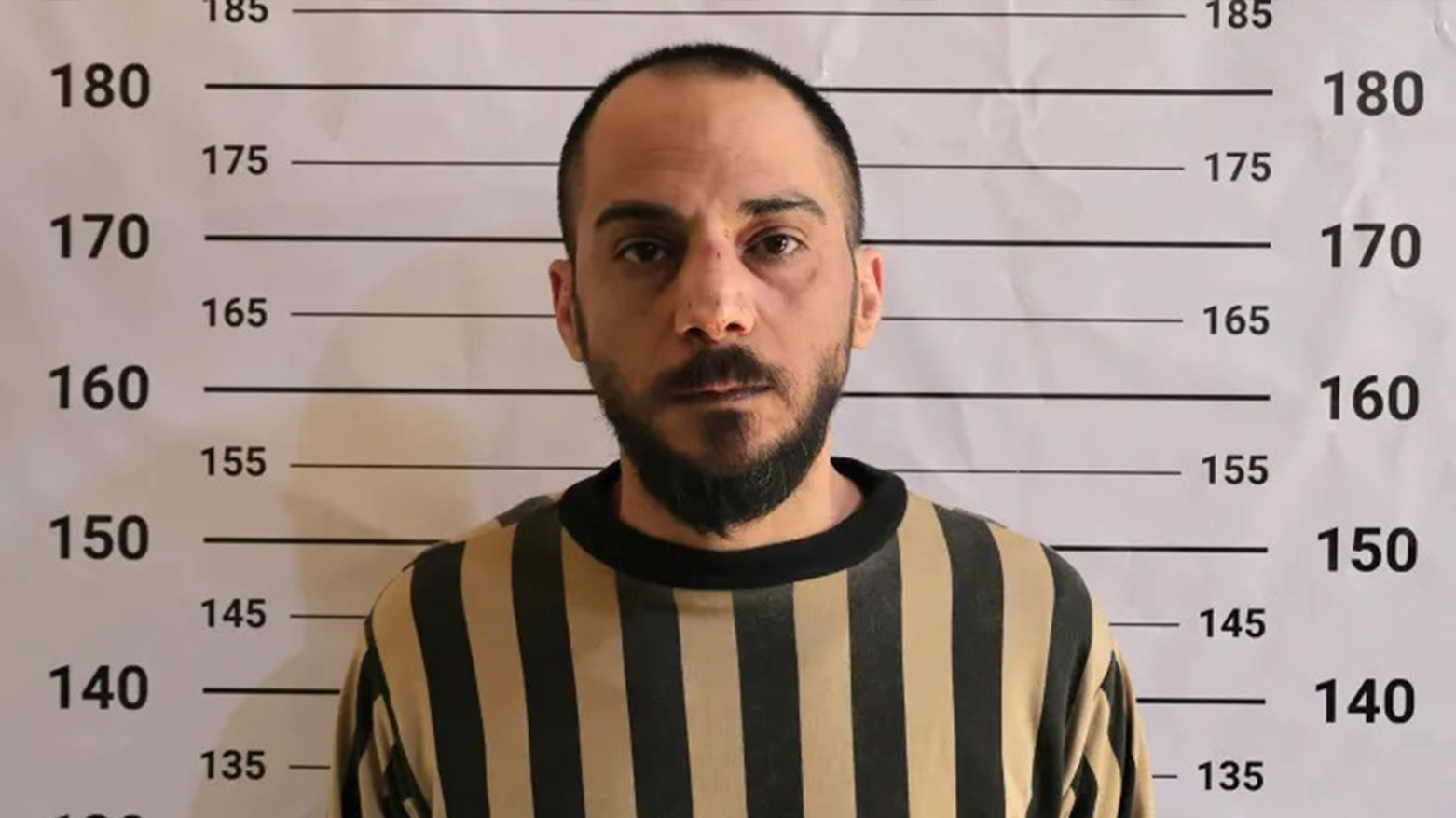
Youssef, whom witnesses and investigators have identified as a central perpetrator in the Tadamon massacre, gave a confession published on Saturday, that laid bare the mechanics of industrial-scale killing.
He stated that he held the rank of First Sergeant in Military Intelligence Branch 227 and admitted to being the individual visible in widely circulated footage of the killings.
According to his own account, victims were shot by direct gunfire, alternating with another individual named Najib al-Halabi from the National Defense militia.
A mass grave had been prepared in advance using heavy machinery. To conceal identities and prevent odors, bodies were burned using rubber tires, and the site was buried two days after the executions.
Youssef claimed the killings were a "personal decision" rather than the result of direct military orders, and said victims were identified based on intelligence reports and accusations of supporting the opposition.
He also claimed the filming was carried out by another individual for what he described as "documentation of security operations," denying knowledge of that person's identity.
The confession provoked immediate shock and widespread condemnation across Syria. Activists and legal observers questioned the credibility of his account — in particular his insistence that he acted without orders, a claim many described as contradictory and self-serving. Calls mounted for full disclosure of everyone involved in the massacre.
The wider net — and the faces behind the charges
The proceedings opened on April 26 are not limited to Najib or the events of Daraa. The trial list includes Wassim al-Assad, former Grand Mufti Badr al-Din Hassoun, and several military officials accused of committing serious violations against the Syrian people.
Bashar al-Assad himself faces charges in absentia, along with his brother Maher al-Assad and a range of senior intelligence and security commanders.
Assad fled to Russia in December 2024 as opposition forces completed their sweep of Damascus, ending a 24-year presidency and five decades of family rule that began with his father, Hafez al-Assad.
His current whereabouts remain in Russia, and no extradition mechanism is in place.
The fate of tens of thousands of missing persons, detainees, and victims of mass graves remains one of the most pressing and unresolved questions facing Syria's new administration — a legacy of suffering that no single trial, however historic, can fully address.
The obstacles ahead
Syria's first transitional justice trial is a beginning, but those closest to the process are careful not to mistake a beginning for momentum. The road ahead is obstructed at nearly every turn.
No comprehensive transitional justice law has yet been publicly introduced, despite the establishment of the National Transitional Justice Authority in May 2025.
Critics argue that arrests alone are insufficient without a broader legal and institutional framework. Syria's deep sectarian divisions complicate the balance between achieving accountability and preserving civil peace.
The new government has moved cautiously, fueling perceptions of delay among victims' families and human rights advocates.
There are also practical constraints. Syria lacks the technical tools, forensic expertise, and institutional capacity that complex transitional justice proceedings require.
Significant international support will be necessary — and has not yet fully materialized. Above all, Syrians are demanding transparency and genuine inclusion of victims' families in a process that, until now, has largely been conducted by newly formed institutions with limited public accountability.
History will not wait for Syria to resolve these contradictions. The courtroom in Damascus on April 26 was, at once, a symbol of what has changed and a reminder of how much has not.
A man who helped spark one of the twenty-first century's most devastating conflicts sat in chains. The president who ordered the crackdown sat in exile. And a country of millions — scattered across refugee camps, rebuilt cities, and shattered communities — watched to see whether the word "justice" would mean anything at all.
The next hearing is scheduled for May. The real verdict, for Syria, is still years away.