Trump on Iran: War will Come to an End Very Soon
The US president signals openness to diplomacy while describing what he calls catastrophic and potentially irreversible damage to Iran's energy sector
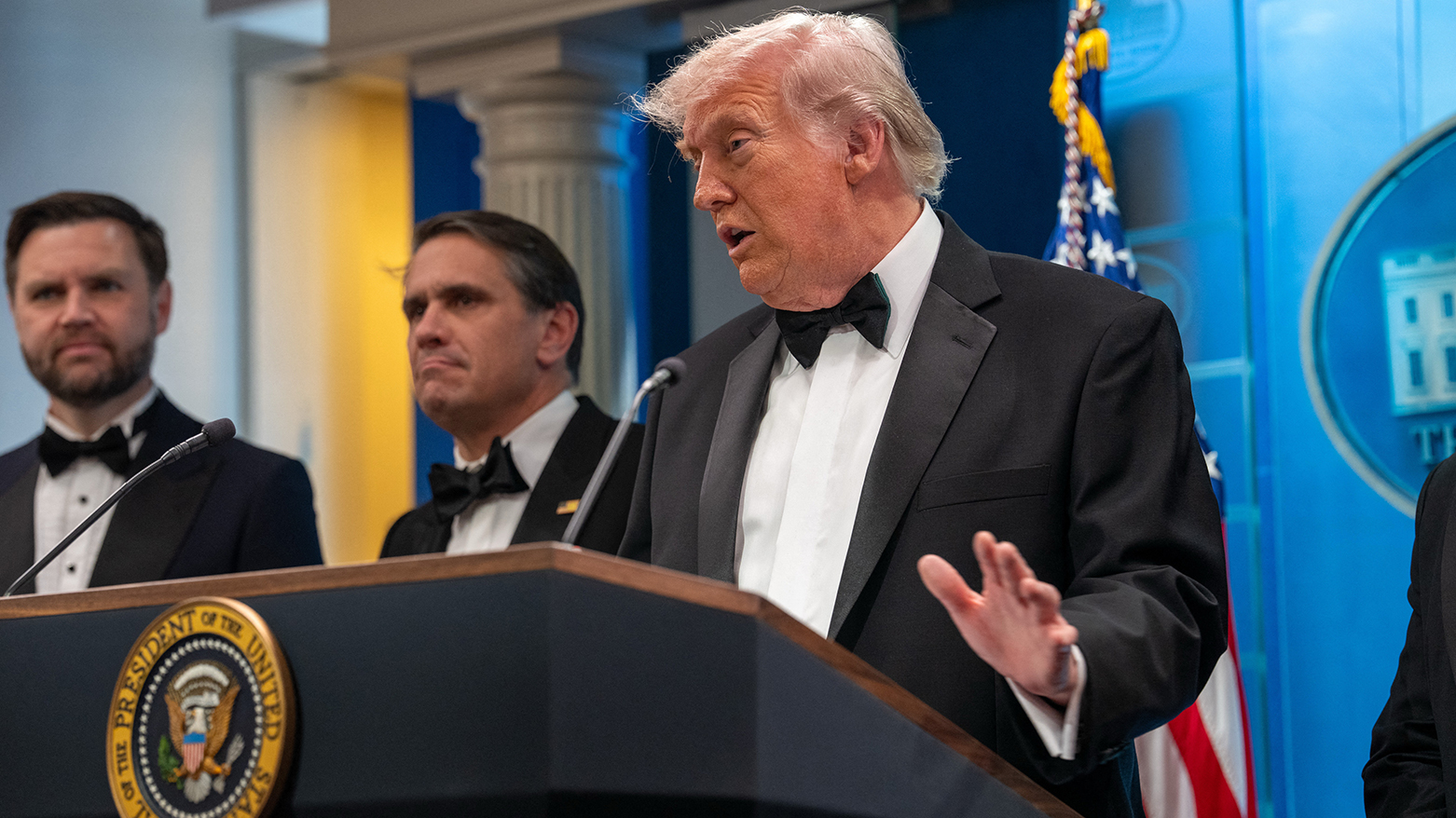
ERBIL (Kurdistan24) - Donald Trump used a Fox News interview on Sunday to simultaneously extend an olive branch to Tehran and describe the scale of destruction his administration has already visited upon it — a combination of inducement and menace that has come to define Washington's approach to the Iran standoff.
Speaking on Sunday, Trump told the network that Iran was welcome to reach out and begin talks. "If the Iranians want to negotiate, they can get in touch with me," he said. "We have all the cards." But the offer came with a condition that has never shifted: Iran cannot be permitted to acquire a nuclear weapon.
"They cannot have a nuclear weapon," Trump said. "It puts the world in danger." He added that if Iran were to become a nuclear-armed state, it could destroy Israel within minutes — an outcome he said he would not allow.
Trump offered a nuanced, if pointed, assessment of the Iranian side. He said that some of the individuals currently handling Iran's negotiations were "very reasonable and intelligent," while others were not — and expressed hope that Tehran's leadership would show "a little wisdom and intelligence." It was a formulation designed to apply pressure while leaving room for a deal.
The president confirmed that within the framework of ongoing negotiations, the United States was seeking to gain control over Iran's enriched uranium stockpile — a core demand that goes to the heart of the nuclear dispute.
Trump did not limit himself to diplomacy. He pointed explicitly to what he described as the economic devastation his administration has inflicted on both Iran and Venezuela, naming the two countries in the same breath as examples of what American sanctions and pressure can achieve. "Look at what we've done to Venezuela and Iran," he said. "They are now in ruins."
On the war with Iran, Trump was blunt: he said the conflict was moving toward its conclusion, and that Washington would emerge from it as the winner.
He also raised what he described as a severe technical and environmental crisis unfolding inside Iran as a direct consequence of economic sanctions and the blockade of oil tankers. With large quantities of oil stranded inside the system — unable to be loaded onto ships or stored in facilities — Trump warned that the infrastructure itself was at risk of catastrophic failure from within.
"When a large amount of oil remains inside the system and there is nowhere to send it — not onto ships, not into storage — the system explodes from the inside," he said. He went further, suggesting that even if Iran were to attempt to repair its systems after such a collapse, it could recover no more than 50 percent of its former capacity. The implication, as Trump framed it, was unambiguous: Iran's oil industry, the financial foundation of its government and its military, could be permanently crippled.
Trump also addressed his administration's decision to cancel the planned delegation visit to Islamabad, which had been under discussion as part of the broader diplomatic framework surrounding the Iran talks. He said he had great respect for Pakistan's prime minister and military commander, but saw no logic in dispatching a delegation on an 18-hour journey simply to sit there. The cancellation has raised questions about the pace and format of the diplomatic process, though Trump gave no indication it reflected a broader breakdown in talks.
In a final turn, the president addressed the war in Russia and Ukraine, saying his administration was working seriously to bring that conflict to an end and had already conducted two telephone conversations — one with Vladimir Putin and one with Volodymyr Zelensky — as part of those efforts.