Iran Requests 'S-400' System From Russia as Defense Talks Intensify
Iran has requested Russia’s S-400, while US officials warn of fuel strain, sanctions pressure and continued conflict.
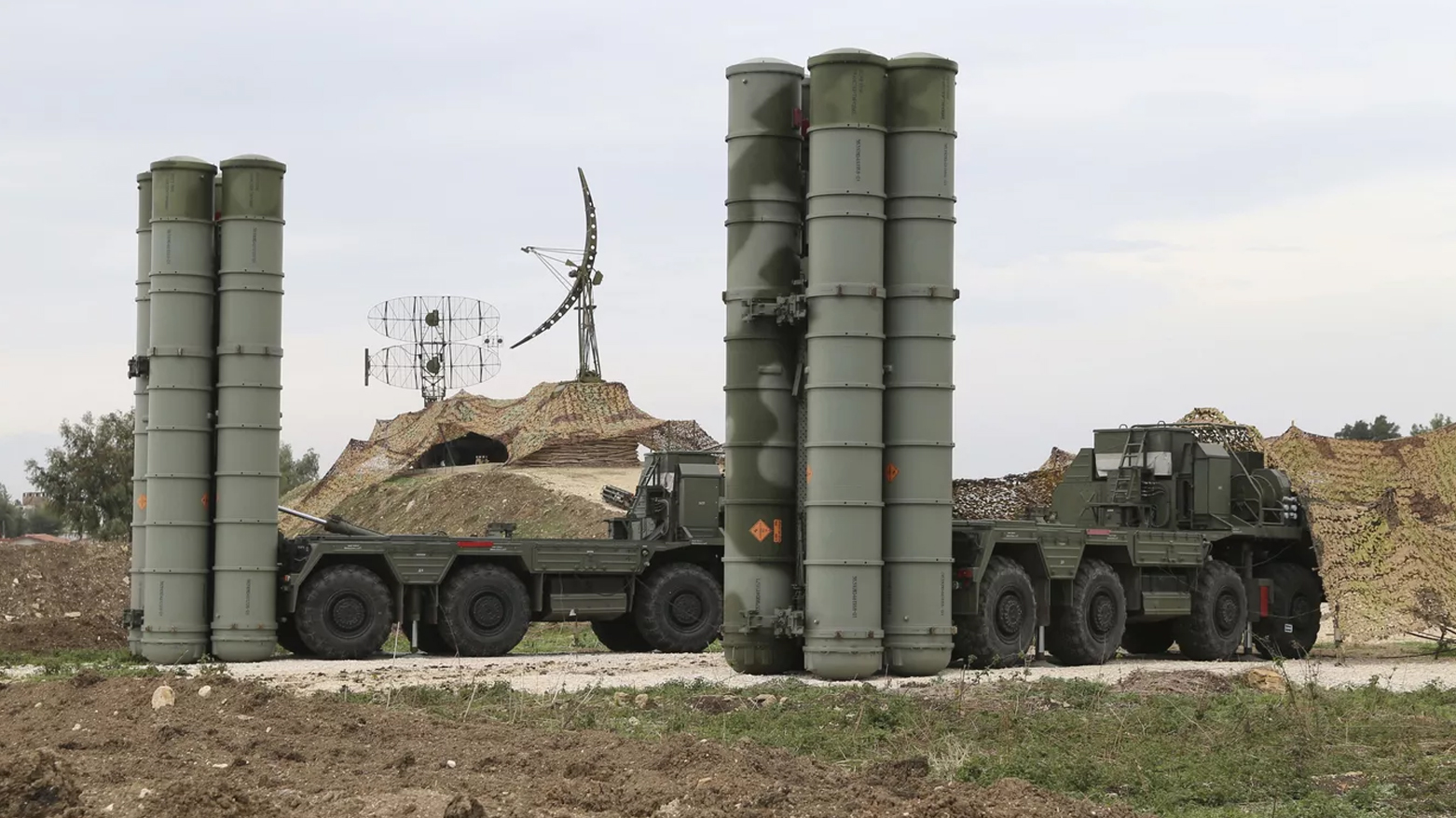
ERBIL (Kurdistan24) - Iran has requested Russia's S-400 air defense system, according to a report by the Telegraph citing a meeting between Iranian Foreign Minister Abbas Araghchi and Russian President Vladimir Putin in Moscow. The Telegraph said Araghchi asked Putin to supply Tehran with the system after US and Israeli attacks exposed gaps in Iran's defenses.
The report added that the S-400 request was discussed alongside wider questions about how Tehran might respond to Washington and how the war could be brought to an end. The S-400 is an air defense system designed to intercept aircraft and missiles.
The request comes as the US Treasury Secretary, Scott Bessent, predicted a gasoline crisis inside Iran.
According to the report, Bessent said Iran's oil industry had suffered serious damage from US naval blockades and that refineries could soon fail, creating a fuel shortage.
He also warned governments and companies against dealing with Iran's energy sector and airlines, saying they could face US sanctions.
The report said blocked export routes and full storage tanks had slowed Iran's oil extraction and forced parts of the sector to halt operations, increasing pressure on the domestic fuel supply.
The two developments, taken together as reported, place defense and energy under the same diplomatic spotlight: Tehran is seeking military hardware from Moscow while Washington is warning that Iran’s internal energy system is under strain.
The reports do not establish any formal linkage between the two issues, but they place them in the same broader context of escalating pressure, sanctions, and military confrontation.
Russia-Iran connectivity deepens as flights resume
The defense request from Tehran also came alongside signs of continued logistical normalization between Russia and Iran.
Novosti, citing sources at Moscow's Sheremetyevo Airport, reported that a Mahan Air flight departed from Tehran for Moscow, the first such flight on the route since Feb. 26.
The report said services had been suspended after military tensions escalated in late February, when Iranian airspace was closed.
Iran's Civil Aviation Organization said airspace over parts of the country's east had reopened on April 18, and that the resumption of flights at airports would be gradual and depend on technical, military and civilian readiness.
The Secretary-General of the Association of Iranian Airlines also said airports including Imam Khomeini, Mehrabad, Mashhad, Birjand, Gorgan and Zahedan had been opened to flights.
In that same context, Araghchi said in a post on X that recent events showed the depth and strength of the strategic partnership between Tehran and Moscow, adding that bilateral relations were continuing to grow.
Araghchi's remarks, as reported, framed the relationship in openly strategic terms.
He said Iran welcomed Russia's support for diplomatic efforts and thanked Moscow for its solidarity.
The reports together suggest that, at least in the public messaging cited, Tehran is presenting Moscow not only as a diplomatic partner but also as a practical counterpart at a time of war, sanctions and disrupted aviation.
Washington signals skepticism and maintains pressure
The US position, as reflected in several reports, remained sharply critical of Tehran's proposals and intentions.
The New York Times reported, citing two senior US officials, that President Donald Trump was dissatisfied with a new Iranian proposal and had ordered his administration to prepare for every scenario.
The report said the proposal, sent to Washington through Pakistani mediators, did not address uranium enrichment or the fate of Iran's enriched uranium, which remained the central point of disagreement.
A separate report said US officials believed Iran was not acting in good faith.
The Wall Street Journal, as cited in that report, said Trump and his team were suspicious of Iran's proposal and believed Tehran was not acting in good faith.
The White House spokesperson, Karoline Leavitt, said the proposal was under discussion and that Trump had met with his national security team.
Marco Rubio, the US secretary of state, also gave a hard line in remarks quoted in the reports. He said the level of sanctions and pressure on Iran was "extraordinary" and could be increased further.
He said the Iranians were trying to save themselves from the crisis they had fallen into, and he argued that regime change, in his words, "must be from within Iran."
He also said the Strait of Hormuz was being used by Iran as an "economic nuclear weapon," according to the report.
Those remarks, taken together, show Washington pressing both the diplomatic and coercive sides of its policy.
The reported US view was that Iran's proposal did not meet American demands, especially on the nuclear file, and that sanctions and blockade measures remained central tools of pressure.
Energy and logistics remain under strain
The pressure on Iran's energy sector was reinforced by Bloomberg's report that a large number of Iranian oil tankers were stranded near Chabahar port.
Bloomberg said satellite imagery showed about eight large vessels and several smaller ships near the port, outside the Gulf, suggesting that oil loading continued even as US blockades kept shipments from reaching buyers.
According to the report, around 155 million barrels of Iranian crude were either in transit or stored on ships, and it was unclear how many empty vessels Iran had available for additional cargoes.
Bloomberg said the lack of storage capacity and the inability to move oil could force Iran to reduce or stop part of its oil production.
The report placed the tankers in the context of the war and subsequent blockade measures.
It said that after the conflict escalated, the Strait of Hormuz was closed to commercial shipping and that the US later imposed a blockade on Iranian ports, preventing Tehran’s commercial vessels from exporting oil.
The significance of the report lies in the logistics: even where production or loading continues, the ability to move crude to market remains constrained.
That constraint aligns with the Treasury Secretary's warning about a gasoline shortage. One report described the problem as a future domestic crisis; the other showed a visible export bottleneck at sea.
Read together, they point to a chain of pressure that moves from ports and tankers to refineries and fuel supply, though each report described a different part of the system.
External commentary enters the wider conflict debate
A separate report from The Guardian, cited in the source material, quoted senior British rabbis as saying that current Israeli policy was a threat to the Jewish religion.
The report said Rabbi Charlie Baginsky and Rabbi Josh Levy, leaders of the Progressive Jewish movement, argued that criticism of the Israeli government was not betrayal but a religious duty.
The report also said the rabbis described the government's direction as inconsistent with Jewish values and presented their comments in connection with a book on Progressive Judaism, Zionism and the State of Israel.
Rabbi Lea Mühlstein was quoted criticizing new legislation as violating previous decisions by Jewish institutions.
The comments were presented as the views of named religious figures and not as a broader institutional statement.
In the context of the wider regional conflict, the report adds another layer of public commentary, but it does not alter the core military, diplomatic or economic developments described in the other reports.
Tensions remain centered on war, sanctions and negotiations
Across the reports, the main themes remained the same: military pressure on Iran, disputes over nuclear terms, sanctions on the energy sector and efforts by Tehran to maintain external partnerships.
The request for the S-400 system placed defense procurement at the front of the story. The gasoline warning brought domestic vulnerability into view.
The return of flights between Tehran and Moscow, and Araghchi's comments on strategic ties, showed the continuity of Russia-Iran contacts.
US statements from Trump administration officials emphasized mistrust, sanctions and the possibility of further escalation.
Bloomberg's tanker report showed the practical limits on moving Iranian oil. The British rabbis' remarks entered the debate as an external opinion, not a policy position.