Trump Says Iran has Privately Admitted 'State of Collapse' and is Pleading for Hormuz to Reopen
Washington and Tehran remain locked in a diplomatic impasse over the sequencing of nuclear talks and Strait of Hormuz negotiations, as Gulf states warn of prolonged regional instability
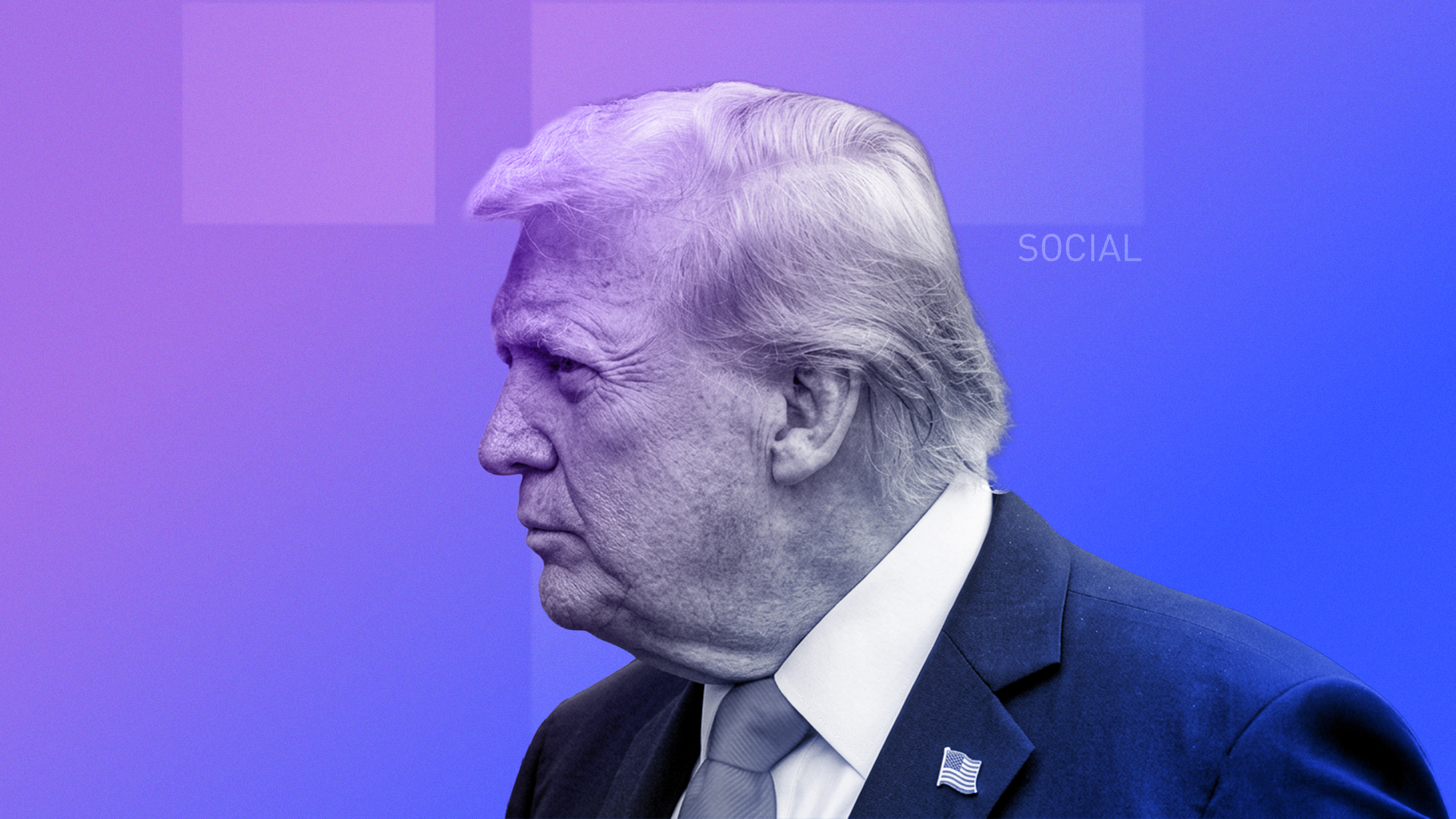
ERBIL (Kurdistan24) - U.S. president Donald Trump went public on Tuesday with what he described as a private Iranian admission of crisis, posting on Truth Social that Tehran had informed Washington it had reached a "state of collapse" and was urgently requesting the reopening of the Strait of Hormuz.
"Iran has just informed us that they are in a 'State of Collapse,'" Trump wrote on Tuesday, April 28. "They want us to 'Open the Hormuz Strait,' as soon as possible, as they try to figure out their leadership situation — which I believe they will be able to do!"
The post landed as negotiations between Washington and Tehran over the strategic waterway remain deadlocked, and as Iran's public posture contradicted the private distress Trump described — Tehran's defense ministry insisting hours earlier that the United States was no longer in a position to dictate terms to sovereign nations.
The gap between Iran's public and private positions encapsulates the central difficulty of the current diplomatic moment.
Iranian defense ministry spokesman Reza Talaei-Nik said Tuesday that Washington must abandon what he described as "illegal and irrational demands," and that Tehran was prepared to share its defensive military capabilities with "independent countries," particularly members of the Shanghai Cooperation Organization.
Yet even as those words were broadcast on Iranian state television, Trump was posting that Tehran's leadership had privately reached out to request the earliest possible reopening of a waterway that Iran itself has effectively blockaded since the early stages of the war — a restriction that has disrupted global energy flows and elevated the Strait to the center of every diplomatic effort since the April 8 ceasefire halted active hostilities.
The core obstacle remains sequencing. Tehran's proposal reportedly links the reopening of the Strait to broader negotiations aimed at ending the conflict with the United States and Israel — a framework that would delay discussions on Iran's nuclear program until after maritime and ceasefire issues are resolved.
Trump has flatly rejected this approach, insisting that nuclear negotiations must be on the table from the outset. That single disagreement has so far proven sufficient to block any comprehensive agreement.
Gulf states sound the alarm
The prospect of a prolonged stalemate is generating alarm among regional actors with the most to lose from continued disruption.
Qatar's foreign ministry spokesperson, Majed al-Ansari, warned explicitly against the emergence of a frozen conflict in the Gulf. "We do not want to see a return to hostilities," he said, "nor a frozen conflict that could reignite for political reasons," calling for a sustainable resolution that addresses the region's broader security concerns.
Those concerns are acute. The Strait of Hormuz carries a significant share of the world's oil and gas shipments, and its continued restriction has sent reverberations through global energy markets. Iran has also taken domestic economic measures linked to the conflict, banning steel exports following airstrikes that targeted its industrial sector.
Amid the diplomatic paralysis, Gulf states have moved to harden their internal security postures. In Bahrain — which hosts a major US military base and has a substantial Shia population — courts sentenced five individuals to life imprisonment on Tuesday for allegedly plotting attacks in coordination with Iran's Revolutionary Guards, with prosecutors saying the group had monitored and photographed sensitive infrastructure.
An additional 25 people received prison terms of up to 10 years for sharing images of Iranian strikes and expressing support for them.
The sentences follow a broader crackdown across the Gulf in which hundreds have reportedly been detained for disseminating footage of attacks or showing sympathy toward Tehran.
The rulings came days after Bahrain revoked the citizenship of 69 individuals accused of supporting Iranian activities — measures that underscore the degree to which the conflict has moved from the battlefield into the domestic politics of every country in the region.
For now, the Strait remains closed, the nuclear file remains unresolved, and the distance between Washington and Tehran — despite the private communications Trump described — remains as wide as ever.