War Silences Iraq’s Holy Cities as Pilgrimage Trade Collapses
Najaf and Karbala face economic strain as regional conflict halts influx of foreign visitors
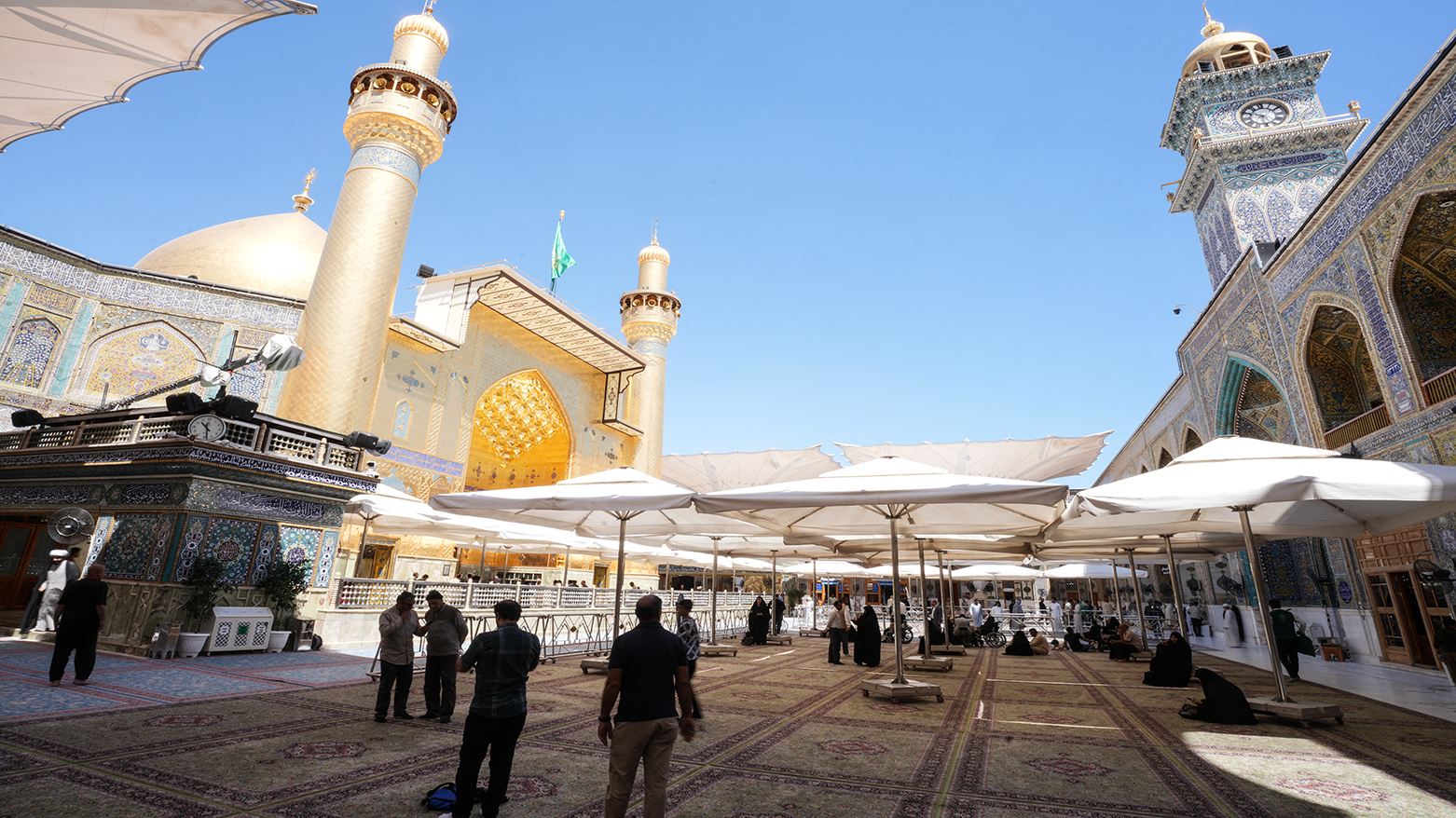
ERBIL (Kurdistan24) — The shrines of Imam Ali Shrine in Najaf stand unusually quiet, their vast courtyards no longer filled with the multilingual hum of pilgrims, as a regional war has sharply curtailed religious tourism across Iraq’s holiest cities.
Local businesses that once depended on a steady stream of visitors now face mounting losses. Shopkeepers, hoteliers, and transport workers describe a sudden and severe downturn following the outbreak of conflict in late February, when US and Israeli strikes on Iran triggered wider regional instability.
“Iranians used to keep us busy, whether the jeweler, the fabric merchant, or the taxi driver. Now there are none,” said Abdel Rahim Harmoush, a 71-year-old jewelry shop owner who has worked for decades in Najaf’s historic market.
“It used to be hard even to step into the market because of foreigners.”
Each year, millions of Shia Muslims travel to Najaf and Karbala, home to some of the most sacred sites in Islam. But the war has halted the flow of pilgrims from Iran, Lebanon, the Gulf, India, and Afghanistan, cutting off a vital economic lifeline.
Najaf’s shrine is the burial site of Ali ibn Abi Talib, a central figure in Shia Islam. The surrounding markets, once bustling with foreign visitors, now sit largely deserted.
“People here live on religious tourism,” Harmoush said, warning that prolonged disruption could lead to widespread economic hardship, with shop owners struggling to pay rent and workers left without income.
The downturn has hit the hospitality sector particularly hard. Abu Ali, a 52-year-old hotel owner, said he had been forced to lay off five staff members, leaving just one to manage nearly 70 empty rooms. “How can I pay salaries if there is no work?” he asked.
According to Saeb Abu Ghneim, head of Najaf’s hotel association, around 80 percent of the city’s 250 hotels have shut down, with more than 2,000 workers either dismissed or placed on unpaid leave.
Iranian visitors—who make up the majority of pilgrims—have been largely absent, along with Lebanese travelers affected by the conflict.
Religious tourism remains one of Iraq’s few stable non-oil revenue streams, having previously withstood disruptions such as pandemic-related closures. Now, the sector faces another severe test.
Currency exchange worker Moustafa al-Haboubi, 28, said business has nearly evaporated. “We barely receive one or two customers,” he said. “There are no pilgrims now, Iranian or otherwise.”
Even after a fragile ceasefire took effect in early April and Iraqi airspace reopened, the recovery has been minimal. Only small numbers of domestic visitors arrive during weekends, offering limited relief.
The situation mirrors developments in Karbala, located about 80 kilometers north of Najaf, where the shrines of Imam Hussein Shrine and Al-Abbas Shrine are key pilgrimage destinations.
Once crowded walkways between the shrines are now largely empty, with visitors predominantly Iraqi. Israa al-Nasrawi, head of Karbala’s tourism committee, described the situation as “a catastrophe,” noting that tourist numbers have dropped by approximately 95 percent.
Hundreds of hotels have closed, and pilgrimage tour operators have suspended most of their activities. Akram Radi, who has worked in the sector for 16 years, said his company—once serving up to 1,000 visitors monthly—is now operating at just 10 percent capacity.
“I might have to close and look for another job,” he said.
As the regional conflict drags on, uncertainty continues to weigh heavily on Iraq’s religious tourism sector, with livelihoods across Najaf and Karbala hanging in the balance.