Akre Rice Production Set for Major Growth Amid Strong Rainfall
Planted area expands to record levels as farmers expect higher yields
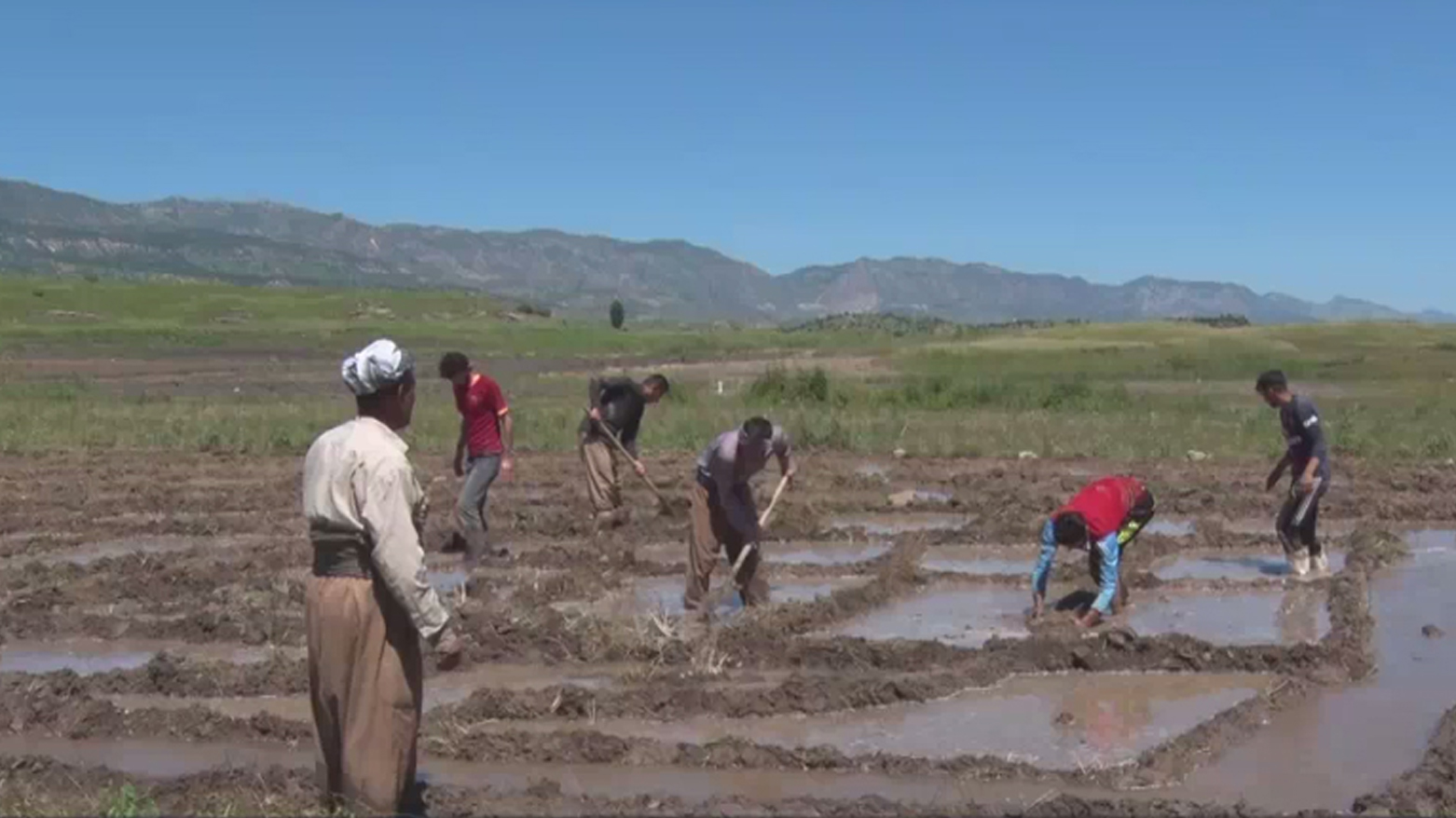
ERBIL (Kurdistan24) - Rice production in Akre is expected to see significant growth this year, driven by higher rainfall levels and an expansion in cultivated agricultural lands, a local agricultural official said on Tuesday.
Fazil Mustafa, Director of Agriculture in Akre, told Kurdistan 24 that the total area planted with rice has increased notably compared to previous years.
According to official data, around 12,500 dunams were cultivated last year, while this year the figure has risen to approximately 14,500 dunams in the Akre district alone, marking a new record level for the area.
He said the increase reflects improved weather conditions, particularly the higher rainfall this season, which has encouraged farmers to expand cultivation and raised expectations for a stronger harvest.
Officials also noted that Akre continues to produce several high-demand rice varieties, including local types such as "Shash Mangi," "Se Mangi," "Penj Mangi," "Sadri Bondar," and "Tahalf," which remain popular in local markets.
Despite the positive outlook, Mustafa explained that planting schedules can still be affected by external factors.
This year, the timing of Ramadan caused some delays in agricultural preparations, while in previous years, drought conditions had also disrupted planting cycles.
Farmers across the region have now begun preparations for the season, expressing optimism for higher yields compared to previous years.
Authorities added that the Kurdistan Regional Government has taken steps to support farmers, including facilitating the marketing of agricultural products.
These efforts are part of a broader strategy to promote local production and expand access to external markets, with Akre rice increasingly being exported to other parts of Iraq as well as to markets in Europe and the United States.
The anticipated growth in rice production highlights the improving conditions for agriculture in parts of the Kurdistan Region, particularly following years of climate-related challenges.
Edited by Kamaran Aziz