U.S. Intelligence Says Iran Could Sustain Naval Blockade for Up to Four Months
U.S. intel, as reported by Reuters, says Iran can endure naval blockade for approximately 4 months as Gulf tensions and Strait of Hormuz clashes escalate without clear strategic breakthrough.
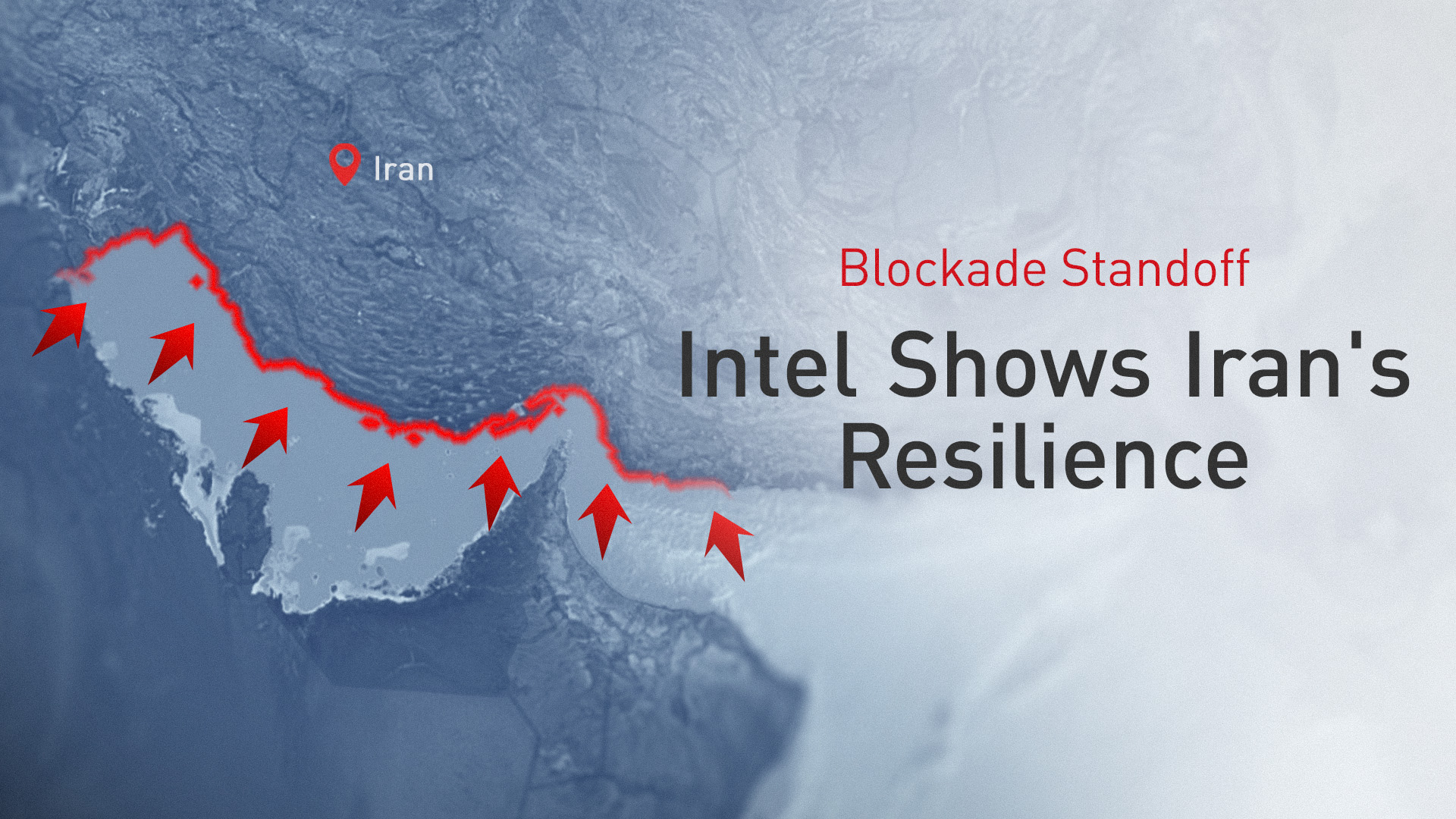
ERBIL (Kurdistan24) - A recent United States intelligence assessment concludes that Tehran possesses the logistical and economic capacity to withstand the current naval blockade for approximately four months, even as kinetic confrontations between U.S. and Iranian forces intensify across regional waterways.
According to reporting by Reuters, the Central Intelligence Agency (CIA) finding suggests that Washington's efforts to force a strategic capitulation through maritime isolation have yet to achieve their primary objectives.
This intelligence evaluation, first detailed by Reuters journalists Idrees Ali, Erin Banco, and Hatem Maher, surfaces during a period of significant military volatility.
While a month-old ceasefire technically remains in place, recent days have witnessed a marked escalation in naval skirmishes in the Gulf of Oman and the strategic Strait of Hormuz.
The reported assessment indicates that Iranian internal reserves and alternative supply mechanisms may provide the country with a longer operational window than previously estimated by some Western policymakers.
The strategic significance of Iran's assessed resilience is underscored by a series of high-stakes maritime incidents.
According to The Associated Press (AP), the U.S. military recently utilized a fighter jet to disable an Iranian oil tanker attempting to breach the blockade, while U.S. naval assets have reportedly intercepted a wave of unprovoked attacks targeting American destroyers.
The intersection of these military engagements and the intelligence suggesting a four-month resilience window reveals a complex stalemate where neither economic strangulation nor sporadic military pressure has yet compelled a definitive diplomatic resolution.
CIA Assessment on Iran's Resilience
The Reuters report, citing a U.S. official familiar with the findings, indicates that the CIA analysis projects Iran can endure the current level of maritime pressure for at least another quarter.
This conclusion has significant implications for U.S. foreign policy, suggesting that the leverage afforded by the naval blockade remains constrained.
According to Reuters, the assessment has become a focal point of internal debate within the American intelligence community.
A senior intelligence official, speaking to Reuters, contested the characterization of the CIA report, describing such claims as inaccurate.
The official argued that the blockade is currently "inflicting real, compounding damage" by severing essential trade routes, depleting national revenue, and accelerating a broader systemic collapse of the Iranian economy.
However, the official cited by Reuters in the primary report maintained that the four-month timeframe represents a credible baseline for Iran's current survival capacity.
The intelligence findings coincide with a period where the U.S. administration is awaiting a response from Tehran regarding a formal proposal to end the war.
According to Reuters, U.S. Secretary of State Marco Rubio, speaking during a diplomatic visit to Rome, expressed hope for a "serious offer" from Iranian officials to break the ongoing deadlock.
While diplomatic channels remain open through mediators in Pakistan, the CIA assessment suggests that Tehran may feel less immediate pressure to concede due to its perceived economic buffer.
Maritime Tensions Escalate in Gulf Waters
The theoretical resilience outlined in intelligence reports is being tested by increasingly frequent kinetic encounters.
AP journalists Joshua Boak, Ben Finley, and Russ Bynum reported that a U.S. fighter jet recently targeted an Iranian oil tanker in the Gulf of Oman.
According to U.S. Central Command, the aircraft fired on the vessel's steering mechanism, effectively disabling its rudder as it attempted to bypass the American blockade of Iranian ports.
This incident marks a shift in the enforcement of the maritime embargo.
According to AP, President Donald Trump has utilized these tactical strikes to increase pressure on Tehran to accept a deal that would formally reopen the Strait of Hormuz to global energy shipments.
In public statements, the U.S. President warned that a failure to reach an agreement would result in a new wave of aerial bombardments at a higher intensity than previously seen during the opening phase of the war.
The confrontation at sea has not been limited to tanker interdictions.
Reuters reported that U.S. military forces also engaged two other Iran-linked vessels that were attempting to enter an Iranian port.
In this instance, a U.S. fighter jet reportedly struck the smokestacks of the ships, forcing them to abort their transit and turn back.
These sporadic clashes, described by Iran's semi-official Fars news agency and cited by Reuters, indicate that the Strait of Hormuz remains a zone of active and unpredictable friction.
Strait of Hormuz Remains Flashpoint
The operational risks for naval forces in the region were further highlighted by a multi-ship engagement on Thursday.
According to AP journalists Adam Schreck, David McHugh, and Russ Bynum, the U.S. military intercepted Iranian attacks directed at three Navy ships transiting the Strait of Hormuz.
U.S. Central Command stated that American forces responded with self-defense strikes against the Iranian military facilities responsible for the assault.
The U.S. military confirmed that no American vessels sustained hits during the engagement.
President Trump, addressing the incident from Washington, characterized the exchange as a minor provocation, stating that Iranian forces "trifled" with U.S. assets and were subsequently repelled. However, the frequency of these encounters highlights the fragility of the April 8 ceasefire.
According to AP, Iranian state media reported that their forces exchanged fire with "the enemy" on Qeshm Island, the largest Iranian island in the Persian Gulf, and noted defensive fire activity in western Tehran.
Parallel to the military escalation, Iran is attempting to institutionalize its control over the waterway.
AP reported that a new government body, the Persian Gulf Strait Authority, has been established by Tehran to vet and collect tolls from vessels seeking passage.
According to a briefing by Lloyd's List Intelligence cited by AP, this agency aims to position itself as the sole valid authority for granting transit permission.
Maritime law experts noted in the report that such demands for tolls and vetting likely violate international conventions regarding peaceful passage through territorial waters.
Military Incidents Heighten Regional Risk
The consequences of the continued maritime stalemate are radiating throughout the Middle East, affecting both energy infrastructure and international shipping.
The Associated Press reported that the French shipping giant CMA CGM Group confirmed one of its cargo ships was damaged and several crew members were wounded in a recent attack while transiting the strait.
Furthermore, the German shipping firm Hapag-Lloyd stated that the shutdown of the waterway is costing the company approximately $60 million per week due to surging fuel and insurance expenses.
The economic war has also seen the targeting of critical energy nodes.
According to the Reuters report, at least 20 oil refineries in the Middle East have been struck or forced into precautionary shutdowns since the conflict began in late February.
This has removed an estimated 2.3 million barrels per day of refining capacity from the global market.
While oil prices have fluctuated, Brent crude remains above $100 a barrel, reflecting deep market anxiety over the potential for a renewed re-escalation.
The United Arab Emirates has also reported being drawn into the flaring conflict.
According to the UAE government cited by Reuters, air defenses in the country engaged two ballistic missiles and three drones launched from Iran on Friday.
Emirati officials characterized the move as a major escalation, noting that three individuals sustained injuries during the defensive operations.
Strategic Implications and Diplomatic Stalemate
The convergence of intelligence assessments and kinetic flurries suggests a deepening of the strategic impasse.
According to Reuters, the U.S. Treasury has continued to ratchet up pressure by announcing new sanctions against individuals and companies in China and Hong Kong for supporting Iran's drone production sector.
This financial pressure is designed to prevent Tehran from reconstituting its military-industrial base.
However, the reported CIA assessment indicating a four-month survival window provides Tehran with a degree of perceived strategic depth.
Iranian Foreign Minister Abbas Araghchi, currently visiting China, has emphasized that a resumption of hostilities is unacceptable while affirming Iran's right to its nuclear program.
According to AP, China has urged a comprehensive ceasefire, leveraging its unique political and economic ties with Tehran to facilitate a resolution.
Domestically, Iranian leadership appears to be maintaining a posture of continuity.
AP reported that Iranian President Masoud Pezeshkian held a lengthy meeting with Supreme Leader Mojtaba Khamenei to oversee the ongoing negotiations.
While the Supreme Leader has not appeared in public since being wounded early in the war, the report noted that he remains a central figure in the decision-making process.
The combination of assessed economic resilience and persistent maritime attacks creates a scenario of "compounded damage" versus "strategic endurance."
As U.S. and Iranian forces continue to trade fire in and around the Strait of Hormuz, the international community remains focused on whether the four-month window identified by the CIA will facilitate a diplomatic breakthrough or merely provide the timeframe for a wider regional escalation.
U.S. intelligence indicates that Iran could withstand the current naval blockade for up to four months, despite flaring military confrontations in the Strait of Hormuz.
AP and Reuters report that U.S. forces have recently disabled an Iranian tanker and intercepted attacks on Navy destroyers.
As Iran establishes a new taxing authority for the strait and the UAE intercepts drone barrages, a strategic stalemate persists between Washington's economic pressure and Tehran's assessed logistical endurance.