Iraq Denies US Claims Deputy Oil Minister Helped Iran Evade Sanctions
Iraq denies U.S. accusations that a senior oil official helped Iran evade sanctions, as Washington expands "Operation Economic Fury" targeting oil smuggling and militia-linked networks.
ERBIL (Kurdistan24) - The geopolitical confrontation between the United States and the Islamic Republic of Iran has increasingly localized within the Iraqi economic and political landscape. As Washington accelerates its "Operation Economic Fury" sanctions architecture against Tehran, Baghdad finds itself navigating intense diplomatic friction.
Agence France-Presse (AFP) reported that Iraq's oil ministry has formally denied U.S. accusations against its deputy minister, who the United States sanctioned over alleged support for Iranian-linked groups.
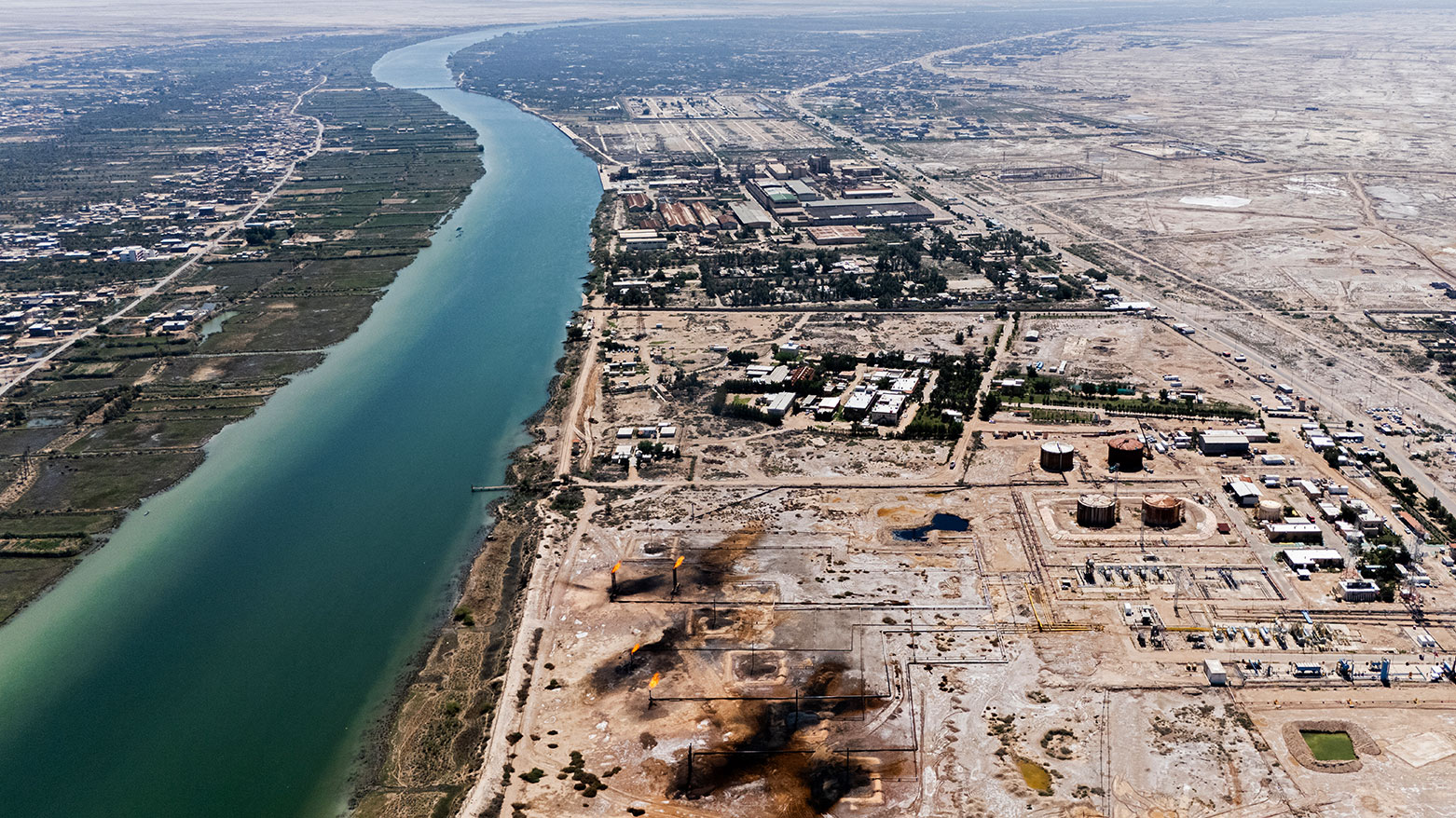
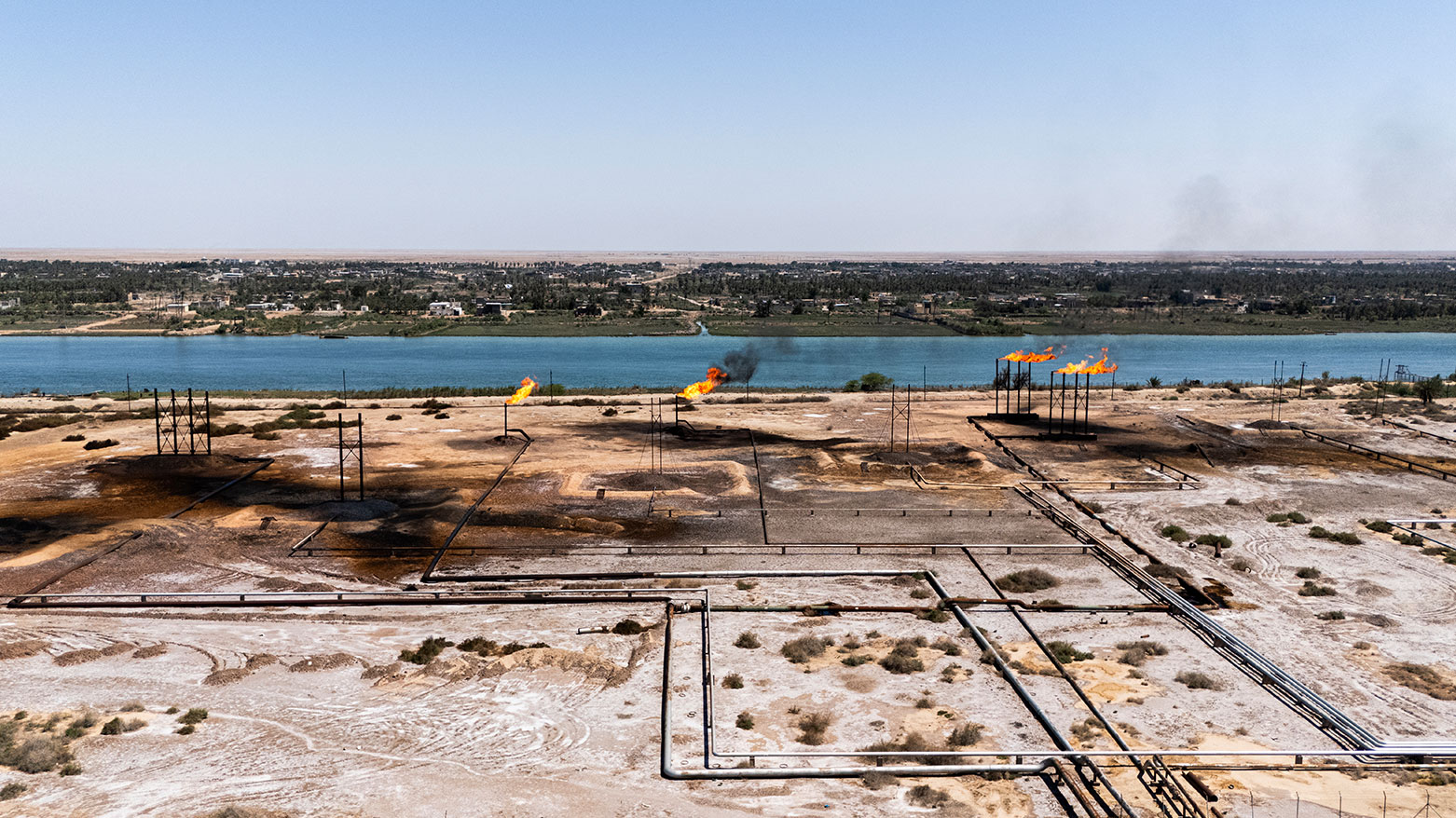
According to AFP, the Iraqi government rejected claims that Deputy Oil Minister Ali Maarij al-Bahadli abused his position to facilitate the smuggling of Iraqi oil on behalf of Iran.
The public denial highlights the complex balancing act Baghdad must maintain as the U.S. Department of the Treasury systematically targets what it describes as an interconnected network of illicit oil logistics, militia financing, and shadow banking designed to sustain the Iranian regime.
Iraq Rejects U.S. Allegations
The diplomatic dispute centers on direct U.S. allegations against senior Iraqi energy officials.
AFP reported that the U.S. State Department announced sanctions on Bahadli, explicitly accusing him of fraudulently mixing Iraqi and Iranian oil as part of a scheme to help Iran avoid international sanctions.
According to AFP, the Iraqi oil ministry issued a statement late Thursday denying the accusations.
The ministry stressed the "importance of transparency in addressing all... accusations on the basis of evidence and facts," according to a statement carried by the INA state news agency and cited by AFP.
The report noted that while the ministry expressed a willingness to investigate the matter, it clarified that "crude oil export operations, marketing, loading onto tankers, and related procedures" were not within Bahadli's official portfolio.
This is not the first instance of Baghdad pushing back against such claims.
AFP noted that after entities run by an Iraqi businessman were sanctioned over similar accusations last year, Iraq's state oil marketing company, SOMO, denied that any oil mixing operations were taking place in the country's ports or territorial waters to assist Iran.
Treasury Expands 'Economic Fury' Measures
The U.S. measures against the Iraqi deputy minister are part of a broader, highly structured financial warfare campaign.
The U.S. Treasury said in a statement that its Office of Foreign Assets Control (OFAC) designated Bahadli alongside several individuals and companies allegedly linked to Iran-aligned militias, including Asa’ib Ahl Al-Haq (AAH) and Kata'ib Sayyid Al-Shuhada (KSS).
According to the Treasury statement, U.S. officials alleged that Bahadli used his position to enrich a known Iran-affiliated oil smuggler and provide favored access to Iraqi oil.
Treasury officials stated that he helped procure forged documentation, enabling Iranian oil to be disguised as Iraqi oil for international sale.
Treasury Secretary Scott Bessent accused Iran of "pillaging resources that rightfully belong to the Iraqi people," stating that the Treasury will not allow Iran's military to exploit Iraqi oil to fund terrorism.
The Treasury statement also detailed sanctions against senior militia figures. U.S. officials alleged that Mustafa Hashim Lazim Al-Behadili, a leader within Asa'ib Ahl Al-Haq, controlled oil smuggling financing and oversaw mineral industry activities for the militia.
According to the Treasury, Al-Behadili managed oil smuggling operations in southern Iraq, coordinating directly with Iran's Islamic Revolutionary Guard Corps-Qods Force (IRGC-QF).
The Treasury said in a statement that several Iraq-based oil and transport companies allegedly controlled by Al-Behadili were also blacklisted.
Sanctions and Regional Economic Pressure
The targeting of Iraqi officials and militia leaders is a component of "Operation Economic Fury," a comprehensive strategy designed to exert maximum pressure on Tehran following the February 2026 conflict. The report noted that the Treasury has disrupted billions in projected oil revenue and cracked down on Tehran's shadow banking networks.
As detailed in the background reports, the U.S. strategy treats the Iranian economy as an interconnected system of nodes.
The sanctions architecture targets oil smuggling networks, shadow fleet vessels transporting petroleum to Asia, and missile procurement chains operating through third-country intermediaries.
According to the U.S. Treasury, the campaign explicitly warns foreign financial institutions and companies that facilitating illicit Iranian commerce risks secondary sanctions.
This intense economic coercion is met with an equally intense ideological response from Tehran.
The report noted that Iranian statements, including a recent message from Supreme Leader Ayatollah Seyyed Mojtaba Khamenei, reframe this economic pressure as a "phase of economic and cultural jihad."
As described in official Iranian discourse, the sanctions are portrayed as an "imposed economic war," transforming external financial restrictions into a domestic call for resilience, self-reliance, and revolutionary endurance.
Oil Networks and Political Tensions
The intersection of U.S. sanctions and Iranian ideological resistance places Iraq in a precarious position.
According to AFP, Iran has maintained close relations with many key players in Shia-majority Iraq since the 2003 U.S. invasion.
Conversely, Washington holds major sway in Iraq and has been escalating pressure on the Iraqi state to disarm Tehran-backed armed groups, which the U.S. designates as terrorist organizations.
The Treasury statement underscores Washington's intent to hold these groups accountable for their actions, which U.S. officials allege are conducted without regard for Iraq's sovereignty or democratic processes.

AFP reported that prior to a recent ceasefire, Iran-backed groups had hit U.S. facilities in Iraq more than 600 times following the late-February attacks on Iran by the United States and Israel.
The allegations against Bahadli highlight U.S. concerns regarding corruption and the exploitation of Iraq's energy sector by militia networks.
The Treasury said in a statement that figures like Al-Behadili use businesses and government contracts as fronts for financial activity, deeply integrating militia operations into the formal Iraqi economy.