KRG Expands Water Infrastructure as Strategic Pillar of 9th Cabinet Reforms
Dam and pond projects strengthen water security, agriculture, electricity production, and environmental sustainability across the Kurdistan Region
ERBIL (Kurdistan 24) - The Kurdistan Regional Government (KRG) has transformed water infrastructure into one of the central pillars of its long-term strategic planning under the 9th Cabinet led by Prime Minister Masrour Barzani, launching an extensive expansion of dams, ponds, highways, and strategic infrastructure projects aimed at strengthening economic resilience, water security, transportation networks, and regional connectivity.
In recent years, the Kurdistan Region has increasingly faced climate-related challenges, rapid urban growth, rising demand for water and electricity, and mounting pressure on public infrastructure. In response, the KRG adopted a broader strategy focused on long-term development through large-scale infrastructure investment designed to modernize the region’s economic foundations.
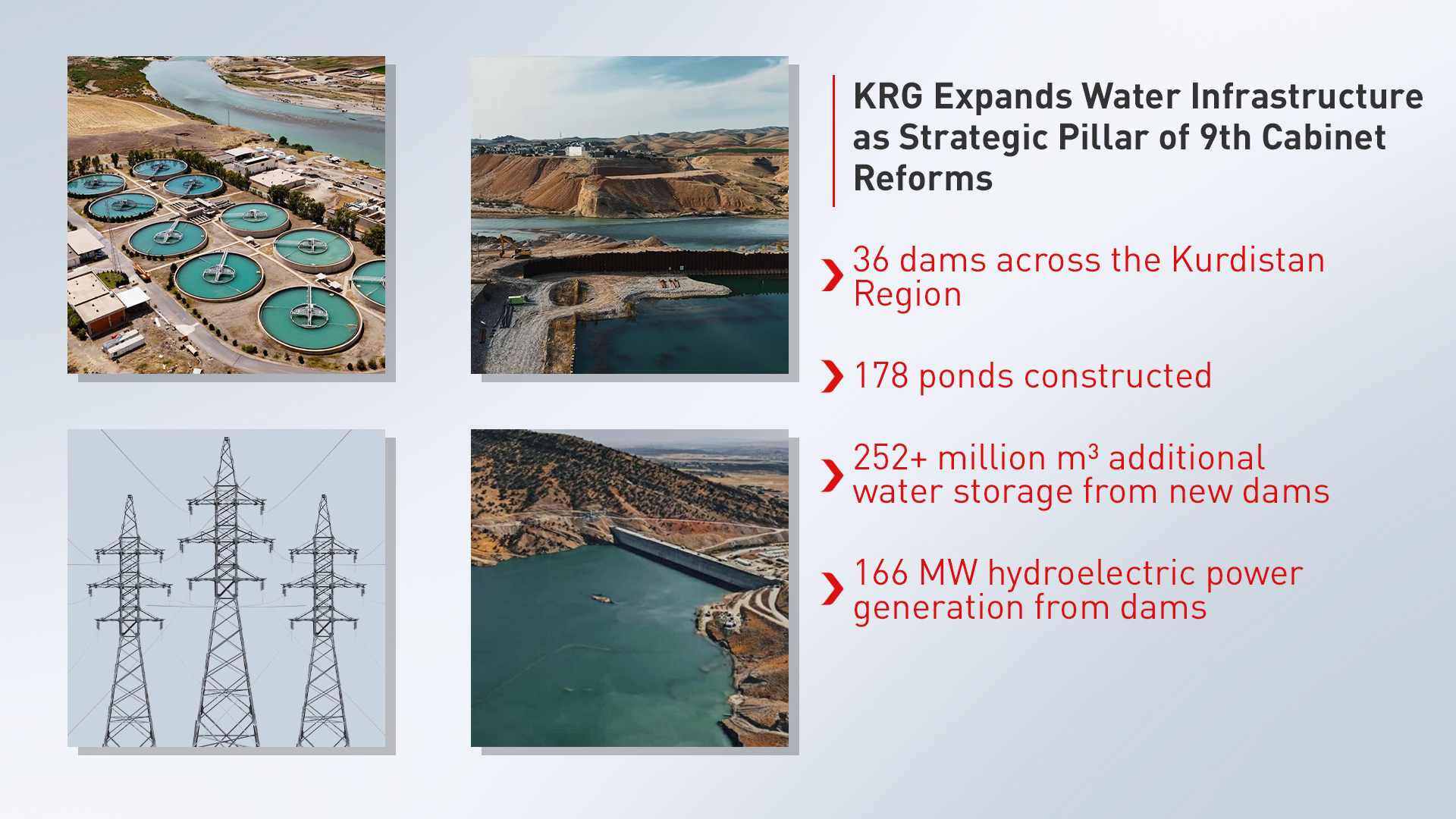
According to official government data, there are currently 36 dams across the Kurdistan Region, of which 25 have been completed, while 11 additional dams remain under construction or implementation. Authorities have also established 178 ponds across different provinces to improve water collection, agricultural support, and environmental sustainability.
During the 9th Cabinet period, infrastructure expansion accelerated significantly. Over the past five years, the government completed 9 new dams with a combined storage capacity exceeding 252 million cubic meters of water, while 23 ponds were completed, and another 58 ponds remain under implementation.
Officials say these projects are designed not only to store water but also to protect groundwater reserves, reduce flood risks, support agriculture and livestock sectors, improve access to clean water, and increase renewable electricity generation capacity.
The Kurdistan Region’s total stored water reserves have now reached approximately 8.5 billion cubic meters, while hydroelectric production from dams has climbed to around 166 megawatts this year.
At the same time, the 9th Cabinet has linked water infrastructure with a wider regional transportation and urban development strategy centered on highways, ring roads, tunnels, bridges, and modern transportation corridors aimed at supporting economic integration and reducing long-term logistical bottlenecks.
Major road and highway projects launched in recent years have focused on improving connections between Erbil, Duhok, Sulaimani, and border trade crossings, while also reducing pressure on older urban roads and facilitating faster commercial transport.
Officials say the expansion of highways and strategic roads plays a critical role in supporting trade, tourism, industrial growth, agricultural distribution, and investment movement throughout the Kurdistan Region.
The government’s infrastructure strategy increasingly views roads, water systems, electricity networks, and industrial development as interconnected sectors rather than separate projects. Improved highways support agricultural supply chains and tourism around newly developed dams and reservoirs, while stronger transportation corridors also improve access to industrial zones and border trade routes.
Authorities also emphasize that the modernization of transportation infrastructure is intended to prepare the Kurdistan Region for long-term economic diversification beyond oil dependency by encouraging logistics, manufacturing, tourism, and regional trade.
The projects reflect the broader development philosophy of the 9th Cabinet, which has prioritized infrastructure-led growth, institutional modernization, and strategic long-term planning as central elements of governance.
Officials argue that the combined expansion of water infrastructure, renewable energy generation, transportation networks, and urban development projects is gradually reshaping the Kurdistan Region’s economic landscape and improving its ability to respond to future regional challenges, including climate change, population growth, and economic volatility.
As neighboring countries continue to struggle with water shortages, aging infrastructure, and logistical challenges, the KRG increasingly presents these projects as part of a long-term vision aimed at positioning the Kurdistan Region as a more stable, connected, and economically resilient part of the Middle East.